


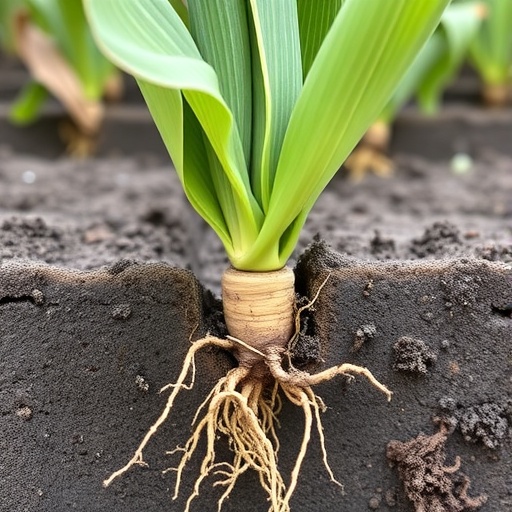
In a groundbreaking study published recently, researchers Sommer, Zhou, and Hochholdinger have unveiled the intricate responses of maize root hairs to variable cold stress conditions. Utilizing a combination of morphological assessment and transcriptomic analysis, the team has shed light on how different intensities of cold stress can elicit unique physiological changes in the root system of Zea mays, a plant of enormous agricultural importance. This research holds significant implications not just for improving crop resilience but also for understanding fundamental plant biology and how plants adapt to changing climates.
Maize, one of the leading staple crops worldwide, is highly susceptible to variations in environmental conditions, particularly temperature fluctuations. Cold stress, when temperatures drop below the optimal range for growth and development, can severely hinder nutrient uptake and overall plant vigor. Understanding the adaptive mechanisms that underpin root hair development under cold stress is crucial, particularly as climate change continues to intensify these stressors globally.
The study employed a detailed experimental design, wherein maize plants were subjected to a series of controlled cold stress conditions. This approach allowed the researchers to precisely quantify not only the morphological changes—like root hair length and density—but also to evaluate alterations at the transcriptomic level, revealing the intricacies of gene expression changes in response to environmental stressors. By identifying specific gene expression patterns associated with varying cold intensities, the team has begun to unravel the complex regulatory networks that facilitate these adaptations.
One of the most striking findings was that even minor variations in cold stress intensity led to differentiated root hair response strategies. For instance, root hairs exposed to mild cold stress exhibited elongation, potentially enhancing their ability to explore a larger volume of soil for essential nutrients. In contrast, root hairs subjected to more severe cold conditions showed stunted growth and changes in gene expression patterns that indicate a defensive strategy may be at play, prioritizing survival over growth.
At the molecular level, the researchers observed the upregulation of several Stress-Responsive Genes (SRGs) in response to cold stress. These genes play pivotal roles in the plant’s ability to manage stress through various biochemical pathways, including those involved in reactive oxygen species (ROS) management and hormone signaling. Knowing how these genes interact can illuminate pathways that are crucial for developing cold-resistant maize varieties through genetic engineering or breeding programs.
The transcriptomic data analysis revealed a diverse range of signaling pathways activated under differential cold stress conditions. For instance, pathways related to auxin and ethylene, two vital plant hormones, were found to be particularly active during cold stress exposure. The alignment of hormonal signaling with stress response genes suggests a tightly regulated network, where root hairs modulate their development based on the severity of cold stress, allowing maize plants to dynamically adapt their root architecture.
Moreover, the researchers established a compelling connection between nutrient uptake efficiency and root hair responses during cold stress exposure. The morphological changes in root hairs could directly correlate with how efficiently the plant absorbs water and essential nutrients like nitrogen and phosphorus under stress conditions. This finding opens up new avenues for agronomic practices aimed at improving nutrient use efficiency in cold-stressed maize.
As the climatic conditions continue to evolve, the study’s implications for future agricultural practices are profound. By integrating this new understanding of cold stress responses into breeding programs, scientists and farmers could strategize more effective methods to enhance crop resilience. For instance, identifying and propagating maize varieties that demonstrate superior cold stress adaptability could lead to more robust crops capable of sustaining higher yields in the face of increasingly variable weather patterns.
In addition, the findings emphasize the importance of developing management practices that foster soil health, which in turn can support root development under stress. Utilizing cover crops, organic amendments, and proper irrigation techniques can help mitigate the adverse effects of cold stress on maize. This holistic approach represents a paradigm shift in how certain stressors are evaluated and managed in crop production systems.
The researchers believe that this foundational work sets the stage for future studies that will delve deeper into the interplay between environmental variables and genetic expression. Unraveling these complex interactions will likely involve interdisciplinary collaborations spanning plant biology, genetics, and computational biology, bringing diverse expertise together to tackle the pressing challenges posed by climate change.
In summary, the differential responses of maize root hairs to cold stress present a fascinating glimpse into the adaptive mechanisms of plants. The innovative methodologies employed in this research, combining morphological and transcriptomic analysis, offer critical insights into enhancing maize resilience against climatic adversities. As our understanding of these processes deepens, stakeholders in agriculture will better position themselves to confront the challenges of a rapidly changing global climate while ensuring food security for future generations.
Ultimately, this study paints a hopeful picture for the future of maize cultivation in cold stress-prone regions, reinforcing the vital role of scientific research in developing sustainable agricultural practices. By bridging the gap between fundamental research and practical application, we can unlock the potential for growing resilient crops that can thrive despite the challenges they face.
Cite Scienmag News
Alan Morgan. (September 22, 2025). Cold Stress Alters Morphology and Genes in Corn Roots. Scienmag. https://scienmag.com/cold-stress-alters-morphology-and-genes-in-corn-roots/
Alan Morgan. "Cold Stress Alters Morphology and Genes in Corn Roots." Scienmag, 22 September 2025, https://scienmag.com/cold-stress-alters-morphology-and-genes-in-corn-roots/. Accessed 4 September 2026.
Alan Morgan. "Cold Stress Alters Morphology and Genes in Corn Roots." Scienmag. September 22, 2025. https://scienmag.com/cold-stress-alters-morphology-and-genes-in-corn-roots/


