


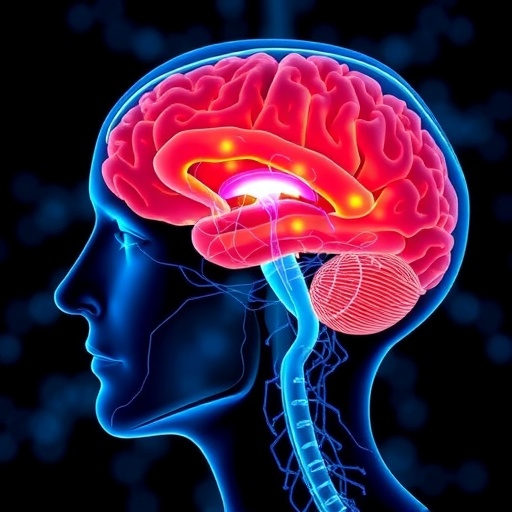
In the ever-evolving field of neurodegenerative disease research, a groundbreaking review published in Translational Psychiatry sheds new light on the intricate cognitive trajectories experienced by Parkinson’s disease (PD) patients undergoing subthalamic deep brain stimulation (STN-DBS). Authored by Almeida, Herz, Blech, and colleagues, this comprehensive analysis not only reexamines the established impacts of STN-DBS on cognition but also introduces novel adaptive strategies poised to reshape therapeutic paradigms. Their forthcoming 2026 review marks a significant leap in understanding the nuanced neuropsychological outcomes associated with this widely utilized neurosurgical intervention.
Parkinson’s disease, characterized predominantly by motor dysfunction, also involves progressive cognitive decline in many afflicted individuals. While STN-DBS has been embraced globally for its remarkable efficacy in ameliorating motor symptoms, its cognitive repercussions remain a contentious and multifaceted issue. The review meticulously dissects data from a plethora of longitudinal studies, clinical trials, and neuropsychological assessments, illustrating the heterogeneity in cognitive responses post-STN-DBS. Importantly, this work underscores the necessity to parse fine-grained differences in cognitive domains such as executive function, memory, attention, and language, rather than relying on broad cognitive scores.
At the neurophysiological level, the subthalamic nucleus (STN) represents a critical node within basal ganglia-thalamocortical circuits implicated in both motor control and higher-order cognitive processing. Deep brain stimulation targeting the STN modulates pathological neural oscillations and network dynamics, thereby restoring motor function. However, this intervention can inadvertently influence cognitive networks due to the STN’s extensive connectivity with prefrontal and limbic regions. Almeida and colleagues eloquently elaborate on the mechanistic underpinnings of STN-DBS by integrating findings from electrophysiological recordings, neuroimaging, and computational modeling, offering a system-level perspective on its dual motor-cognitive effects.
One of the review’s striking insights pertains to the variability in cognitive trajectories among patients undergoing STN-DBS. While some individuals experience cognitive stabilization or even improvements, others exhibit subtle to pronounced declines in executive deficits, verbal fluency, or processing speed. The authors attribute this disparity to a constellation of factors including patient age, disease duration and severity, electrode placement precision, stimulation parameters, and baseline cognitive reserve. They argue for a personalized medicine approach incorporating preoperative cognitive profiling and intraoperative neurophysiological mapping to optimize outcomes.
Against this backdrop emerges a critical discussion of emerging adaptive strategies designed to mitigate cognitive side effects while preserving motor benefits. The authors highlight innovative technologies such as closed-loop DBS systems, which dynamically adjust stimulation intensity based on real-time neural feedback. These systems have demonstrated promising preliminary results in tailoring stimulation patterns to avoid overstimulation of non-motor circuits implicated in cognition. In parallel, advances in electrode design and targeting algorithms enable more selective engagement of STN motor territories, minimizing off-target cognitive perturbations.
Moreover, Almeida et al. emphasize the potential of multimodal therapeutic frameworks combining STN-DBS with adjunct cognitive rehabilitation or pharmacological agents targeting cholinergic and dopaminergic systems. Such integrative strategies aim not only to ameliorate motor dysfunction but also to arrest or even reverse cognitive deficits. The review calls for rigorous clinical trials to validate these hybrid approaches, urging the neuropsychiatric community to adopt a holistic conceptualization of PD management.
Notably, the review accentuates the pivotal role of longitudinal monitoring using sophisticated neuropsychological batteries and digital biomarkers to capture subtle cognitive changes throughout disease progression and post-intervention. Continuous monitoring may facilitate early detection of deleterious cognitive effects, enabling timely adjustments in DBS parameters or initiation of adjunctive therapies. The convergence of wearable technology and remote cognitive assessments represents a transformative frontier for personalized DBS management encapsulated within the authors’ vision.
The review also confronts the ethical implications inherent in modulating deep brain circuits that govern not just movement but identity-defining cognitive processes. Informed consent procedures must encompass transparent discussions about potential cognitive risks, and multidisciplinary care teams involving neurologists, neuropsychologists, neurosurgeons, and ethicists are advocated to holistically support patients and families navigating complex therapeutic decisions.
In a sweeping synthesis of preclinical and clinical evidence, the authors recognize that while STN-DBS has definitively revolutionized the motor symptom landscape in PD, its cognitive repercussions remain an ongoing challenge necessitating nuanced understanding and technological innovation. The review becomes an indispensable resource for clinicians, researchers, and biomedical engineers targeting the confluence of neural circuit modulation and cognitive preservation.
Future research directions outlined in the paper include refining biomarkers predictive of cognitive vulnerability, enhancing computational models to simulate patient-specific DBS effects, and exploring gene-environment interactions that modulate response heterogeneity. The integration of artificial intelligence in electrode placement and stimulation programming is poised to further propel the field beyond current limitations.
This comprehensive review by Almeida et al. is a clarion call for the neuroscience community to embrace complexity in Parkinson’s disease therapeutics. By fusing multidisciplinary insights and heralding adaptive neuromodulation technologies, it lays the groundwork for a new era where cognitive outcomes are prioritized alongside motor function — ultimately striving for holistic restoration of quality of life in PD patients.
In conclusion, the authors illuminate an emergent research frontier at the intersection of neuromodulation, cognition, and personalized medicine. Their erudite synthesis charts a path toward more sophisticated and ethically attuned interventions harnessing the full potential of STN-DBS. As adaptive strategies continue to evolve, the possibility of tailoring brain stimulation to individual cognitive profiles moves from aspirational to achievable, signaling a paradigm shift in how we conceive and implement treatments for Parkinson’s disease.
Cite Scienmag News
Cassandra Pierce. (April 10, 2026). Cognitive Changes in Parkinson’s: STN-DBS and Advances. Scienmag. https://scienmag.com/cognitive-changes-in-parkinsons-stn-dbs-and-advances/
Cassandra Pierce. "Cognitive Changes in Parkinson’s: STN-DBS and Advances." Scienmag, 10 April 2026, https://scienmag.com/cognitive-changes-in-parkinsons-stn-dbs-and-advances/. Accessed 3 September 2026.
Cassandra Pierce. "Cognitive Changes in Parkinson’s: STN-DBS and Advances." Scienmag. April 10, 2026. https://scienmag.com/cognitive-changes-in-parkinsons-stn-dbs-and-advances/


