


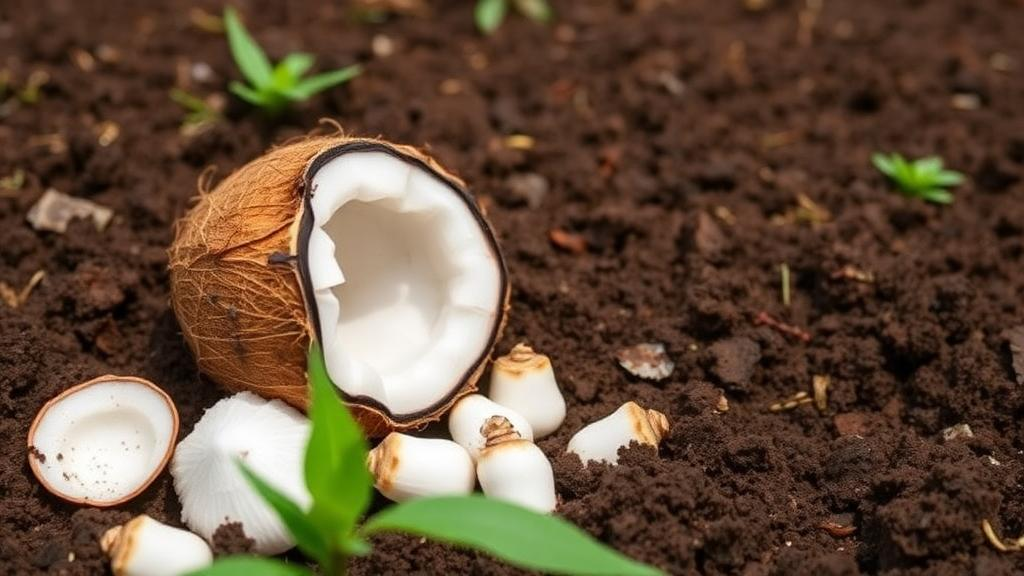
A humble charcoal-like material made from coconut shells may offer one of the most effective tools yet for neutralizing stubborn pesticide residues that linger in the world’s croplands. A new study published in Environmental Geochemistry and Health by researchers at Guizhou University in China has demonstrated that biochar, when mixed into contaminated soil, can dramatically reduce the bioavailability of napropamide, a widely used amide herbicide that persists in agricultural fields long after its initial application. The findings, drawn from 112 days of controlled aging experiments across typical Chinese farmland soils, reveal not only how much of the pesticide can be locked away, but also the precise physical and chemical mechanisms by which different biochars accomplish this sequestration.
Napropamide is a pre-emergence herbicide used to suppress weeds in vegetable crops, and like many amide herbicides it does not simply vanish after spraying. Over weeks and months, pesticide molecules in soil undergo a process known as aging: they migrate into the tiniest pores of soil particles, bind to organic matter, and become progressively less accessible to extraction or degradation. This aging phenomenon has long posed a paradox for environmental scientists. On one hand, aged residues are less mobile and less immediately toxic; on the other, they represent a long-term reservoir that can slowly release back into soil water, be taken up by crops, or accumulate in soil organisms. Understanding and controlling this reservoir is therefore central to managing the ecological risk of pesticide-contaminated farmland.
The research team, led by Jiaxing Yu and corresponding author Xiaomao Wu, set out to quantify how aging changes napropamide’s behavior in soil and whether biochar amendment could tip the balance toward immobilization. Working with sterilized soils representing typical Chinese farmland, they spiked the soils with napropamide and allowed them to age for 112 days. The results were striking: aging alone significantly enhanced the soil’s adsorption of the herbicide, with adsorption coefficients increasing by a factor of four to sixteen compared with freshly spiked pesticide. In other words, the passage of time itself makes soils grip napropamide more tightly, drawing the molecules into less accessible compartments within the soil matrix.
The real breakthrough came when the researchers amended red soil, one of the test substrates, with three different types of biochar at application rates ranging from 0.1 to 1 percent by weight. The biochars were derived from coconut shells, bamboo, and tobacco stems, three abundant agricultural and industrial byproducts. All three biochars amplified the aging-related enhancement of adsorption, but coconut shell-derived biochar, abbreviated CSC in the study, clearly outperformed the others. Its superior performance was evident across every measured parameter, from adsorption coefficients to the fraction of pesticide remaining dissolved in the soil solution, making it the standout candidate for practical soil remediation.
The quantitative differences between application rates were particularly revealing. In soil treated with 1 percent coconut shell biochar, the residual extractable napropamide content remained remarkably low, between just 0.46 and 1.34 percent of the applied amount. By contrast, at the tenfold lower application rate of 0.1 percent, residual content ranged from 2.15 to 5.32 percent. This dose-response relationship suggests that farmers and land managers seeking to remediate contaminated fields would need to apply biochar at meaningful concentrations to achieve the strongest immobilization effect, but that even modest additions produce measurable reductions in the dissolved, plant-accessible fraction of the pesticide.
Beneath these headline numbers lies a more nuanced mechanistic story. Through detailed mechanistic studies, the team found that bamboo-derived and tobacco stem-derived biochars engaged aged napropamide through a combination of physical and chemical interactions, including surface adsorption, partitioning into carbonaceous domains, and possibly hydrogen bonding and pi-pi interactions between the herbicide’s aromatic structure and the biochar’s carbon lattice. Coconut shell biochar, however, functioned predominantly through physical sequestration, trapping pesticide molecules within its extensive pore network and holding them through purely physical confinement. This distinction matters because physical sequestration is generally more stable over time, less sensitive to changes in soil chemistry, and less likely to be reversed by fluctuations in pH, ionic strength, or dissolved organic matter.
Alongside the reduction in dissolved napropamide, biochar addition promoted the formation of non-extractable residues, often abbreviated as NER in the environmental chemistry literature. Non-extractable residues are pesticide fractions that bind so tightly to soil components that standard extraction methods cannot recover them. Their formation is a double-edged sword: they represent pollutant mass removed from active biogeochemical cycling, but their long-term stability depends on the nature of the binding. The study’s finding that biochar shifts aged napropamide toward this bound state, while simultaneously depleting the dissolved fraction, indicates a net reduction in ecological exposure, since only the dissolved and weakly sorbed fractions are readily available to organisms.
The most consequential results concern bioavailability, the fraction of a contaminant that living organisms can actually absorb. The researchers tested this using three complementary biological systems. In pepper plants, Capsicum annuum, biochar amendment reduced the uptake of aged napropamide by more than 85 percent, a figure with direct implications for food safety, since napropamide residues in vegetables are a recognized consumer health concern. In earthworms, Eisenia fetida, a standard model organism for soil ecotoxicology and a sentinel species for soil health, tissue accumulation fell to a negligible 0.05 milligrams per kilogram. And in a microbial test, the degradation residues left by Bacillus cereus strain LGY06, a bacterium capable of breaking down the herbicide, dropped to 0.70 milligrams per kilogram, showing that even biological processing of the contaminant was curtailed once the compound was sequestered.
These three lines of evidence converge on a single conclusion: coconut shell biochar does not merely hide napropamide from chemical analysis, it genuinely removes the pesticide from the food chain pathways that matter. A pesticide molecule locked inside a biochar pore cannot be taken up by a pepper root, ingested by an earthworm, or readily accessed by degrading bacteria. The consistency of the effect across plants, animals, and microbes strengthens the case that the observed immobilization reflects a real reduction in ecological risk rather than an artifact of any single measurement technique.
The broader implications extend well beyond napropamide itself. Biochar has attracted intense interest in recent years as a dual-purpose soil amendment, valued both for its ability to improve soil fertility and water retention and for its capacity to immobilize organic and inorganic contaminants, from pesticides to heavy metals such as cadmium. This study adds critical mechanistic depth to that literature by showing that the choice of feedstock matters enormously, that coconut shell biochar’s dense, porous structure makes it exceptionally effective at physical sequestration, and that application rate is a key lever for achieving meaningful risk reduction. For regions grappling with legacy pesticide contamination in intensive vegetable production systems, the work offers a practical, low-cost remediation pathway using a material derived from abundant agricultural waste. It also underscores a note of caution for pesticide management more generally: because aging increases adsorption and biochar accelerates sequestration, the environmental fate of a herbicide is shaped as much by soil management decisions made after application as by the chemical properties of the compound itself. As the researchers conclude, these findings provide crucial insights into how biochar modifies the environmental behavior of aged pesticides and offer valuable guidance for developing effective soil remediation strategies in contaminated farmland worldwide.
Subject of Research: Biochar-mediated immobilization and reduced bioavailability of the aged herbicide napropamide in agricultural soil
Article Title: Biochar-mediated immobilization of aged napropamide in soil: reduced bioavailability and underlying sequestration mechanisms
Article References: Yu, J., Guo, Z., Yang, J., Zhang, W., Li, J., & Wu, X. (2026). Biochar-mediated immobilization of aged napropamide in soil: reduced bioavailability and underlying sequestration mechanisms. Environmental Geochemistry and Health, 48(16), Article 635. https://doi.org/10.1007/s10653-026-03537-6
Image Credits: AI Generated
DOI: 10.1007/s10653-026-03537-6
Keywords: biochar, napropamide, soil remediation, pesticide aging, bioavailability, coconut shell biochar, non-extractable residues, adsorption, sequestration, soil contamination, ecotoxicology, agricultural soils
Cite Scienmag News
Sloane Callahan. (October 12, 2026). Coconut Shell Biochar Locks Away Aged Herbicide Residues in Farmland Soil. Scienmag. https://scienmag.com/coconut-shell-biochar-locks-away-aged-herbicide-residues-in-farmland-soil/
Sloane Callahan. "Coconut Shell Biochar Locks Away Aged Herbicide Residues in Farmland Soil." Scienmag, 12 October 2026, https://scienmag.com/coconut-shell-biochar-locks-away-aged-herbicide-residues-in-farmland-soil/. Accessed 12 October 2026.
Sloane Callahan. "Coconut Shell Biochar Locks Away Aged Herbicide Residues in Farmland Soil." Scienmag. October 12, 2026. https://scienmag.com/coconut-shell-biochar-locks-away-aged-herbicide-residues-in-farmland-soil/


