

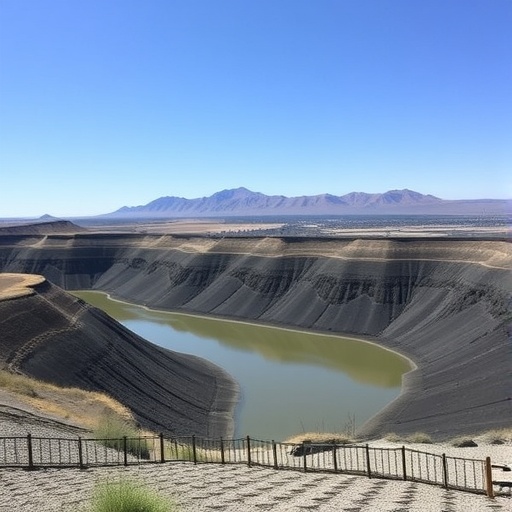
In the heart of Northern Ordos, China, a detailed investigation has been undertaken to uncover the intricate mechanisms governing groundwater mixing and the hydrogeochemical processes instigated by coal mining activities. This research, conducted by Meng and colleagues, highlights a pressing environmental concern that intertwines natural water systems with human industrial influence. As the world grapples with the ramifications of coal extraction, understanding these interactions becomes imperative to assess both ecological health and potential human risks.
Firstly, the study centers on the groundwater systems that provide vital resources for the communities in the Northern Ordos region. Groundwater serves as a primary source of freshwater, crucial for agricultural use, drinking water, and sustaining local ecosystems. However, coal mining, a critical economic activity in the area, has altered the natural flow and composition of these groundwater systems, raising alarms about contamination and sustainability. The research delves into the exact mechanisms through which mining operations influence the groundwater dynamics.
The authors meticulously gathered and analyzed groundwater samples from various sites surrounding coal mines to evaluate changes in chemical composition, flow patterns, and ecological impacts. By employing advanced hydrochemical analysis techniques, they were able to discern the fingerprints of mining activities on the groundwater’s natural state. The findings demonstrate significant deviations in the chemical constituents of groundwater, potentially leading to detrimental effects on both human health and biodiversity in the region.
Moreover, the research elucidates the processes behind groundwater mixing. Normally, groundwater flows beneath the Earth’s surface, influenced by geological formations and pressure differentials. However, mining activities can disrupt these natural flows, leading to the intermingling of groundwater with pollutants, including heavy metals and various chemical compounds used in mining operations. This mixing can significantly increase the concentration of harmful substances, transforming previously safe water sources into hazardous ones.
Importantly, the study addresses the implications of these changes for local inhabitants. In regions dependent on groundwater for drinking and irrigation, the quality of water affects not only the health of communities but also agricultural productivity. The chemical alterations ranging from increased salinity to heavy metal contamination can undermine crops, posing a risk to food security. The researchers stress the urgency of monitoring these changes to mitigate health risks and to enable informed decision-making for public health and resource management.
Furthermore, the research integrates data from hydrogeochemical modeling to provide predictive insights into future scenarios. The models indicate potential trends in groundwater quality over time, particularly in relation to varying mining intensities and practices. The projections made in this study act as a critical tool for policymakers and environmental regulators, providing a framework for potential intervention strategies to minimize environmental degradation.
As coal mining continues unabated in Northern Ordos, the study emphasizes the need for sustainable practices that prioritize the preservation of water quality. It advocates for the implementation of stricter regulations governing mining operations, particularly concerning water management practices. Innovations in mining technology and a strategic shift towards less invasive methods can potentially alleviate some of the pressing environmental impacts highlighted in this research.
In a broader context, this research serves as a crucial reminder of the intertwined nature of industrial activity and natural resources. It calls on researchers, policymakers, and industry leaders to adopt an interdisciplinary approach in addressing the challenges of groundwater management. The insights gained from this study could inform similar investigations worldwide, particularly in regions where coal mining significantly influences hydrochemical processes.
The implications of this research extend beyond the immediate vicinity of Northern Ordos, echoing the global challenges faced by mining communities everywhere. It underscores the necessity of merging economic development with environmental stewardship. As nations continue to grapple with the trade-offs inherent in resource extraction, studies like this one provide a roadmap for aligning industrial practices with ecological preservation.
Moreover, the collaborative effort behind this research showcases the importance of cross-disciplinary partnerships in tackling complex environmental issues. By integrating expertise from hydrogeology, chemistry, and environmental science, the authors of this work illustrate how comprehensive studies can yield robust findings that ultimately benefit society and the ecosystem.
In conclusion, the exploration of groundwater mixing mechanisms and hydrogeochemical processes catalyzed by coal mining in Northern Ordos, China, illuminates pivotal environmental concerns. As we move towards a future increasingly centered on sustainability, understanding these intricate relationships will be critical. This research not only informs localized strategies aimed at safeguarding water resources but also inspires global conversations about responsible resource management. The findings call for a concerted effort to develop practices that protect our vital freshwater systems while addressing the energy demands of modern society, ensuring a balance between progress and environmental integrity.
Subject of Research: Groundwater mixing mechanisms and hydrogeochemical processes driven by coal mining
Article Title: The groundwater mixing mechanism and hydrogeochemical processes driven by coal mining in the typical area, Northern Ordos, China.
Article References:
Meng, Y., Zhang, Z., Hao, Q. et al. The groundwater mixing mechanism and hydrogeochemical processes driven by coal mining in the typical area, Northern Ordos, China. Environ Monit Assess 198, 41 (2026). https://doi.org/10.1007/s10661-025-14875-w
Image Credits: AI Generated
DOI: https://doi.org/10.1007/s10661-025-14875-w
Keywords: Groundwater, hydrogeochemistry, coal mining, environmental impact, Northern Ordos, water quality, sustainable practices, resource management.


