


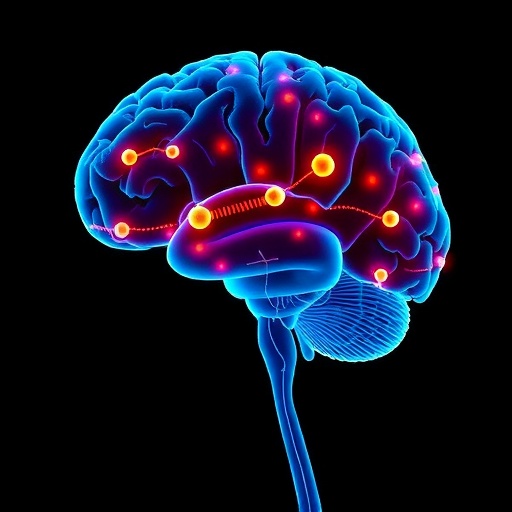
A research team has introduced a new approach that could transform how noninvasive brain stimulation is designed: a system that uses functional magnetic resonance imaging, or fMRI, to monitor brain activity while transcranial alternating current stimulation is being delivered. The proof-of-concept randomized trial, reported by G. Soleimani, R. Kuplicki, B. Mulyana and colleagues in Translational Psychiatry, combines two technologies that have traditionally been used separately. The goal is not simply to apply electrical stimulation and observe its effects later, but to create a feedback loop in which brain-imaging data can guide the stimulation process as it unfolds. The study represents an early step toward more individualized and responsive forms of neuromodulation.
Transcranial alternating current stimulation, commonly known as tACS, delivers weak electrical currents through electrodes placed on the scalp. Unlike direct-current stimulation, which maintains a relatively constant polarity, tACS oscillates between positive and negative phases at a selected frequency. Researchers use this rhythmic stimulation to influence patterns of neural activity that may be associated with attention, memory, perception, mood or other brain functions. The underlying idea is that external electrical rhythms may interact with the brain’s own oscillations, a phenomenon sometimes described as neural entrainment. Yet the effects of tACS can vary substantially from one person to another because brain anatomy, electrode placement, tissue conductivity and intrinsic neural dynamics differ across individuals.
The new closed-loop strategy attempts to address that variability. In a conventional stimulation experiment, investigators typically choose parameters such as current strength, frequency, electrode arrangement and stimulation duration before the session begins. Those settings may be based on previous research or an anatomical model, but they do not necessarily reflect the participant’s real-time brain state. A closed-loop system, by contrast, measures a biological signal, evaluates whether the desired response is emerging and then uses that information to adjust or optimize the intervention. In this trial, real-time fMRI serves as the measurement component, while tACS provides the controlled input to the brain.
Functional MRI does not record electrical impulses directly. Instead, it detects changes in blood oxygenation through the blood-oxygen-level-dependent, or BOLD, signal. When populations of neurons become more active, local changes in blood flow and oxygen use can alter the magnetic properties of surrounding tissue. These changes allow researchers to map activity across the brain with high spatial resolution. Although the BOLD signal is slower than the underlying neural events, it can reveal where stimulation-related changes are occurring. Using the imaging data during the experiment creates the possibility of identifying whether the brain is responding in the intended region or network and whether the selected stimulation settings are producing a measurable effect.
Combining fMRI and tACS, however, is technically demanding. Electrical stimulation inside an MRI scanner can generate artifacts in the imaging data, while the magnetic environment imposes strict safety and equipment requirements. The stimulation hardware must be designed to operate within the scanner without interfering with image acquisition or creating unacceptable risks. Researchers must also separate genuine physiological changes from signals caused by the stimulation equipment, electrode leads, movement or scanner noise. Real-time analysis adds another layer of complexity because images must be acquired, processed and interpreted quickly enough to inform the next stage of stimulation rather than merely being analyzed after the session is over.
The trial’s randomized design is important because it provides a structured way to compare conditions and assess whether changes are associated with the adaptive stimulation procedure rather than with expectation, repeated scanning or ordinary fluctuations in brain activity. Randomization can help reduce systematic differences between experimental conditions, while a proof-of-concept framework allows investigators to determine whether the full technical pipeline can function in practice. That pipeline includes participant preparation, electrode placement, MRI acquisition, artifact management, real-time signal processing, decision-making and stimulation control. Establishing that these components can work together is a necessary step before larger studies can evaluate clinical effectiveness.
The most significant promise of this approach is personalization. The brain is not a fixed electrical circuit with identical wiring from one person to the next. Even when two participants receive the same stimulation protocol, their brains may respond differently because of variations in skull thickness, cortical folding, network connectivity and baseline oscillatory activity. Real-time fMRI-guided optimization could eventually allow researchers to identify which stimulation parameters are most effective for a particular individual. Instead of assuming that a single frequency or electrode montage will work equally well for everyone, future systems might adjust the intervention according to each participant’s measured neural response.
Such technology could have implications for research into psychiatric and neurological conditions, although the present work should not be interpreted as proof that the system is ready to treat patients. Noninvasive stimulation is being investigated for conditions including depression, anxiety, chronic pain, addiction and cognitive disorders, but results across studies have often been mixed. One reason may be that stimulation protocols are not sufficiently sensitive to individual biology or to changes in brain state during an intervention. A responsive system could help researchers test whether adapting stimulation in real time improves consistency. It could also offer a way to study causal relationships between brain rhythms, distributed neural networks and behavior.
The approach may also change how scientists think about experimental control. Rather than treating the brain as a passive object that receives a predetermined dose of stimulation, closed-loop neuromodulation treats it as a dynamic system that continuously provides feedback. That perspective is already influential in other areas of neuroscience, including deep-brain stimulation and brain-computer interfaces. Applying it to tACS with real-time fMRI is especially ambitious because it combines a relatively accessible form of stimulation with one of the most information-rich tools for measuring human brain function. If refined, the method could help bridge the gap between broad population-level protocols and truly individualized interventions.
For now, the study is best understood as an engineering and methodological milestone rather than a finished therapy. The researchers’ central contribution is to demonstrate the feasibility of linking real-time functional imaging with adaptive transcranial electrical stimulation in a randomized experimental framework. Future investigations will need to determine how reliably the system identifies meaningful neural responses, how long those responses last, whether they translate into changes in behavior or symptoms and whether the approach can be scaled beyond specialized research scanners. The work nevertheless points toward a striking possibility: brain stimulation that does not merely send commands into the nervous system, but listens to the brain and adjusts its strategy in response.
Cite Scienmag News
Cassandra Pierce. (August 14, 2026). Closed-Loop Brain Stimulation Optimized by Real-Time fMRI Shows Promise in Randomized Trial. Scienmag. https://scienmag.com/closed-loop-brain-stimulation-optimized-by-real-time-fmri-shows-promise-in-randomized-trial/
Cassandra Pierce. "Closed-Loop Brain Stimulation Optimized by Real-Time fMRI Shows Promise in Randomized Trial." Scienmag, 14 August 2026, https://scienmag.com/closed-loop-brain-stimulation-optimized-by-real-time-fmri-shows-promise-in-randomized-trial/. Accessed 3 September 2026.
Cassandra Pierce. "Closed-Loop Brain Stimulation Optimized by Real-Time fMRI Shows Promise in Randomized Trial." Scienmag. August 14, 2026. https://scienmag.com/closed-loop-brain-stimulation-optimized-by-real-time-fmri-shows-promise-in-randomized-trial/


