


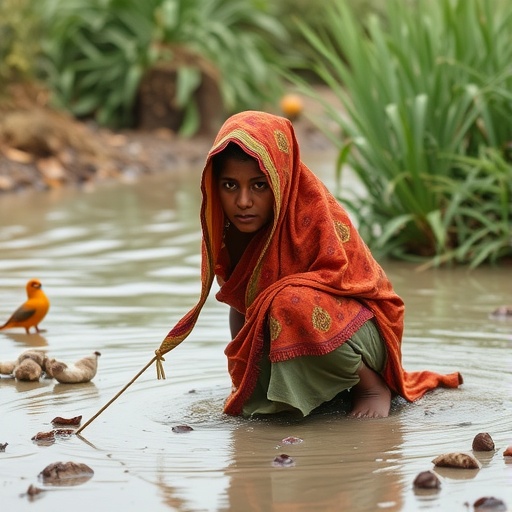
In recent years, the confluence of climate change and socio-economic issues has become increasingly evident, especially with the rising frequency of climate shocks in vulnerable regions. A striking example is India, where these environmental fluctuations have a profound impact on the landscape of poverty. A groundbreaking study titled “Impact of Climate Shocks on Poverty in India” conducted by Behera, Das, and Gual explores this pressing issue, shedding light on the intricate web of economic vulnerability exacerbated by climate change.
Climate shocks refer to unexpected and severe weather events that can devastate agricultural yields, disrupt livelihoods, and diminish the resilience of communities. In India, where agriculture employs nearly half of the workforce, even minor deviations in weather patterns can have sweeping effects. The researchers emphasize that these shocks are not mere anomalies but increasingly frequent occurrences due to the ongoing climate crisis. An understanding of how these events interact with poverty metrics is crucial for policymakers striving to develop effective adaptation strategies.
Central to the findings of the study is the recognition that climate shocks do not affect all demographics uniformly. The authors highlight that marginalized communities, particularly in rural areas, bear the brunt of these shocks. Limited resources, inadequate access to technology, and a lack of safety nets compound their vulnerability, pushing them further into poverty. This cyclical relationship becomes a vicious circle; as poverty increases, the ability of these communities to adapt to future climate shocks diminishes, thereby entrenching their socio-economic status.
Moreover, the researchers utilize a robust analytical framework to quantify the relationship between climate shocks and poverty levels in various districts across India. They utilize longitudinal data sets, incorporating information from the National Sample Survey, to create a comprehensive picture of how extreme weather events impact livelihoods. Their analysis illustrates that not only do weather-related anomalies lead to immediate dips in income, but they also have long-term repercussions on education, health, and overall quality of life.
The role of government in addressing the downstream effects of climate-induced poverty emerges as a focal point of the study. Behera and colleagues underscore that timely interventions, including the establishment of climate-resilient infrastructure and proactive disaster-response systems, can help mitigate some of these adverse outcomes. They argue that policymakers need to prioritize funding for these initiatives, ensuring that vulnerable populations are shielded from the extreme end of climate shocks.
Education is another critical area highlighted by the authors. The study indicates that access to education plays a pivotal role in determining how communities respond to climate shocks. The link between educational attainment and adaptive capacity is particularly relevant; individuals with higher education levels tend to possess better skills to navigate economic instability. Therefore, investing in educational programs that incorporate climate literacy can empower communities, enabling them to devise innovative solutions to emerge from economic hardship.
The significance of local knowledge in combating climate shocks is also examined. Indigenous practices and traditional agricultural techniques harbor insights that can bolster resilience. The authors advocate for a collaborative approach where local wisdom is integrated into scientific frameworks, fostering community-led initiatives. This holistic method not only enhances adaptive capacity but also reinforces social cohesion among communities facing environmental instability.
As climatic unpredictability becomes the norm, mental health emerges as an often-overlooked dimension of poverty. The psychological toll of climate shocks can lead to increased anxiety and depression, further exacerbating socio-economic woes. The researchers urge that mental health support mechanisms be integrated into poverty alleviation strategies, providing emotional and psychological resilience to affected individuals. This aspect is particularly pressing in the context of relentless climate patterns that leave families struggling to make ends meet.
In addition, the influence of climate shocks on access to essential resources such as water and food further complicates poverty dynamics. Food insecurity becomes pronounced following extreme weather events, fueling malnutrition and health challenges. The study emphasizes the need for robust food security programs that can respond dynamically to climatic events, ensuring that the most vulnerable populations receive timely assistance during crises.
The findings from Behera, Das, and Gual’s research serve as a wakeup call for various stakeholders, including governments, NGOs, and international organizations. Strategic collaborations are vital to developing comprehensive frameworks that address both climate change and poverty. By anchoring interventions in empirical research, stakeholders can devise targeted programs that genuinely meet the needs of at-risk communities.
As the world grapples with climate change, the implications for global economic stability cannot be ignored. Countries like India, with their burgeoning populations and economic potential, wield significant influence on global markets. Thus, failing to address the intersection of climate shocks and poverty could pose broader economic repercussions, affecting international stability and growth. The study posits that investing in climate resilience for vulnerable populations is not only a moral obligation but a strategic economic choice.
In closing, “Impact of Climate Shocks on Poverty in India” stands as a critical examination of the challenges faced by vulnerable communities in the face of growing climate instability. By combining empirical evidence with practical recommendations, the researchers provide a pathway toward alleviating poverty while addressing the urgent threat of climate change. Their work invites renewed focus on integrated approaches that encompass environmental sustainability, economic growth, and social equity.
The urgent need for action cannot be overstated. Stakeholders at all levels must unite to craft innovative solutions that transcend traditional poverty alleviation methods. The resilience of communities hinges not solely on their financial capabilities but equally on their ability to adapt to a rapidly changing environmental landscape. To forge a sustainable future, individuals, organizations, and governments must prioritize collaborative efforts aimed at confronting climate shocks while alleviating poverty, fostering resilience for generations to come.
As we look forward, the integration of climate considerations into broader socioeconomic planning will be essential for achieving sustainable development goals. Climate shocks are here to stay, and how we address them will ultimately shape the future of poverty in regions like India and beyond. In a world increasingly marked by climatic volatility, proactive adaptation strategies will be paramount in ensuring that the most vulnerable are not left behind.
Behera, S., Das, A. & Gual, L. Impact of climate shocks on poverty in India.
Discov Sustain 6, 1283 (2025). https://doi.org/10.1007/s43621-025-02013-y
Cite Scienmag News
Sloane Callahan. (November 19, 2025). Climate Shocks Deepen Poverty Crisis in India. Scienmag. https://scienmag.com/climate-shocks-deepen-poverty-crisis-in-india/
Sloane Callahan. "Climate Shocks Deepen Poverty Crisis in India." Scienmag, 19 November 2025, https://scienmag.com/climate-shocks-deepen-poverty-crisis-in-india/. Accessed 3 September 2026.
Sloane Callahan. "Climate Shocks Deepen Poverty Crisis in India." Scienmag. November 19, 2025. https://scienmag.com/climate-shocks-deepen-poverty-crisis-in-india/


