


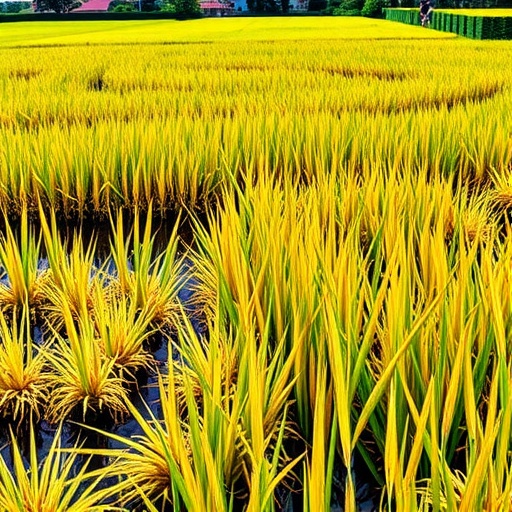
The interconnection between climate change and agricultural production is becoming increasingly pronounced, making it imperative for agricultural scientists and practitioners to explore innovative strategies for ensuring sustainable food sources. A recent study authored by Biswal, Faisal, and Swain, published in Discover Plants, delves into climate-resilient agricultural strategies focusing specifically on rice and potato production. As staple crops that feed a significant portion of the global population, these crops are critical to food security, and understanding how to enhance their resilience to climate change is vital.
The research emphasizes the need for agricultural practices to adapt to changing environmental conditions. The study is a comprehensive multi-scale review that integrates findings from various regions and practices, providing a holistic view of how rice and potato farming can evolve amidst climatic challenges. Rice and potatoes, being highly sensitive to temperature fluctuations and moisture variability, confront significant risks as climate patterns continue to shift.
One of the standout features of this research is its focus on both micro and macro agricultural strategies. At the micro-level, methods such as the introduction of heat-resistant varieties of rice and utilizing drought-tolerant potato strains were explored. These innovations can significantly enhance yield stability in the face of unpredictable weather patterns, ensuring that farmers can still produce food even when conditions are less than ideal.
In addition to exploring crop varieties, the study also emphasizes the importance of soil health. Healthy soils are the backbone of resilient agriculture. By implementing practices such as cover cropping, crop rotation, and reduced tillage, farmers can improve the soil’s ability to retain moisture and nutrients. This not only aids in crop production but also enhances the agricultural ecosystem, promoting biodiversity and reducing reliance on chemical inputs.
Furthermore, the researchers called attention to the potential of integrated pest management (IPM) as a sustainable agricultural strategy. With climate change potentially altering pest populations and disease cycles, IPM offers a flexible approach that can be adapted to varying conditions. By combining biological controls, cultural practices, and judicious use of pesticides, farmers can maintain crop health while minimizing environmental impact.
On a broader scale, the study also addresses policy frameworks essential for fostering climate-resilient agricultural practices. Governments and agricultural institutions have a crucial role in supporting farmers by investing in research and development for resilient varieties, providing education on best practices, and offering financial incentives for adopting sustainable methods. Such policies can create an enabling environment where farmers can innovate and implement climate-smart practices.
Moreover, the study highlights the importance of community engagement in the adoption of these strategies. Working together, farmers can share knowledge and experiences, facilitating a more rapid implementation of climate-resilient practices in agricultural systems. This grassroots approach not only empowers individual farmers but enhances the collective resilience of farming communities.
The water resource management aspect is another critical element discussed in the study. With increasing evidence of fluctuating rainfall patterns and extreme weather events, effective water management strategies are paramount. Techniques such as rainwater harvesting and drip irrigation can maximize water efficiency, ensuring that crops receive adequate hydration even in prolonged dry spells.
In their analysis, the authors also examined climate-smart technologies. These innovations, ranging from precision agriculture to digital farming tools, can provide real-time data that farmers need to make informed decisions. By utilizing technology, farmers can monitor climatic conditions, pest outbreaks, and soil health more accurately, allowing them to respond promptly to any emerging issues.
As part of this comprehensive review, a compelling narrative emerges around traditional knowledge and its integration with modern agricultural practices. Indigenous farming techniques that have stood the test of time may hold invaluable lessons for modern practices. By blending these traditional methods with contemporary agricultural science, a more robust framework for food production can be established.
The benefits of these climate-resilient practices extend beyond the fields. By enhancing agricultural sustainability, communities can improve their economic stability and reduce their vulnerability to climate shocks. Improved crop resilience leads to more stable market prices and food availability, directly influencing the livelihoods of farmers and their families.
Ultimately, the pathway to achieving climate-resilient agricultural systems for rice and potato production will require concerted action from all stakeholders involved in the agricultural value chain. From researchers and policymakers to farmers themselves, everyone has a part to play in driving the transformation needed to adapt to a changing environment.
In conclusion, the findings of the study by Biswal et al. offer a roadmap for navigating the complex interplay between climate change and agriculture. By embracing innovative strategies, fostering community engagement, investing in technology, and prioritizing sustainability, the global agricultural community can better prepare for the challenges that lie ahead. While the threats posed by climate change are formidable, the potential for resilience is equally significant, providing hope for the future of rice and potato production.
Biswal, P., Faisal, A., Swain, D.K. et al. Climate-resilient agricultural strategies for sustainable rice and potato production: a multi-scale review.
Discov. Plants 2, 247 (2025). https://doi.org/10.1007/s44372-025-00336-8
Cite Scienmag News
Alan Morgan. (August 30, 2025). Climate-Resilient Approaches for Sustainable Rice and Potato. Scienmag. https://scienmag.com/climate-resilient-approaches-for-sustainable-rice-and-potato/
Alan Morgan. "Climate-Resilient Approaches for Sustainable Rice and Potato." Scienmag, 30 August 2025, https://scienmag.com/climate-resilient-approaches-for-sustainable-rice-and-potato/. Accessed 4 September 2026.
Alan Morgan. "Climate-Resilient Approaches for Sustainable Rice and Potato." Scienmag. August 30, 2025. https://scienmag.com/climate-resilient-approaches-for-sustainable-rice-and-potato/


