


Australia’s ski industry is at risk of major disruptions and shorter seasons if the current level of climate pollution continues, according to new modelling from Protect Our Winters Australia (POW) and The Australian National University (ANU).

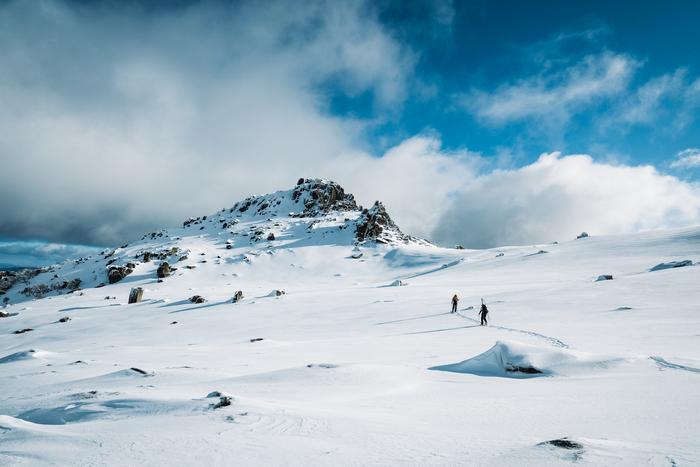
Credit: Must credit: Matt Wiseman/Protect Our Winters
Australia’s ski industry is at risk of major disruptions and shorter seasons if the current level of climate pollution continues, according to new modelling from Protect Our Winters Australia (POW) and The Australian National University (ANU).
The report found the average ski season across all resorts in Australia will be 44 days shorter by 2050 under a mid-greenhouse gas emissions scenario and 55 days shorter under a high-emissions scenario.
It also shows that despite a dramatic decline in snowfall under mid- and high-emissions scenarios, the Australian snow industry would fare significantly better if decisive action is taken to reduce climate pollution in line with a low emissions scenario this decade.
Under a low-emissions scenario, the ski season would be 28 days shorter by 2050, before starting to improve by 2080 if emissions are kept down.
The researchers argue unless urgent climate action is taken, some ski resorts are at risk of closing their doors for good.
Report co-author and ANU researcher Ruby Olsson said in addition to rapidly phasing out fossil fuels and adopting renewable energy systems like wind and solar, support measures are needed to help ski resorts stand resilient in the face of climate change and help the communities that depend on the Australian Alps.
“We need to support vulnerable resorts to diversify into year-round tourism. This could include a coordinated approach between state governments, assisted by the Australian Alps Liaison Committee or Australian Alps Ministerial Council, to support those ski resorts that are most at risk,” she said.
“The more we can limit the impacts of climate change by reducing greenhouse gas emissions, the less expensive adaptation by businesses, communities, and the environment will be and the more options we will have.
“Waiting to act increases the risk of resort closure or species extinction. Resort closures and extinctions are difficult or impossible to undo. So, this decade is critical in terms of taking urgent climate action.”
Protect Our Winters Australia Director and Lead Advocate Sam Quirke said: “The ski season last year was tough, with minimal snowfall and some resorts having to shut their doors early. This report shows that we’ll see that happening more and more frequently, as ski seasons become more erratic and harder to predict due to global warming, until we do something about it.”
The researchers argue the health of the Australian Alps is critical to Australia’s agricultural needs and water security.
According to the report, snow-melt water runoff provides an average of 9,600 gigalitres of water per year into the Murray-Darling Basin, which is around 29 per cent of the Basin’s total annual flows. At the same time, climate change will directly reduce rainfall in the Australian Alps by five to 24 per cent by 2050 and indirectly reduce catchment yield through ecological changes.
Co-author Professor Adrienne Nicotra from ANU, who is also Director of the Australian Mountain Research Facility, said climate change is already having a significant impact on the native animals and plants that call the Australian Alps home.
“As well as keeping fossil fuels in the ground to prevent devastating climate change, we need investment that brings together mountain scientists, policy makers, resort owners and Alpine communities to map out a plan that sees them adapt,” Professor Nicotra said.
The full report is available on the Protect Our Winters Australia (POW) website.
Method of Research
Computational simulation/modeling
Subject of Research
Not applicable
Article Title
Our Changing Snowscapes: Climate Change Impacts and Recommendations for the Australian Alps
Article Publication Date
5-Jun-2024
Cite Scienmag News
Sloane Callahan. (June 6, 2024). Climate crisis puts Australia’s ski industry on slippery slope, but not all hope is lost. Scienmag. https://scienmag.com/climate-crisis-puts-australias-ski-industry-on-slippery-slope-but-not-all-hope-is-lost/
Sloane Callahan. "Climate crisis puts Australia’s ski industry on slippery slope, but not all hope is lost." Scienmag, 6 June 2024, https://scienmag.com/climate-crisis-puts-australias-ski-industry-on-slippery-slope-but-not-all-hope-is-lost/. Accessed 4 September 2026.
Sloane Callahan. "Climate crisis puts Australia’s ski industry on slippery slope, but not all hope is lost." Scienmag. June 6, 2024. https://scienmag.com/climate-crisis-puts-australias-ski-industry-on-slippery-slope-but-not-all-hope-is-lost/

