


In a groundbreaking study published in Cell Death Discovery, Chen and colleagues have shed new light on the molecular mechanisms underpinning drug resistance in cervical cancer cells, illuminating a novel pathway that could redefine future therapeutic strategies. Their research centers on the intricate relationship between CLC3 and V-ATPase, two proteins that intimately regulate lysosomal function—crucial organelles responsible for degrading cellular debris and mediating drug sequestration. This revelation not only deepens our understanding of cellular resistance mechanisms but also highlights potential targets for overcoming the persistent challenge of cisplatin resistance, a major hurdle in effective cervical cancer treatment.
Cisplatin, a platinum-based chemotherapeutic agent, remains a cornerstone in the management of various cancers, including cervical carcinoma. Despite its initial efficacy, many cancer cells develop resistance, leading to treatment failure and relapse. Resistance mechanisms are multifaceted, involving changes at genetic, epigenetic, and metabolic levels. A key mechanism involves the modulation of lysosomal degradation pathways, which can sequester and inactivate chemotherapeutic agents before they inflict fatal damage on cancer cells. Chen et al.’s work dissects this lysosomal contribution, focusing on the regulatory roles of CLC3 and its impact on V-ATPase function.
The CLC3 protein belongs to a family of chloride channels known to mediate ion transport across cellular compartments. Its precise role in cancer cells’ adaptive responses has remained elusive until this study highlighted its critical function in lysosomal acidification—a process essential for the optimal degradation capacity of lysosomes. The study demonstrates that CLC3 regulates V-ATPase, a proton pump responsible for acidifying lysosomes, thereby enhancing their ability to degrade cisplatin molecules effectively. This acidification process not only aids in drug inactivation but also facilitates lysosomal exocytosis, thereby expelling cytotoxic agents from cancer cells.
Central to this research is the crosstalk between CLC3-mediated chloride ion flux and V-ATPase-driven proton pumping. The investigators found that CLC3 modulates the activity of V-ATPase, influencing lysosomal pH and consequently adjusting the degradative efficiency of these organelles. This mechanistic insight reveals that CLC3 acts as a regulatory switch, fine-tuning lysosomal acidity to optimize the degradation of cisplatin and consequently enhance drug resistance. Their biochemical assays and cellular imaging techniques vividly illustrate how disrupting CLC3 expression diminishes V-ATPase activity, leading to lysosomal alkalinization and increased sensitivity of cervical cancer cells to cisplatin.
These findings bear significant clinical implications, especially as drug resistance severely limits the success of cisplatin-based chemotherapy in cervical cancer, which remains a global health burden, particularly in low-resource settings. By targeting the CLC3-V-ATPase axis, future therapies might circumvent the lysosomal shielding effect utilized by cancer cells, restoring cisplatin’s cytotoxicity. This concept introduces a promising therapeutic paradigm where modulation of lysosomal physiology could be exploited to sensitize drug-resistant tumors.
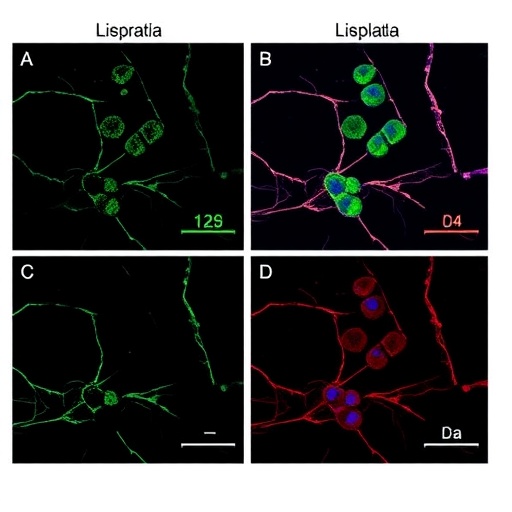
Delving deeper into the molecular ramifications, Chen and co-authors employed sophisticated gene knockdown experiments combined with pharmacological inhibitors to unravel the contributions of CLC3 to V-ATPase regulation. These interventions led to impaired lysosomal acidification and reduced cisplatin degradation, which in turn augmented the drug’s cytotoxic efficacy. The use of high-resolution confocal microscopy further revealed that CLC3 localizes predominantly to lysosomal membranes, co-localizing with V-ATPase subunits, thereby confirming its direct physical and functional associations within these critical organelles.
Moreover, this study explores the downstream cellular effects triggered by altered lysosomal function mediated through CLC3. It appears that disrupting this axis not only sensitizes cancer cells to chemotherapy but also influences autophagic flux, a related cellular degradation pathway often implicated in tumor survival under stress. The authors speculate that modulating CLC3 activity may simultaneously hamper autophagic defenses, pushing cancer cells toward apoptosis when exposed to cisplatin.
Understanding these intricate cellular processes has been facilitated by novel biosensor technologies employed in this research, which enabled precise pH measurements within lysosomes and real-time tracking of cisplatin accumulation and degradation. Such technological innovations offer unprecedented insight into subcellular dynamics and equip researchers with powerful tools to dissect cancer cell biology at a granular level.
The significance of this study extends beyond cervical cancer, as the principles governing lysosomal regulation and drug resistance are likely conserved across various tumor types. Cancer cells often exploit lysosomal pathways to evade chemotherapy-induced death. Targeting ion channels like CLC3 might thus represent a generalized approach to overcome chemoresistance, reinvigorating cytotoxic regimens stalled by cellular defense mechanisms.
Crucially, the translational potential of these findings warrants urgent exploration in clinical settings. While current therapeutic options targeting lysosomal function remain limited, the identification of CLC3 as a master regulator opens avenues for drug development. Small molecules or biologics designed to inhibit CLC3 could synergize with cisplatin, improving patient outcomes by dismantling lysosomal protective barriers.
This study also raises intriguing questions about the broader physiological roles of CLC3 and V-ATPase in normal tissues. Given their ubiquitous presence in cellular ion homeostasis and acid-base balance, targeted modulation must be cautiously developed to avoid detrimental systemic effects. The complexity of tumor microenvironments and heterogeneity among cervical cancer subtypes further complicates direct clinical application.
Despite these challenges, Chen et al.’s research represents a paradigm shift in the understanding of chemoresistance mechanisms. By unraveling the crosstalk between chloride channels and proton pumps within lysosomes, this study unveils a novel biological nexus critical for cancer cell survival under therapeutic stress. It underscores how subcellular ion transporters orchestrate organelle function, influencing cancer progression and drug responsiveness in hitherto unappreciated ways.
Future directions inspired by this work will likely involve integrating CLC3 antagonists within combination therapy regimens, evaluating their efficacy and safety in preclinical models, and developing biomarkers to identify patients most likely to benefit. Additionally, expanding investigations into how this regulatory axis interfaces with other transporters and signaling pathways could provide a holistic view of lysosomal adaptation in cancer.
In summary, Chen and colleagues deliver a highly compelling narrative linking CLC3 to V-ATPase control, lysosomal acidification, and cisplatin resistance in cervical cancer. This research paves the way toward innovative strategies to subvert cancer cell defenses, offering hope for improved therapeutic success against a disease that continues to afflict millions worldwide. As the scientific community races to translate these findings, the prospect of overcoming one of chemotherapy’s most formidable obstacles grows ever brighter.
Cite Scienmag News
Nathaniel Bowman. (April 14, 2026). CLC3 Boosts Lysosomal Degradation, Driving Cisplatin Resistance. Scienmag. https://scienmag.com/clc3-boosts-lysosomal-degradation-driving-cisplatin-resistance/
Nathaniel Bowman. "CLC3 Boosts Lysosomal Degradation, Driving Cisplatin Resistance." Scienmag, 14 April 2026, https://scienmag.com/clc3-boosts-lysosomal-degradation-driving-cisplatin-resistance/. Accessed 4 September 2026.
Nathaniel Bowman. "CLC3 Boosts Lysosomal Degradation, Driving Cisplatin Resistance." Scienmag. April 14, 2026. https://scienmag.com/clc3-boosts-lysosomal-degradation-driving-cisplatin-resistance/


