


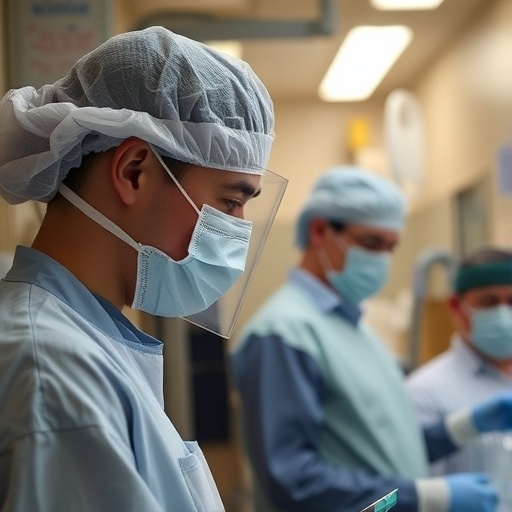
Recent investigative research reveals alarming formaldehyde exposure levels in National Health Service (NHS) pathology departments across the United Kingdom, raising severe concerns about occupational health risks for thousands of workers. These findings, published in the esteemed journal Occupational & Environmental Medicine, are the culmination of a comprehensive analysis based on Freedom of Information (FOI) requests made to NHS Trusts across the UK. Despite the well-documented carcinogenic properties of formaldehyde, many pathology labs continue to experience poor monitoring and insufficient exposure control, exposing staff to potentially harmful airborne concentrations regularly.
Formaldehyde, a widely used human tissue preservative in pathology, is now classified as a known carcinogen by numerous health agencies. The study reveals that airborne formaldehyde levels often exceed recommended regulatory limits designed to minimize employee exposure. Notably, seven out of ten NHS pathology departments reported airborne formaldehyde concentrations surpassing the European Union’s 8-hour workplace exposure limit of 0.3 parts per million (ppm). This high frequency of exposure surpassing EU standards spotlights the failure of existing monitoring protocols within NHS facilities.
The urgency of the findings is heightened by an important backdrop: after the United Kingdom’s departure from the European Union in 2020, the country retained a significantly higher permissible formaldehyde exposure limit of 2 ppm for both short-term and long-term durations. This divergence from the stricter EU regulatory thresholds means NHS staff in the UK are essentially operating under less protective occupational safety standards, even as mounting scientific evidence emphasizes the risks inherent to formaldehyde inhalation at lower concentrations.
In order to quantify exposure rates more precisely, researchers submitted FOI requests to 122 NHS Trusts encompassing the entirety of the UK—comprising England, Scotland, Wales, and Northern Ireland. These requests asked for detailed data on formaldehyde airborne monitoring over a full 12-month period (2024-25), aiming to discern patterns in how frequently formaldehyde levels were assessed and whether measurements adhered to any consistent schedule. Alongside air monitoring data, labs also reported the volume of surgical specimens processed annually, providing context for potential sources of formaldehyde emissions.
The response rate to these FOI requests was remarkable, with all NHS Trusts replying and the majority (85%) providing complete 12-month monitoring records for 117 different pathology laboratories nationwide. Cumulatively, researchers analyzed an extensive dataset encapsulating 1,715,516 distinct formaldehyde monitoring events. Laboratories reported handling an average annual caseload of nearly 37,000 surgical specimens, underscoring the volume of biological processing occurring in these ostensibly hazardous environments.
However, the frequency of formaldehyde monitoring in these vital clinical settings was woefully inadequate. Approximately 73% of pathology labs conducted formaldehyde monitoring once a week or less, with 15% only conducting quarterly assessments and a concerning 4% performing airborne measurements just once per year. Such infrequent sampling is demonstrably insufficient to ensure effective exposure controls and safeguard worker health, especially given the regular presence of formaldehyde in these facilities.
Moreover, the results expose serious gaps in the control of airborne formaldehyde concentrations. While none of the surveyed sites exceeded the UK-specific long- and short-term exposure limits of 2 ppm, nearly one-third of sites reported at least one instance in the past year where formaldehyde levels surpassed this threshold. Meanwhile, a significant 70% of labs frequently exceeded the more stringent EU long-term exposure limit of 0.3 ppm, revealing widespread non-compliance with exposure levels proven to mitigate cancer and other health risks.
A growing body of toxicological evidence points to formaldehyde’s broad-ranging and deleterious health effects well below the thresholds currently maintained in the UK. Chronic inhalation of formaldehyde has been conclusively linked with respiratory illnesses, reproductive harm, and elevated risks of cancers affecting the nasal cavity, throat, and hematologic systems such as leukemia. Emerging epidemiological studies further suggest possible associations between formaldehyde exposure and neurodegenerative disorders including motor neuron disease and cognitive decline, amplifying the urgent need for robust protective strategies.
While the study’s focus lies within the healthcare sector, the implications of these findings ripple far beyond NHS labs. Formaldehyde exposure is pervasive in multiple industries including manufacturing, construction, and chemical processing, affecting tens of thousands of workers across diverse occupational settings throughout the UK. Therefore, the researchers emphasize that the findings resonate broadly and demand cross-sector attention to occupational health hazards presented by this potent chemical.
The research team thus calls upon national regulatory bodies for immediate and decisive action to overhaul formaldehyde exposure standards within NHS pathology departments. Proposed interventions include modernizing laboratory infrastructure to minimize emissions, instituting rigorous and frequent personal exposure monitoring, enhancing employee education regarding formaldehyde risks and safe laboratory practices, guaranteeing access to appropriate personal protective equipment, and establishing management accountability frameworks. Crucially, this overhaul demands external oversight by regulatory agencies such as the Health and Safety Executive (HSE) to enforce effective compliance.
Commentary accompanying the research highlights certain methodological limitations inherent in the FOI material. The editorial notes deficiencies in the data regarding sampling and analytical techniques, including ambiguity over whether samples were collected via personal or stationary monitors and lacking details on sampling durations. Despite these constraints, exposure assessments strongly implicate the suboptimal control of formaldehyde in NHS labs and the failure to adhere to the “as low as reasonably practicable” (ALARP) principle mandated under the UK Control of Substances Hazardous to Health (COSHH) Regulations.
The collective weight of evidence presented demands the urgent development and institution of standardized guidelines specifically targeting the monitoring and control of formaldehyde exposures within the NHS. Additionally, aligning UK workplace exposure limits with those prescribed by the European Union would mark a significant improvement in protecting frontline pathology workers, bringing regulation into coherence with contemporary scientific understanding of formaldehyde’s toxicity.
Ultimately, this exhaustive study reveals a pressing occupational health crisis hidden “under the microscope” in NHS pathology departments: an avoidable but pervasive threat posed by formaldehyde emissions due to inadequate monitoring, lax regulatory standards, and insufficient protective measures. Without swift national regulatory intervention and a cultural shift toward stringent exposure control, thousands of frontline healthcare workers will continue to face unnecessary risks in laboratories critical to patient diagnosis and care.
News Publication Date: 9-Jun-2026
Web References: http://dx.doi.org/10.1136/oemed-2025-110545
Cite Scienmag News
Nathaniel Bowman. (June 10, 2026). Chronic Exposure to Hazardous Formaldehyde Levels Threatens Health of Thousands of NHS Workers. Scienmag. https://scienmag.com/chronic-exposure-to-hazardous-formaldehyde-levels-threatens-health-of-thousands-of-nhs-workers/
Nathaniel Bowman. "Chronic Exposure to Hazardous Formaldehyde Levels Threatens Health of Thousands of NHS Workers." Scienmag, 10 June 2026, https://scienmag.com/chronic-exposure-to-hazardous-formaldehyde-levels-threatens-health-of-thousands-of-nhs-workers/. Accessed 4 September 2026.
Nathaniel Bowman. "Chronic Exposure to Hazardous Formaldehyde Levels Threatens Health of Thousands of NHS Workers." Scienmag. June 10, 2026. https://scienmag.com/chronic-exposure-to-hazardous-formaldehyde-levels-threatens-health-of-thousands-of-nhs-workers/


