


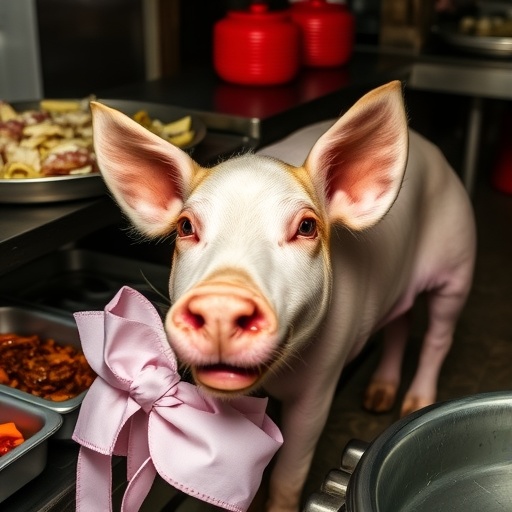
Pork has become a cornerstone of dietary preferences in China, accounting for over 60% of the meat consumed across the nation. While this high consumption rate supports the culinary traditions of the populace, it simultaneously triggers significant environmental challenges that have remained unresolved for years. The overwhelming demand for pork has led to the production of approximately 3.8 billion tons of pig manure each year, which, when converted into organic fertilizer, raises serious concerns about heavy metal contamination, particularly copper toxicity.
Recent research conducted by a collaborative team from Fujian Normal University in China and the University of South Australia has illuminated a potential pathway to address this creeping environmental issue. The study introduces an innovative solution: the incorporation of green-synthesized iron nanoparticles (G-nFe) into pig manure treatment processes. This approach holds promise in neutralizing excessive copper compounds in pig manure, which can otherwise pose a toxic threat to agricultural ecosystems.
Copper is a necessary nutrient for livestock and is routinely added to pig feed to enhance growth. However, the excessive accumulation of bioavailable copper in the agricultural cycle threatens plant health, contaminates soil and water, and presents risks to human health. As pig farming expands to satisfy the nutritional needs of a burgeoning population of 1.4 billion individuals, the challenge of managing the resultant manure and sewage has escalated, complicating efforts to comply with existing regulations that already limit copper concentrations in pig feed.
According to the findings, the experimental application of G-nFe to pig manure composting led to a notable reduction in various forms of copper toxicity. Measurements indicated that exchangeable copper dropped by 66.8%, while carbonate-bound copper diminished by 47.5%, and deposit of copper in iron-manganese oxides was reduced by 15.4%. This material change signifies a pivotal shift, as the transformation of free copper into a less bioavailable form drastically reduces its potential uptake by crops.
While the initial stages of testing revealed an uptick in residual copper levels—an increase of one-third during the first five days of composting—subsequent observations showed an overall decline of over 60.9% throughout the complete composting period. This temporal dynamic suggests an essential phase in the composting process in which the G-nFe effectively binds with copper, mitigating its adverse environmental effects.
The implications of this research are far-reaching. China is not only the world’s largest pork producer, processing around 628 million pigs annually, but the nation also grapples with the environmental repercussions of poorly managed pig manure. Approximately half of the 3.8 billion tons of generated manure undergoes inadequate treatment, introducing heavy metals and organic pollutants into the environment. As contamination extends its impact, it has become increasingly evident that pig manure, traditionally valued as an economical organic fertilizer, now represents a significant concern due to its heavy metal content.
Green-synthesized iron nanoparticles have made headlines in various environmental remediation efforts due to their low toxicity, cost-effectiveness, and exceptional absorption properties. Research into their potential applications within composting frameworks marks a vital advancement. The integration of such nanoparticles in organic waste management systems could pave the way for sustainable farming practices that effectively manage both nutrient availability and environmental integrity.
As Associate Professor Gary Owens notes, this research marks a significant stride toward combating heavy metal pollution in agricultural waste. The innovative use of green-synthesized iron nanoparticles not only enhances the safety standards of composted pig manure but also aligns with contemporary demands for more sustainable agricultural methodologies. The focus is not merely on addressing copper levels but also on providing a roadmap for integrating eco-friendly practices into livestock management strategies.
Looking ahead, the researchers aim to explore the efficiency of G-nFe in larger-scale composting systems, utilizing fresh pig manure. Their objective is to engage various stakeholders in the livestock and composting industries, advocating for the adoption of this promising remediation technique. The successful implementation of this approach could signify a transformative moment in the pursuit of sustainable agriculture, addressing not only the burgeoning challenges in waste management but also contributing positively to crop yields.
The publication of their findings in the journal Science of the Total Environment has already begun to circulate among policymakers, eco-activists, and agricultural stakeholders. This attention is critical as it underscores the urgency of addressing the potential health risks associated with heavy metal presence in agricultural products and soil systems. The pursuit of scientific solutions such as these provides hope for balancing the food security needs of the nation with the environmental integrity of agricultural practices.
In summary, the discovery of green-synthesized iron nanoparticles as a remedial agent in mitigating copper toxicity in pig manure signifies an amalgamation of innovation and environmental stewardship. It highlights the profound need for research-driven solutions to complex problems presented by large-scale livestock farming. As agricultural practices evolve, methods that safeguard both crop productivity and environmental safety will be crucial, paving the way for a more sustainable future.
—
Cite Scienmag News
Courtney Benton. (March 17, 2025). Chinese Cuisine’s Abundant Pork Comes at a Significant Environmental Cost. Scienmag. https://scienmag.com/chinese-cuisines-abundant-pork-comes-at-a-significant-environmental-cost/
Courtney Benton. "Chinese Cuisine’s Abundant Pork Comes at a Significant Environmental Cost." Scienmag, 17 March 2025, https://scienmag.com/chinese-cuisines-abundant-pork-comes-at-a-significant-environmental-cost/. Accessed 5 September 2026.
Courtney Benton. "Chinese Cuisine’s Abundant Pork Comes at a Significant Environmental Cost." Scienmag. March 17, 2025. https://scienmag.com/chinese-cuisines-abundant-pork-comes-at-a-significant-environmental-cost/


