


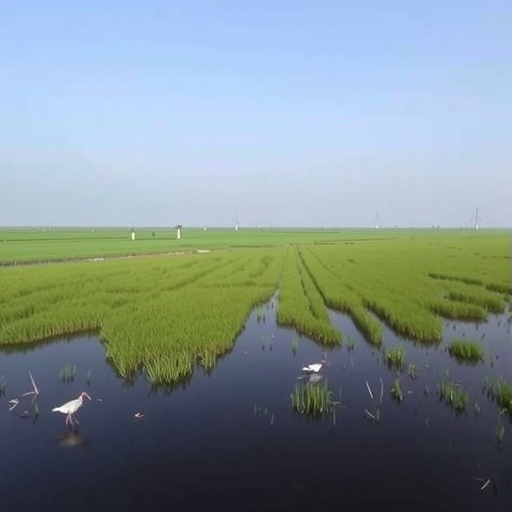
In a groundbreaking study that sheds light on the environmental dynamics of China, researchers have uncovered persistent vegetation greening trends across the nation’s wetlands. This in-depth investigation, conducted by a team led by Ren Y., Mao D., Wang T., and their colleagues, was published in the journal Commun Earth Environ. The findings reveal significant ecological changes taking place in these vital ecosystems, showing that wetlands are experiencing an unprecedented shift towards increased vegetative cover. This greening phenomenon raises crucial questions about climate resilience, biodiversity, and the long-term health of these ecosystems.
Wetlands are often referred to as the “lungs of the earth,” playing a pivotal role in carbon storage, water filtration, and providing habitat for countless species. They are crucial for maintaining the overall health of our planet’s ecological balance. The research highlights how these areas in China are undergoing transformative changes, with vegetation density and diversity on the rise. This shift is largely attributed to a combination of climate change, land-use policies, and concerted conservation efforts in recent years.
The study utilized a variety of satellite imagery and remote sensing technology to assess vegetation trends over an extended period. By analyzing data from these high-resolution images, the researchers were able to accurately gauge the extent of greening and its implications for the surrounding ecosystem. The findings indicate that from 2000 to 2020, a significant increase in vegetation cover has been observed, suggesting a shift that may have broader ramifications for not just local, but global climate patterns as well.
One of the remarkable aspects of the research is the varied response of different wetland types to environmental changes. Coastal wetlands, in particular, have exhibited a remarkable resilience to rising sea levels and increased salinity. Their capacity to adapt illustrates a potential blueprint for ecosystem management in the face of climate adversities, making them a key focus for future conservation efforts. As these wetlands thrive, they not only contribute to carbon sequestration but also provide critical habitats for numerous migratory bird species and other wildlife.
The research highlights the essential role of governmental policy and community involvement in fostering this positive trend. The authors emphasize that coherent policies aimed at wetland restoration and protection have provided a supportive framework for natural recovery processes. In many areas, restrictions on draining wetlands and enhancing water management practices have created a conducive environment for vegetation to flourish, illustrating the powerful impact that human intervention can have when aligned with ecological principles.
However, it is essential to approach this greening trend with a critical eye. While it is tempting to view the findings as wholly positive, the researchers caution that not all changes within wetland environments lead to increased biodiversity. Some invasive species may thrive under these new conditions, potentially undermining the rich ecological tapestry of native species that wetlands support. This finding underscores the complex interplay between climate change, anthropogenic influences, and ecological health — a relationship that scientists are still working to fully understand.
The study highlights the significance of interdisciplinary collaboration in addressing these complex environmental issues. By combining expertise in ecology, remote sensing technology, and policy analysis, the researchers were able to deliver a comprehensive overview that not only informs ongoing debates in environmental science but also serves as a crucial reference for policymakers. As climate change continues to present challenges worldwide, insights from this research could inform more effective strategies for wetland management and biodiversity conservation.
Furthermore, the implications of this study extend beyond national borders. Wetlands are a global phenomenon, and the processes observed in China may serve as a microcosm of broader ecological trends occurring worldwide. The findings could inspire similar research and conservation initiatives in other countries, as the fight against climate change requires coordinated global action. As scientific communities gather to better understand these trends, the hope is that lessons learned from China’s wetlands will resonate and influence environmental stewardship elsewhere.
Looking ahead, it remains essential for scientists to continue monitoring these changes over time. The particularly adaptive nature of these ecosystems makes them an ideal subject for ongoing research, providing invaluable data points that can enhance our understanding of climate resilience. Future investigations could focus on the long-term sustainability of these greening trends and their potential to pivot in response to future environmental shocks or shifts in human activity.
In conclusion, the persistent greening trends observed in China’s wetlands represent not only a hopeful sign amidst the typical bleak narratives surrounding climate change but also a call to action. The research emphasizes the importance of sustained conservation efforts and the need for a collaborative approach amongst scientists, policymakers, and local communities. By fostering an environment where wetlands can thrive, we are not only protecting biodiversity but also contributing to the global fight against climate change, ensuring a healthier planet for future generations.
The potential of wetlands to act as ecological buffers illustrates their relevance in today’s environmental landscape. As the research continues to unfold, it is clear that wetlands will remain at the forefront of biodiversity conservation strategies, offering insights that extend far beyond their geographical boundaries. For those invested in understanding and confronting ecological change, the implications of these findings cannot be overstated.
In a world increasingly impacted by climate change, the ability of China’s wetlands to adapt and thrive serves as a vital success story that emphasizes the critical importance of environmental governance and ecological awareness. Inspired by this research, many will hope to enact similar measures in their regions, propelling a global movement toward conservation that recognizes the irreplaceable value of wetlands in the climate dialogue. As we forge ahead, it is incumbent upon all of us to advocate for the preservation and understanding of these crucial ecosystems.
The ongoing discourse around greening trends in wetlands illustrates a burgeoning field of research ripe with potential that could enable meaningful strides in ecological sustainability. As we adapt to changing climate conditions, we must also acknowledge the lessons offered by nature — lessons reflected in the vibrant resurgence of vegetation across China’s wetlands, a testament to resilience, recovery, and hope.
Ren, Y., Mao, D., Wang, T. et al. Persistent vegetation greening trends across China’s wetlands.
Commun Earth Environ 6, 624 (2025). https://doi.org/10.1038/s43247-025-02628-z
Cite Scienmag News
Margaret Porter. (August 7, 2025). China’s Wetlands Show Lasting Greening Trends. Scienmag. https://scienmag.com/chinas-wetlands-show-lasting-greening-trends/
Margaret Porter. "China’s Wetlands Show Lasting Greening Trends." Scienmag, 7 August 2025, https://scienmag.com/chinas-wetlands-show-lasting-greening-trends/. Accessed 3 September 2026.
Margaret Porter. "China’s Wetlands Show Lasting Greening Trends." Scienmag. August 7, 2025. https://scienmag.com/chinas-wetlands-show-lasting-greening-trends/


