


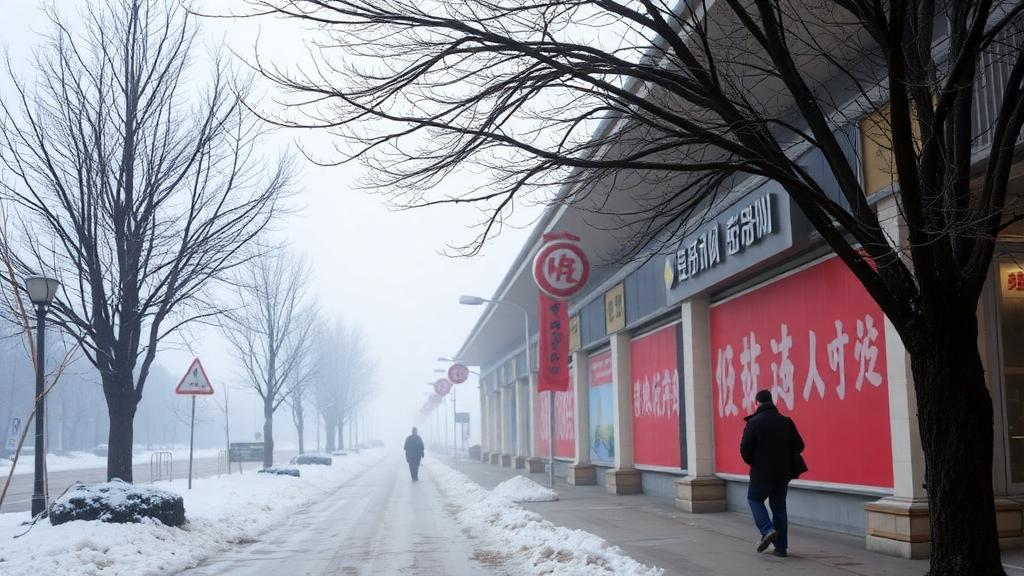
In the ancient city of Xi’an, where winter haze once blanketed the terracotta warriors and the crowded streets of the Fenwei Plain in a gray shroud, the air has quietly changed. A new study published in the journal Environmental Geochemistry and Health offers one of the most detailed looks yet at how China’s sweeping Clean Air Action plan has reshaped the invisible chemistry of winter smog in an inland basin city. The findings are both encouraging and cautionary: levels of the most notorious particle-bound carcinogens have fallen compared with the pre-policy era, yet a related family of oxidized compounds, often overlooked by regulators, surges during haze episodes and now dominates the toxic burden carried on fine particles.
The research team, led by Shun Xiao of Shaanxi Normal University together with colleagues from the Chinese Academy of Sciences and partner institutions, focused on fine particulate matter known as PM2.5, particles smaller than 2.5 micrometers that penetrate deep into the lungs. Suspended on these particles are polycyclic aromatic hydrocarbons, or PAHs, a class of organic molecules formed whenever carbon-based fuels burn incompletely. PAHs include compounds such as benzo[a]pyrene that are classified as probable human carcinogens. But the team went a step further and also measured oxygenated polycyclic aromatic hydrocarbons, or OPAHs, the oxidized derivatives produced when parent PAHs react with ozone, nitrogen oxides, and other atmospheric oxidants. These derivatives have received far less regulatory attention, even though laboratory studies suggest many of them are more mutagenic, more persistent, and more soluble than their parent compounds.
The study’s historical comparison delivered the headline result: wintertime PAH concentrations in Xi’an have generally declined during the years of China’s clean air actions. This is a meaningful signal for a city whose geography works against it. Xi’an sits in a basin on the Guanzhong Plain, hemmed in by the Qinling Mountains to the south and the Loess Plateau to the north. In winter, temperature inversions trap cold, dense air near the surface like a lid on a pot, allowing emissions from heating, traffic, and industry to accumulate for days. That a basin city with such unfavorable dispersion conditions has still seen PAH levels fall suggests that emission controls, rather than favorable weather alone, have driven the improvement.
To understand where the remaining pollution comes from, the researchers applied a statistical source-apportionment technique called positive matrix factorization, or PMF. The method disentangles the chemical fingerprints of different emission sources by analyzing the relative abundances of dozens of individual PAH and OPAH species. The results pointed to a mixed picture, with biomass-burning-related mixed combustion emerging as the single largest contributor. In practical terms, the burning of wood, crop residues, and other solid fuels for residential heating and cooking remains the dominant engine of wintertime PAH pollution in the region, alongside contributions from traffic and industrial sources. This matters because residential solid-fuel combustion is notoriously difficult to regulate: millions of households in northern China still rely on it, and emissions occur at low temperatures that favor the formation of both parent PAHs and their oxygenated derivatives.
One of the most technically intriguing findings concerns what happens during haze episodes. When the researchers compared clear days with heavy pollution episodes, they found that absolute concentrations of both PAHs and OPAHs increased, but the increase was statistically significant only for the OPAHs. The parent PAHs rose, but not in a way that stood apart from normal variability. The chemical profiles also told a story: four- and five-ring PAHs dominated the parent compound profile, while a specific OPAH called benzanthrone, abbreviated BcdPQ, dominated the oxidized fraction. This asymmetry suggests that during stagnant, polluted conditions, atmospheric oxidation processes actively transform PAHs into their oxygenated counterparts, so the toxic chemistry of the haze evolves even as emissions stay roughly constant. Secondary formation, in other words, amplifies the oxidized fraction precisely when people are breathing the most polluted air.
Meteorology emerged as a powerful controlling factor. The team found that pollutant concentrations were strongly associated with synoptic-scale pressure patterns, the large-scale weather systems that determine wind speed, boundary-layer height, and atmospheric stability. When high-pressure systems settle over the region, calm winds and suppressed vertical mixing allow locally emitted pollutants to build up. The analysis of regional transport added another layer: pollution in the basin was dominated by accumulation within the basin itself, combined with short-range transport from industrial zones in northern Shaanxi. This finding has direct policy implications, because it means that even aggressive local controls in Xi’an cannot fully protect the city without coordinated management of upwind industrial emissions across the province.
To translate chemistry into health terms, the researchers calculated toxic-equivalent concentrations, a metric that weights each PAH species by its carcinogenic potency relative to benzo[a]pyrene. During haze periods, these toxic-equivalent concentrations were markedly higher, and, strikingly, the OPAHs, particularly BcdPQ, dominated the toxicity-equivalent burden. This is a result that should make regulators pause. Conventional air quality management targets PM2.5 mass and a short list of priority PAHs, yet the compounds contributing the largest share of the calculated toxic load during the worst pollution episodes may fall outside that list entirely. If oxidized derivatives carry much of the risk, then policies that reduce particle mass without curbing the precursors and oxidation conditions that generate OPAHs may overstate the health benefits achieved.
The team also performed screening-level estimates of the incremental lifetime cancer risk, or ILCR, a standard metric that estimates the additional probability of developing cancer over a lifetime of exposure. The estimates generally remained below the commonly used threshold of one in ten thousand, a level often treated as an upper bound of acceptable risk. However, the risks increased during haze episodes, and the elevation was most pronounced for adults and elderly groups, who breathe larger volumes of air and accumulate greater lifetime exposure. While the screening-level nature of the calculation means the absolute numbers should be interpreted with care, the pattern is clear: the episodes that produce the worst visibility also produce the highest estimated risk, and the most vulnerable populations bear the largest share.
The broader context makes the study timely. China’s Clean Air Action plan, launched in 2013 and strengthened in subsequent phases, has achieved documented reductions in PM2.5 concentrations across much of the country, and recent national bulletins report continued improvement in overall air quality. Yet researchers have begun to warn that the easy gains may be over. Studies from other regions, including the Yangtze River Delta, have documented prolonged winter haze events even in the post-action-plan era, and analyses of decadal PAH trends confirm that source profiles are shifting as coal gives way to biomass burning, gas, and electricity in the residential sector. Xi’an’s experience illustrates this transition: the city’s air is cleaner by the measures that policy was designed to improve, but the residual pollution is increasingly shaped by sources that are diffuse, household-level, and chemically transformed in the atmosphere.
What should happen next, according to the study’s conclusions, is a targeted second wave of controls. The authors argue that stronger measures against residential biomass and other solid-fuel combustion, tighter management of traffic emissions, and explicit attention to the atmospheric formation of OPAHs remain necessary in the Fenwei Plain. That would mean accelerating clean heating conversions in rural households around the basin, coordinating industrial emission controls across northern Shaanxi, and expanding the suite of monitored compounds to include oxygenated derivatives whose toxicity may rival or exceed that of the parent PAHs. For a city that has spent a decade clawing back its winter skies, the message is one of progress with a chemical asterisk: the haze is thinner than it used to be, but what remains of it is, in the most toxic sense, not the same haze at all.
Subject of Research: PM2.5-bound PAHs and OPAHs pollution, sources, and health risks in Xi'an under China's Clean Air Action plan
Article Title: Pollution characteristics and health risks of PAHs and OPAHs in PM2.5 of an inland basin city in China under the influence of the clean air action plan
Article References: Xiao, S., Luo, X., Li, J., Zhang, N., Liu, S., Du, W., Liu, J., & Yang, L. (2026). Pollution characteristics and health risks of PAHs and OPAHs in PM2.5 of an inland basin city in China under the influence of the clean air action plan. Environmental Geochemistry and Health, 48(14), Article 566. https://doi.org/10.1007/s10653-026-03449-5
Image Credits: AI Generated
DOI: 10.1007/s10653-026-03449-5
Keywords: PM2.5, PAHs, OPAHs, haze, Clean Air Action, Xi'an, Fenwei Plain, source apportionment, biomass burning, health risk, toxic equivalency, air quality
Cite Scienmag News
Russell Cooper. (October 5, 2026). China’s Clean Air Push Curbed Winter PAH Pollution, but Hidden Oxidized Toxins Linger. Scienmag. https://scienmag.com/chinas-clean-air-push-curbed-winter-pah-pollution-but-hidden-oxidized-toxins-linger/
Russell Cooper. "China’s Clean Air Push Curbed Winter PAH Pollution, but Hidden Oxidized Toxins Linger." Scienmag, 5 October 2026, https://scienmag.com/chinas-clean-air-push-curbed-winter-pah-pollution-but-hidden-oxidized-toxins-linger/. Accessed 5 October 2026.
Russell Cooper. "China’s Clean Air Push Curbed Winter PAH Pollution, but Hidden Oxidized Toxins Linger." Scienmag. October 5, 2026. https://scienmag.com/chinas-clean-air-push-curbed-winter-pah-pollution-but-hidden-oxidized-toxins-linger/


