Wednesday, October 28, 2026
Science
No Result
View All Result
  • Login
  • HOME
  • SCIENCE NEWS
  • CONTACT US
  • HOME
  • SCIENCE NEWS
  • CONTACT US
No Result
View All Result
Scienmag
No Result
View All Result
Home Science News Chemistry

Chicken Manure Biochar Strips Zinc from Smelter Wastewater at Scale

October 28, 2026
in Chemistry
Bethany Barker
By Bethany Barker Scienmag Editorial Profile - Catalysis
Reading Time: 2 mins read
0
Chicken Manure Biochar Strips Zinc from Smelter Wastewater at Scale

Chicken Manure Biochar Strips Zinc from Smelter Wastewater at Scale

65
SHARES
587
VIEWS
Share on FacebookShare on Twitter
ADVERTISEMENT

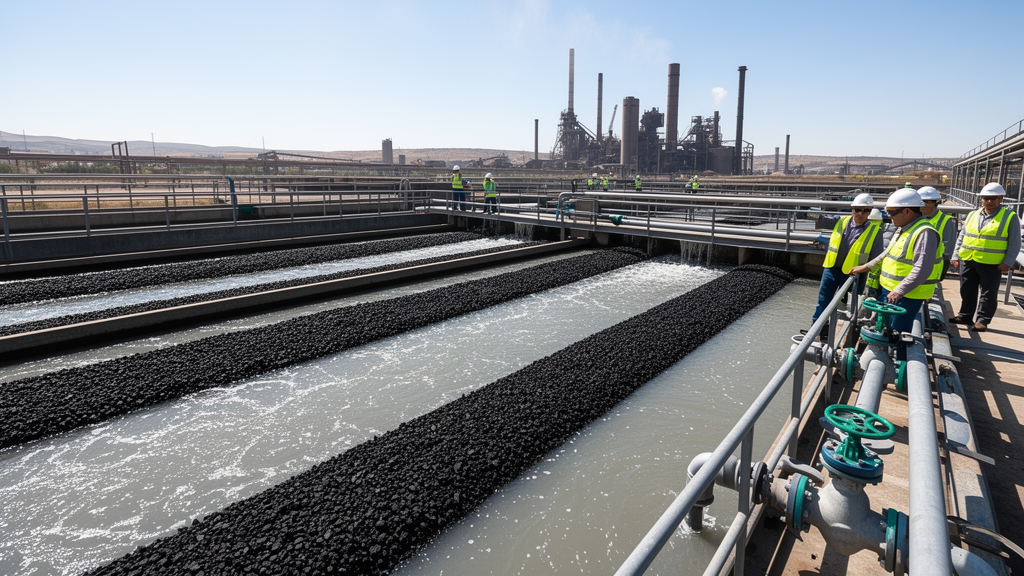
Researchers have shown that biochar made from chicken manure, produced in a large-scale pyrolysis system capable of processing 15 tons of material per day, can remove zinc from real zinc smelter wastewater with high efficiency. In experimental validation using the actual industrial effluent, the unmodified biochar reduced the zinc concentration from 1,871.7 mg/L to 50.3 mg/L, corresponding to a removal efficiency of 97.3%.

The study, published in BMC Chemistry, evaluated the material, termed chicken manure-based biochar or CMBC, under controlled laboratory conditions as well as with real wastewater. In batch adsorption experiments, the maximum experimentally observed zinc adsorption amount was 36.37 mg/g. Kinetic data were better described by the Elovich model, while equilibrium data fit the Langmuir model, indicating favorable adsorption behavior toward zinc ions.

Physicochemical characterization suggested that zinc removal did not rely on a single mechanism. Based on the release of exchangeable cations, ion exchange was estimated to account for 37.4% of the zinc removed. X-ray diffraction analysis and a decrease in dissolved phosphate concentration pointed to the possible formation of zinc-containing phosphate phases, and FT-IR and XPS analyses indicated possible interactions between zinc and oxygen-containing functional groups on the biochar surface.

To identify the conditions that most influence performance, the team used response surface methodology. This analysis identified reaction time, temperature, and biochar dose as statistically significant factors affecting zinc removal, whereas pH was not statistically significant within the range investigated. Under optimized conditions, the predicted removal efficiency was 99.2%, and the experimental validation with real smelter wastewater achieved 97.3%.

The wastewater itself posed a demanding test. The authors state that these findings highlight the potential of unmodified CMBC produced using a large-scale pyrolysis system for treating highly zinc-contaminated industrial wastewater.

The multiple removal pathways identified by characterization may also matter for practical performance. Ion exchange, possible phosphate-phase precipitation, and surface interactions with oxygen-containing functional groups together suggest that the material captures zinc through several concurrent processes rather than a single binding mode, which the authors link to the observed removal behavior.

As with any adsorption study, the reported results reflect the conditions tested. The removal efficiency of 97.3% was achieved under the optimized experimental conditions with the specific wastewater examined, and the 99.2% figure is a model prediction rather than a measured outcome.

For zinc smelters and other metal-processing industries facing stringent limits on zinc in their effluents, the approach represents a candidate technology worth further evaluation.

Subject of Research: Chicken manure-derived biochar for removing zinc from zinc smelter wastewater

Article Title: Large-scale chicken manure-derived biochar for efficient zinc removal from real zinc smelter wastewater

Article References: Lee, J.-I., Im, E.-C., Lee, C.-G., Isinkaralar, K., & Park, S.-J. (2026). Large-scale chicken manure-derived biochar for efficient zinc removal from real zinc smelter wastewater. BMC Chemistry. https://doi.org/10.1186/s13065-026-01950-7

Image Credits: AI Generated

DOI: 10.1186/s13065-026-01950-7

Keywords: biochar, chicken manure, zinc removal, wastewater treatment, pyrolysis, adsorption, heavy metals, smelter wastewater, ion exchange, response surface methodology, Large-scale, chicken

Cite Scienmag News

Bethany Barker. (October 28, 2026). Chicken Manure Biochar Strips Zinc from Smelter Wastewater at Scale. Scienmag. https://scienmag.com/chicken-manure-biochar-strips-zinc-from-smelter-wastewater-at-scale/

Bethany Barker. "Chicken Manure Biochar Strips Zinc from Smelter Wastewater at Scale." Scienmag, 28 October 2026, https://scienmag.com/chicken-manure-biochar-strips-zinc-from-smelter-wastewater-at-scale/. Accessed 28 October 2026.

Bethany Barker. "Chicken Manure Biochar Strips Zinc from Smelter Wastewater at Scale." Scienmag. October 28, 2026. https://scienmag.com/chicken-manure-biochar-strips-zinc-from-smelter-wastewater-at-scale/
Tags: adsorptionBiocharbiochar adsorption capacitybiochar characterization techniqueschickenchicken manureChicken manure biocharheavy metalsindustrial wastewater treatmention exchangeion exchange mechanism in biocharkinetic and equilibrium adsorption modelslarge-scalelarge-scale biochar productionpyrolysispyrolysis of chicken manureresponse surface methodologysmelter wastewatersustainable waste managementwastewater treatmentzinc removalzinc removal efficiencyzinc removal from wastewaterzinc-phosphate formation
Share26Tweet16
Previous Post

When heritage protection ends the practice it meant to save: lessons from Ayutthaya’s waters

Next Post

Farming legacy outlasts drought in wheat soil microbes

Related Posts

Waste-Fed Microbes and Smart Statistics Could Cut Biosurfactant Costs
Chemistry

Waste-Fed Microbes and Smart Statistics Could Cut Biosurfactant Costs

October 28, 2026
Gum-Based Magnetic Hydrogel Shows pH-Controlled Naproxen Release in Lab Tests
Chemistry

Gum-Based Magnetic Hydrogel Shows pH-Controlled Naproxen Release in Lab Tests

October 28, 2026
FDA, EMA and NMPA differ in how they assess radiopharmaceuticals, review finds
Medicine

FDA, EMA and NMPA differ in how they assess radiopharmaceuticals, review finds

October 28, 2026
Cell Study Links RNA Modification WTAP to KDR Protection in Aneurysm Model
Chemistry

Cell Study Links RNA Modification WTAP to KDR Protection in Aneurysm Model

October 28, 2026
Biochar locks carbon in soil for the long haul while stover keeps it cycling
Chemistry

Biochar locks carbon in soil for the long haul while stover keeps it cycling

October 28, 2026
Thixotropic MXene Nanofluid Flow Over an Inclined Cylinder Yields New Irreversibility Map
Chemistry

Thixotropic MXene Nanofluid Flow Over an Inclined Cylinder Yields New Irreversibility Map

October 28, 2026
Next Post
Farming legacy outlasts drought in wheat soil microbes

Farming legacy outlasts drought in wheat soil microbes

  • Mothers who receive childcare support from maternal grandparents show more optimized

    Mothers who receive childcare support from maternal grandparents show more parental warmth, finds NTU Singapore study

    27656 shares
    Share 11059 Tweet 6912
  • University of Seville Breaks 120-Year-Old Mystery, Revises a Key Einstein Concept

    1061 shares
    Share 424 Tweet 265
  • Bee body mass, pathogens and local climate influence heat tolerance

    682 shares
    Share 273 Tweet 171
  • Researchers record first-ever images and data of a shark experiencing a boat strike

    546 shares
    Share 218 Tweet 137
  • Groundbreaking Clinical Trial Reveals Lubiprostone Enhances Kidney Function

    531 shares
    Share 212 Tweet 133
Science

Embark on a thrilling journey of discovery with Scienmag.com—your ultimate source for cutting-edge breakthroughs. Immerse yourself in a world where curiosity knows no limits and tomorrow’s possibilities become today’s reality!

RECENT NEWS

  • Systematic review maps end-of-life psychosocial and spiritual needs in physical disability
  • Text Message Campaign Reached Only a Third of Patients Overdue for Colorectal Cancer Screening
  • FOXO1 Emerges as Candidate Regulator and Biomarker in Hip Dysplasia
  • Regulators, developers and clinicians in Shenzhen voice concerns over medical AI governance

Categories

  • Agriculture
  • Anthropology
  • Archaeology
  • Athmospheric
  • Biology
  • Biotechnology
  • Blog
  • Bussines
  • Cancer
  • Chemistry
  • Climate
  • Earth Science
  • Editorial Policy
  • Marine
  • Mathematics
  • Medicine
  • Pediatry
  • Policy
  • Psychology & Psychiatry
  • Science Education
  • Science News
  • Social Science
  • Space
  • Technology and Engineering

Subscribe to Blog via Email

Enter your email address to subscribe to this blog and receive notifications of new posts by email.

Join 5,151 other subscribers

© 2025 Scienmag - Science Magazine

Welcome Back!

Login to your account below

Forgotten Password?

Retrieve your password

Please enter your username or email address to reset your password.

Log In
No Result
View All Result
  • HOME
  • SCIENCE NEWS
  • CONTACT US

© 2025 Scienmag - Science Magazine

Discover more from Science

Subscribe now to keep reading and get access to the full archive.

Continue reading