

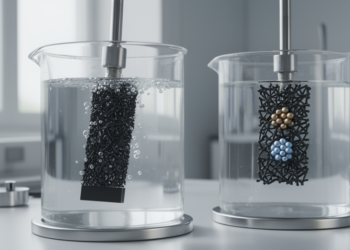
Single- and bimetal nitrogen-doped carbon catalysts show promising laboratory ORR performance
A pyrolysis method produced iron, nickel, manganese and bimetal catalysts supported on nitrogen-doped carbon, with Fe/NC and MnFe/NC showing the ...
A pyrolysis method produced iron, nickel, manganese and bimetal catalysts supported on nitrogen-doped carbon, with Fe/NC and MnFe/NC showing the ...

A systematic review of 156 studies shows that biochar can improve soils, immobilize contaminants and alter greenhouse-gas emissions, but its ...
A laboratory comparison found that rice-husk biochar made at 380 °C retained more total biomass-derived carbon than biochar made at ...
A low-temperature sorbitol-nitrate pyrolysis method produced controllable bismuth oxide polymorphs and one-step composites by adjusting precursor stoichiometry and the gas ...
Spent coffee grounds have been transformed into polysaccharide–protein nanoparticles that encapsulate cocoa flavor, protect vanillin through storage and pyrolysis, and ...
A new review finds that electromagnetic induction heating can dramatically accelerate biomass conversion while improving energy efficiency and product selectivity, ...
A systematic review of 116 studies reveals that coffee-industry residues can be converted into biogas, biochar, and biofuels through pyrolysis ...
Researchers co-pyrolyzed spent lithium-ion battery cathodes and plastic waste into defect-engineered carbon nanotube absorbers that block microwaves at ultrathin thicknesses.
A new comparative review shows that sewage sludge spread on farmland transfers microplastics, PFAS, and pharmaceutical residues to soil through ...
A major review finds that nitrogen-doped biochar made from agricultural waste can outperform commercial activated carbon in capturing antibiotics, dyes, ...

Embark on a thrilling journey of discovery with Scienmag.com—your ultimate source for cutting-edge breakthroughs. Immerse yourself in a world where curiosity knows no limits and tomorrow’s possibilities become today’s reality!