


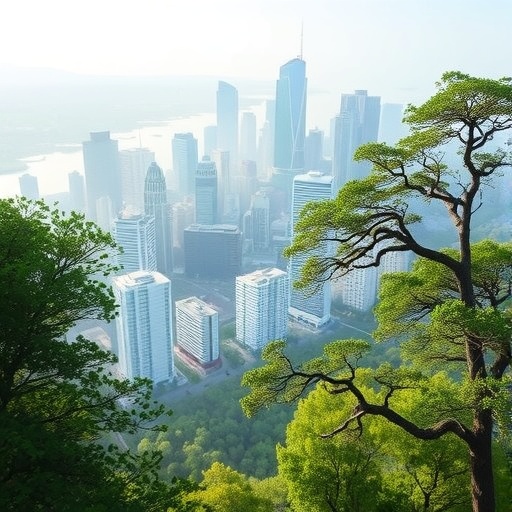
As the relentless march of urbanization reshapes landscapes worldwide, cities are confronting an insidious adversary: rising temperatures. Urban heat islands, driven by heat-absorbing concrete, asphalt, and high-density infrastructure, are escalating the challenges of urban living. In response, urban forests emerge as a critical nature-based solution, offering more than aesthetic relief—they can significantly mitigate temperature increases while boosting the liveability and ecological health of metropolitan areas. Yet, fostering resilient and sustainable urban forests capable of withstanding the pressures of climate change is far from straightforward. Emerging research reveals a complex web of ecological and socioeconomic challenges that threaten their future viability.
Recent studies delve into an intricate array of barriers obstructing the creation and maintenance of robust urban forests. At the heart of these challenges lie four pivotal dimensions: tree species selection, the logistics of tree supply, the lifecycle management encompassing establishment and ongoing maintenance, and finally, community engagement. Each dimension contains nuanced difficulties that, if unaddressed, could undermine decades of progress and investment in urban greenery. However, integrating the deep-rooted wisdom of traditional urban forestry with cutting-edge technological innovations presents an overarching strategy capable of surmounting such obstacles.
Species selection is foundational yet deceptively complex. Urban environments differ vastly from rural or wilderness settings—microclimates, soil compaction, pollution levels, and limited rooting space impose stringent conditions on tree survival. Selecting species that can not only survive but thrive requires detailed knowledge of ecophysiology and urban stress tolerances. Furthermore, genetically diverse populations are essential to buffer against pests, diseases, and climate extremes. Advances in genomics and remote sensing are enlightening this process, enabling urban foresters to make data-driven choices that optimize resilience while maximizing ecological benefits such as carbon sequestration and biodiversity support.
Tree supply chains present a second formidable bottleneck. Unlike natural forests, where regeneration occurs autonomously, urban forest expansion depends heavily on nurseries and vendors capable of providing diverse, healthy saplings at scale. Constraints in propagation techniques, limited species availability, and logistical hurdles all drive up costs and uncertainties. Furthermore, nursery stock often lacks genetic diversity, further compromising long-term resilience. Emerging propagation technologies such as tissue culture, advanced seed banks, and cryopreservation hold promise for expanding the genetic repository available for urban forestry, but their widespread adoption requires coordinated investment and policy support.
Beyond procurement, the establishment and maintenance phase constitutes a costly and resource-intensive barrier. Young urban trees demand meticulous care—adequate irrigation, soil amelioration, pruning, pest management, and protection from physical damage. Particularly in drought-prone or water-scarce cities, irrigation strategies must be efficient and sustainable to avoid exacerbating environmental stress. Here, precision irrigation systems integrated with soil moisture sensors and weather forecasting algorithms are revolutionizing care regimens, decreasing water waste while promoting optimal growth. Similarly, innovations in soil health monitoring and bioamendments offer pathways to enhancing tree vitality amidst urban adversities.
Yet even the best species and supply infrastructures fall short without meaningful community engagement. Urban forests are not static installations; they are dynamic assets shaped by human interactions, values, and stewardship. Social acceptance and involvement drive successful tree planting and maintenance campaigns, fostering a sense of ownership and connection. Incorporating participatory planning, education initiatives, and digital platforms for citizen science dramatically boosts community buy-in. Moreover, recognizing diverse cultural relationships to trees enriches urban forest design, ensuring inclusivity and relevance. Modern social media tools amplify community voices and mobilize action at an unprecedented scale, accelerating urban greening efforts.
Amid these multifaceted barriers, a promising synthesis arises: the convergence of traditional urban forestry foundations with emergent technologies affords a holistic framework to architect resilient, sustainable urban forests. High-resolution satellite imagery combined with artificial intelligence enables constant monitoring of tree health, growth patterns, and environmental stressors, facilitating proactive management. Drone-based assessments allow rapid, cost-effective surveillance of sprawling urban green spaces, detecting early signs of disease or damage. Data analytics integrated with urban planning software can simulate growth scenarios and climate impacts, guiding decision-making with robust predictive capacity.
Climate change adds urgency and complexity to these endeavors. Escalating temperatures, altered precipitation patterns, and intensification of extreme weather events impose unprecedented stress on urban forest ecosystems. Adaptive management strategies are needed that incorporate climate projections into species selection and planting schedules. Genetic enhancement approaches, including the development of drought-tolerant or pest-resistant cultivars, are gaining traction. Moreover, cross-disciplinary collaboration between urban ecologists, climate scientists, horticulturists, social scientists, and policymakers is crucial to harmonizing goals and resources.
Fiscal constraints frequently cast a long shadow over urban forestry initiatives. Budgets allocated for planting and maintenance often compete with other municipal priorities. Innovative financing mechanisms, such as public-private partnerships, green bonds, and ecosystem service payments, are being explored to sustain investments. Demonstrating the multifaceted benefits of urban forests—including carbon offsetting, air quality improvement, stormwater management, and mental health enhancement—reinforces their value proposition to stakeholders and funders alike.
Moreover, regulatory frameworks impact urban forest outcomes. Zoning laws, tree protection ordinances, and land-use policies vary widely, influencing which trees can be planted where and how they are managed. Streamlining regulatory procedures and promoting flexible, context-specific guidelines can facilitate more strategic urban forest growth. Importantly, incorporating urban forests into climate action plans and sustainability goals elevates their priority in municipal agendas.
Beyond immediate ecological and logistical aspects, urban forests also embody social justice considerations. Historically marginalized communities frequently suffer from lack of green space, resulting in disproportionate heat exposure and diminished wellbeing. Equitable distribution of urban trees not only addresses environmental disparities but also enriches social cohesion and cultural identity. Incorporating equity metrics into urban forestry planning ensures that benefits are accessible to all residents, avoiding the pitfalls of green gentrification.
The future of urban forests hinges on an integrative paradigm that marries nature’s resilience with human ingenuity. Leveraging smart sensors, machine learning, and participatory digital tools can optimize tree health monitoring and facilitate rapid response to emerging threats. This connectivity transforms urban forests into living, breathing networks capable of dynamically adapting to shifting climate and social landscapes. Simultaneously, fostering inclusive community involvement anchors these technological advancements in grounded human values.
As cities swell and climates warm, urban forests are not mere luxuries but indispensable infrastructures for sustainable urban life. Success depends on acknowledging and overcoming intricate barriers through interdisciplinary research, innovative technologies, and robust community partnerships. While challenges remain formidable, the convergence of emerging science and citizen activism offers an unprecedented opportunity to cultivate cities where humans and nature coexist harmoniously, securing healthier futures beneath urban canopies.
Cite Scienmag News
Courtney Benton. (May 31, 2025). Challenges and Prospects for Sustainable Urban Forests. Scienmag. https://scienmag.com/challenges-and-prospects-for-sustainable-urban-forests/
Courtney Benton. "Challenges and Prospects for Sustainable Urban Forests." Scienmag, 31 May 2025, https://scienmag.com/challenges-and-prospects-for-sustainable-urban-forests/. Accessed 3 September 2026.
Courtney Benton. "Challenges and Prospects for Sustainable Urban Forests." Scienmag. May 31, 2025. https://scienmag.com/challenges-and-prospects-for-sustainable-urban-forests/


