


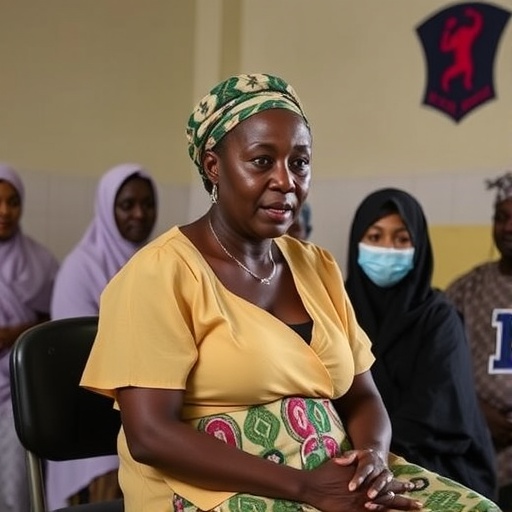
In the challenging landscape of public health in North-Western Nigeria, a groundbreaking study has shed light on the critical issue of cervical cancer among female sex workers (FSWs), a demographic often overlooked in mainstream health initiatives. This pioneering research conducted in Sokoto State brings to the forefront the urgent need for targeted cervical cancer screening programs, especially for vulnerable populations at heightened risk of human papillomavirus (HPV) infections, notably HPV types 16 and 18.
Female sex workers occupy a precarious position in the epidemiology of HPV-related diseases. Their occupational exposure, coupled with limited access to consistent health services, places them at an amplified risk of contracting high-risk HPV strains that are known precursors to cervical cancer. Despite this acknowledged vulnerability, previous data concerning the prevalence of high-risk HPV and corresponding cervical cytological abnormalities among FSWs in Nigeria, particularly in the northwest region, have been scarce. This study addresses that glaring gap by implementing outreach well-woman clinics directly within brothels, essentially taking screening services to the doorstep of the most affected.
Employing a cross-sectional methodology, researchers recruited 165 female sex workers during these innovative outreach clinics. Participants underwent a comprehensive process involving structured questionnaires to capture socio-demographic data and risk factors, followed by cervical smear collections. Advances in diagnostic technology were leveraged through liquid-based cytology (LBC) and real-time polymerase chain reaction (PCR) assays for HPV DNA detection, ensuring high sensitivity and specificity in identifying infections. This methodological rigor set a new standard for conducting epidemiological research within marginalized populations who often face barriers to healthcare access.
The findings are as illuminating as they are concerning. A substantial proportion of the cohort, nearly 73%, consented to undergo cervical cancer screening, highlighting the feasibility and acceptability of outreach clinical services in brothel settings. Among those screened, over half tested positive for HPV types 16 and 18 — strains most notorious for their oncogenic potential. Strikingly, the prevalence of single HPV 16 infections was twice that of HPV 18, and a notable subset exhibited co-infections, underscoring the complexity of HPV epidemiology within this group.
Cervical cytological abnormalities, detected in just over 8% of participants, were predominantly low-grade squamous intraepithelial lesions (LSIL). This finding suggests a window of opportunity for early intervention before the progression to high-grade lesions and eventual malignancy. Interestingly, the age-specific distribution of HPV infection and cytological abnormalities pinpointed the 30–39-year bracket as bearing the highest HPV 16/18 burden, while abnormal cytology was confined to women aged between 21 and 39. These age trends hint at the dynamics of infection persistence and the natural history of cervical neoplasia among sexually active women engaged in sex work.
Delving deeper into potential predictors, bivariate analysis initially linked early sexual debut (age at coitarche), early age at first marriage, and cumulative years in sex work to increased HPV infection risk. However, multivariate logistic regression distilled this to a singular, significant predictor: the number of years engaged in sex work. Women with longer durations in this occupation exhibited more than five times the odds of harboring HPV 16/18 infections compared to those with shorter durations. This statistically robust association signifies the cumulative risk factor load that prolonged occupational exposure imparts on cervical HPV acquisition.
The implications of these revelations are profound. High prevalence rates of HPV 16/18 infections amidst female sex workers in Sokoto State underscore the dire need for effective preventive strategies. The study strongly advocates for the introduction and scaling of bivalent HPV vaccination programs tailored to this high-risk group. While the relatively low detection of cytological abnormalities might superficially suggest a lesser immediate burden, it also signals the latent potential for disease progression if preventive measures are not urgently instituted.
Moreover, the successful implementation of outreach well-woman clinics within brothels stands as a testament to the power of community-engaged health interventions. By lowering structural and social barriers to care, these clinics facilitate early detection and timely management of precancerous lesions. This approach could serve as a model framework for similar interventions across regions where sex work is stigmatized and healthcare access is limited or fraught with fear and discrimination.
The study authors emphasize the necessity for regular cervical cancer screening for FSWs, extending beyond their active years in sex work. This longitudinal approach is critical given the persistence of HPV infections and the long latency period of cervical neoplasia development. Continued surveillance and follow-up can substantially mitigate the progression to invasive cervical cancer, a disease that remains a leading cause of cancer-related mortality among women in low-resource settings.
While this research marks a significant step forward, it also acknowledges its limitations, particularly the modest sample size and the focus on only HPV types 16 and 18. The authors recommend future studies with larger cohorts and comprehensive genotyping of all high-risk HPV strains to paint a more complete epidemiological picture. Such data will be invaluable in refining vaccination and screening strategies, aligning them closely with the prevalent HPV genotype distribution.
Technologically, the integration of liquid-based cytology and real-time PCR-based HPV DNA testing within outreach clinical settings represents a noteworthy advancement. This methodological synergy enhances diagnostic accuracy and ensures that even asymptomatic or early-stage infections are detected promptly. The feasibility of deploying such sophisticated diagnostics in resource-constrained environments owes much to innovations in portable and cost-effective molecular testing platforms.
Beyond the clinical and technological insights, this research ventures into the socio-behavioral dimensions underpinning HPV transmission dynamics among female sex workers. Understanding the interplay between age at sexual debut, marital history, and occupational duration aids in designing culturally sensitive and targeted counseling interventions. These insights can inform peer education programs, condom promotion campaigns, and community advocacy, fostering a comprehensive, multi-pronged approach to HPV prevention.
This study resonates deeply within the broader global health narrative that calls for equity in healthcare delivery. Female sex workers often reside on the fringes of health systems, their needs overshadowed by stigma and policy neglect. By bringing cervical cancer screening directly into their environments, this research exemplifies the philosophy of health as a right rather than a privilege, reinforcing the mandate to make lifesaving services accessible to all.
The notion of “taking it to their doorstep” captures more than a logistical strategy; it embodies a paradigm shift toward inclusivity and empowerment. Such community-tailored interventions can dismantle barriers to healthcare engagement, fostering trust and ensuring sustained participation in preventive programs. This transformative approach is precisely what is needed to combat cervical cancer — a preventable disease that continues to claim lives disproportionately in underserved populations.
From a public health policy standpoint, these findings carry weighty implications. They advocate for integrating HPV vaccination and cervical cancer screening into existing sexual health programs targeted at sex workers. Partnerships between government agencies, non-governmental organizations, and brothel management can facilitate ongoing health education, vaccination drives, and screening schedules, paving the way for sustainable health improvements.
Importantly, this study highlights the intersection of infectious disease control, cancer prevention, and social justice. Female sex workers face compounded vulnerabilities — a nexus of socioeconomic marginalization and heightened health risks. Addressing their healthcare needs in a respectful and evidence-driven manner is a moral imperative and a public health necessity, ultimately contributing to the reduction of cervical cancer burden at population levels.
In summation, the investigation conducted in North-Western Nigeria not only fills critical knowledge gaps about HPV prevalence and cervical cytological abnormalities among female sex workers but also pioneers a replicable model of healthcare outreach. Through scientifically rigorous methods, community engagement, and policy-oriented recommendations, it charts a hopeful course toward diminished cervical cancer incidence among one of the most marginalized yet significant public health groups. This research stands as a clarion call to global health stakeholders to invest in targeted interventions that deliver life-saving services where they are most needed.
Cite Scienmag News
Nathaniel Bowman. (October 28, 2025). Cervical Cancer Screening Reaches Nigerian Brothels. Scienmag. https://scienmag.com/cervical-cancer-screening-reaches-nigerian-brothels/
Nathaniel Bowman. "Cervical Cancer Screening Reaches Nigerian Brothels." Scienmag, 28 October 2025, https://scienmag.com/cervical-cancer-screening-reaches-nigerian-brothels/. Accessed 4 September 2026.
Nathaniel Bowman. "Cervical Cancer Screening Reaches Nigerian Brothels." Scienmag. October 28, 2025. https://scienmag.com/cervical-cancer-screening-reaches-nigerian-brothels/


