


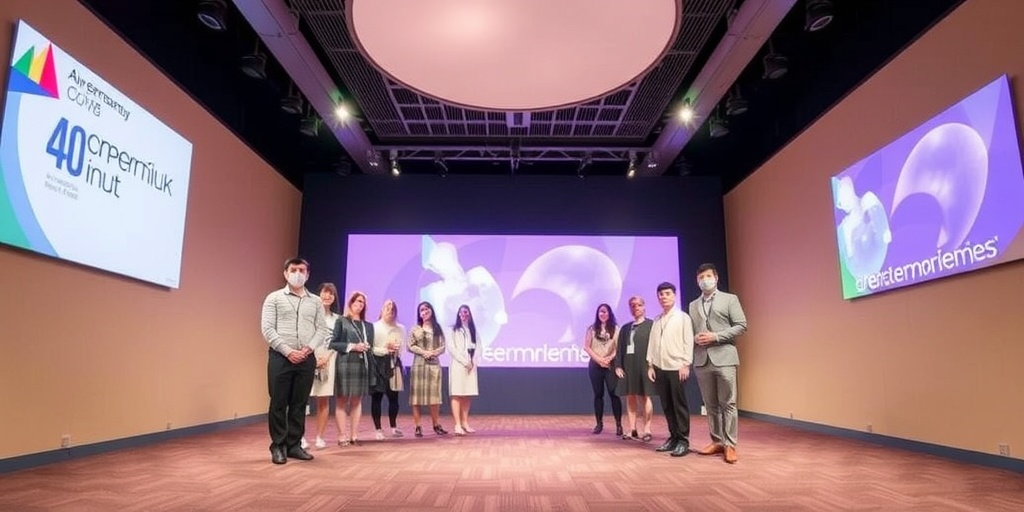
SINGAPORE – As the ASTAR Institute of Molecular and Cell Biology (ASTAR IMCB) celebrated its 40th anniversary on April 10, 2025, it reflected on a legacy of scientific innovation that has significantly shaped Singapore’s position within the global biomedical research landscape. The gala event, attended by Dr. Tan See Leng, the Minister for Manpower and Second Minister for Trade and Industry, served as a testament to the institute’s unwavering commitment to advancing human health through cutting-edge research. Over the years, IMCB has become synonymous with groundbreaking discoveries that have propelled Singapore into a vital hub for biomedical science and technology.
Over the decades, IMCB’s pioneering research has expanded the frontiers of knowledge in molecular and cell biology. Established in 1985, it positioned Singapore at the forefront of a transformation from dependency on technical expertise to a vibrant knowledge economy centered around scientific research. This transition reflected a national ambition to cultivate a sustainable ecosystem of innovation, with IMCB playing a pivotal role in positioning Singapore as a leader in biomedical advancements in Asia and beyond. The cumulative achievements of IMCB underscore its significant contributions not only to scientific knowledge but also to economic growth across various sectors.
At the core of IMCB’s impact is its well-documented history of significant scientific discoveries that have far-reaching implications in modern medicine. Noteworthy among these is the institute’s groundbreaking work on protein kinases and phosphatases, which are essential components in cellular signaling pathways. The discovery has gained international recognition and was even depicted on Singapore’s $10,000 banknote—a rare honor awarded to scientific achievements. Such accolades underscore the gravity of IMCB’s contributions to molecular biology and highlight its role in enhancing public understanding of such complex processes.
Furthermore, the IMCB was integral to the early efforts to sequence the fugu fish genome, representing a significant scientific milestone that occurred prior to the sequencing of the human genome. The fugu’s compact genome provided an invaluable model for identifying essential genes and their roles in various human diseases. By delineating the similarities between the fugu and human genome, researchers enhanced the understanding of genetic diseases and opened avenues for precision medicine initiatives that continue to evolve today. This pioneering work exemplifies IMCB’s collaborative spirit and its commitment to leveraging foundational research for translational purposes.
In recent years, the institute has increasingly focused on advancing research in critical areas such as ageing, precision medicine, and advanced cellular therapies. IMCB’s relentless pursuit of scientific excellence places it at the forefront of addressing some of the most pressing health challenges. This focus on impactful research aligns with Singapore’s national healthcare priorities, ensuring that scientific advancements translate into significant improvements in patient care and outcomes. IMCB aims to tackle complex clinical questions through innovative approaches, responding to the evolving needs of the population it serves.
In addition to its research contributions, the A*STAR IMCB has made a substantial investment in training the next generation of scientific leaders. With over 400 PhD students and 1,000 postdoctoral fellows having trained in its environment, IMCB plays a crucial role in fostering scientific talent. These individuals represent the future of biomedical research and are positioned to contribute significantly to hospitals, academic institutions, and biotech start-ups not only in Singapore but globally. Their diverse expertise ensures a continuous flow of fresh ideas and perspectives that are vital for innovation in the field.
Moreover, the clear synergy between IMCB and Singapore’s burgeoning biotech ecosystem can be observed through numerous successful spin-offs that originated from its foundational research. These companies, including Albatroz Therapeutics and Intra-ImmuSG, represent the tangible impact of deep scientific inquiry translated into real-world applications. This entrepreneurial spirit underscores IMCB’s commitment to bridging the gap between laboratory discoveries and clinical practices, driving economic growth while contributing valuable therapeutic solutions to the public.
The emerging field of artificial intelligence (AI) also features prominently in the future directions set by IMCB. By integrating AI with existing biological knowledge, researchers are developing advanced disease models that not only predict disease progression but also tailor treatment plans to individual patients. This approach has the potential to revolutionize diagnostics and therapeutics, paving the way for personalized medicine where treatments are optimized for each patient’s unique biological makeup. The institute’s foresight in embracing technological advancements such as AI demonstrates its commitment to remaining at the cutting edge of biomedical research.
As IMCB sets its sights on the next forty years, its mission remains steadfast: to harness scientific discoveries for meaningful impacts in health and disease management. With an unwavering commitment to scientific excellence and societal needs, the institute is poised to explore new territories in biomedical research, focusing on areas such as translational neuroscience and cancer immunotherapies. This forward-looking approach positions the institute to continue benefiting beyond the confines of academia, leveraging collaborative efforts to enhance the overall health and well-being of the global community.
The legacy of IMCB is not solely marked by its internal achievements but is also deeply intertwined with its contribution to national identity and global stature in science and technology. The institute exemplifies how focused, strategic investments in research and development can foster not only scientific advancements but also broader economic and social welfare. As Singapore cements its reputation as a regional and global biomedical powerhouse, the role of A*STAR IMCB in this evolution remains crucial, symbolizing educational prowess, innovation, and collaboration across sectors.
In conclusion, the 40-year journey of A*STAR IMCB is a compelling narrative of transformation, achievement, and impact. As the institute celebrates its impressive milestones, it remains committed to its mission of advancing human health through science. With ambitious plans for the future, IMCB guarantees its continued contribution to the biomedical field, reinforcing Singapore’s position as a critical player in the global scientific community.
Cite Scienmag News
Drew Townsend. (April 11, 2025). Celebrating Four Decades of Biomedical Breakthroughs: A*STAR IMCB Marks 40 Years of Innovation and Impact. Scienmag. https://scienmag.com/celebrating-four-decades-of-biomedical-breakthroughs-astar-imcb-marks-40-years-of-innovation-and-impact/
Drew Townsend. "Celebrating Four Decades of Biomedical Breakthroughs: A*STAR IMCB Marks 40 Years of Innovation and Impact." Scienmag, 11 April 2025, https://scienmag.com/celebrating-four-decades-of-biomedical-breakthroughs-astar-imcb-marks-40-years-of-innovation-and-impact/. Accessed 3 September 2026.
Drew Townsend. "Celebrating Four Decades of Biomedical Breakthroughs: A*STAR IMCB Marks 40 Years of Innovation and Impact." Scienmag. April 11, 2025. https://scienmag.com/celebrating-four-decades-of-biomedical-breakthroughs-astar-imcb-marks-40-years-of-innovation-and-impact/


