


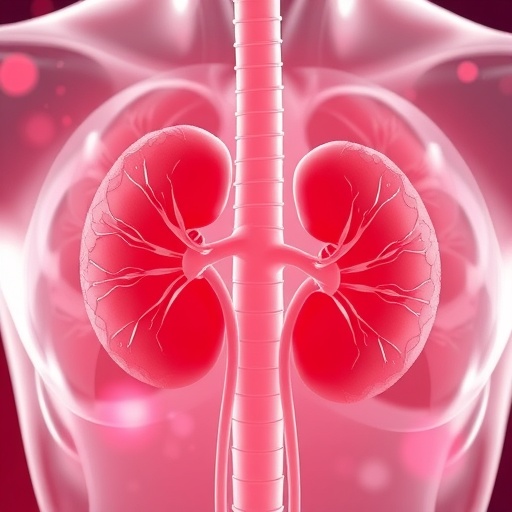
In a groundbreaking study that promises to revolutionize our understanding of renal health, researchers have unveiled a novel kidney-protective mechanism mediated by the reduction of cellular oxidative stress through the CD5L protein. This new insight into the cellular defense strategies against oxidative damage opens promising avenues for therapeutic interventions aimed at combatting kidney diseases, which affect millions worldwide.
Oxidative stress, the imbalance between the production of reactive oxygen species (ROS) and the body’s ability to detoxify these reactive intermediates, has long been implicated in the progression of chronic kidney diseases (CKD). Excessive ROS accumulation leads to cellular damage, inflammation, and fibrosis, ultimately impairing kidney function. Identifying mechanisms that naturally counteract oxidative stress can pave the way for effective treatments.
The international research team led by Kudo, Ikeda, and Ikeda explored the role of the CD5L protein, a less studied but increasingly significant molecule in immune regulation and cellular homeostasis. CD5L, also known as CD5 antigen-like protein, is known for its involvement in inflammatory processes, but its specific function in the kidney remained elusive until now.
Through sophisticated cellular and molecular biology techniques, the researchers demonstrated that CD5L actively reduces oxidative stress levels within kidney cells. By enhancing the cell’s intrinsic antioxidant defenses, CD5L mitigates the detrimental effects of ROS accumulation. This protein acts as a molecular sentinel, preventing oxidative damage that typically leads to cellular apoptosis and tissue degeneration.
Their experiments revealed that overexpression of CD5L in renal cells significantly lowered markers of oxidative stress, including decreased lipid peroxidation and DNA damage indicators. Conversely, silencing the CD5L gene resulted in heightened oxidative stress and increased vulnerability to injury, underscoring the protective role of this protein.
At the biochemical level, CD5L appears to modulate key signaling pathways associated with oxidative stress response. It upregulates the activity of crucial antioxidant enzymes such as superoxide dismutase (SOD) and catalase, reinforcing the cell’s ability to neutralize superoxide radicals and hydrogen peroxide, potent ROS that damage essential biomolecules.
Moreover, CD5L influences mitochondrial function – the powerhouse of the cell and a significant source of ROS. CD5L’s activity improves mitochondrial integrity and efficiency, limiting excessive ROS leakage that contributes to oxidative damage. The stabilization of mitochondrial dynamics by CD5L preserves energy metabolism and promotes cell survival in stress conditions.
The team also shed light on CD5L’s involvement in modulating autophagy, the cellular “cleanup” process that removes damaged organelles and proteins. By enhancing autophagic flux, CD5L facilitates the removal of oxidatively damaged components, preventing their accumulation and the exacerbation of cellular injury.
Importantly, the study extended these cellular findings into animal models of kidney injury. Mice genetically engineered to express higher levels of CD5L showed remarkable resistance to chemically induced nephrotoxicity. These mice exhibited reduced tubular damage, maintained glomerular filtration rates, and diminished inflammatory infiltrates, all of which suggest preserved renal function.
Equally compelling were the observations that administration of recombinant CD5L protein to wild-type mice conferred similar protective effects. This points to the therapeutic potential of CD5L not only as a biomarker but also as a candidate molecule for biologic drug development targeting oxidative stress-mediated renal diseases.
The implications of this discovery are profound, given the widespread impact of CKD and acute kidney injury (AKI) on global health. Current treatments mainly focus on symptom management and slowing disease progression, but they often fall short of halting irreversible damage rooted in oxidative stress mechanisms.
This research thus positions CD5L at the forefront of new therapeutic strategies, emphasizing modulation of intrinsic cellular defense pathways rather than external immunosuppression or broad antioxidant supplementation, which has met with limited clinical success.
Furthermore, the study raises intriguing questions about the role of CD5L beyond renal tissues. Because oxidative stress is a common pathological feature in numerous diseases including cardiovascular disorders, neurodegeneration, and cancer, CD5L might represent a universal protector against oxidative injury, inspiring cross-disciplinary investigations.
Future research is expected to delve deeper into the regulation of CD5L expression and activity, identifying potential stimuli and molecular partners that finely tune its protective functions. Understanding these regulatory networks will be crucial for designing drugs that enhance or mimic CD5L’s antioxidant effects.
Another exciting direction involves exploring genetic variations in the CD5L gene among human populations, potentially uncovering susceptibility factors for kidney diseases or differential responses to therapy. Personalized medicine approaches could leverage such genetic insights to optimize patient outcomes.
While these findings herald a hopeful leap forward, translating them from bench to bedside requires rigorous clinical trials to validate safety, efficacy, and dosage parameters of CD5L-based treatments. Optimized delivery systems to target kidney tissues specifically will also need development to maximize therapeutic benefits.
In conclusion, the elucidation of CD5L’s role in reducing cellular oxidative stress outlines a vital defense mechanism that protects kidney integrity under damaging conditions. This study not only advances renal biology but also brings fresh optimism for patients suffering from debilitating renal disorders worldwide, underscoring the power of precision molecular medicine.
As the scientific community builds upon this landmark research, the vision of harnessing endogenous proteins like CD5L to mediate protection against oxidative stress could redefine the treatment paradigms for a broad spectrum of oxidative stress-related diseases.
Cite Scienmag News
Ophelia Keating. (May 23, 2026). CD5L Protein Shields Kidneys by Reducing Oxidative Stress. Scienmag. https://scienmag.com/cd5l-protein-shields-kidneys-by-reducing-oxidative-stress/
Ophelia Keating. "CD5L Protein Shields Kidneys by Reducing Oxidative Stress." Scienmag, 23 May 2026, https://scienmag.com/cd5l-protein-shields-kidneys-by-reducing-oxidative-stress/. Accessed 4 September 2026.
Ophelia Keating. "CD5L Protein Shields Kidneys by Reducing Oxidative Stress." Scienmag. May 23, 2026. https://scienmag.com/cd5l-protein-shields-kidneys-by-reducing-oxidative-stress/


