


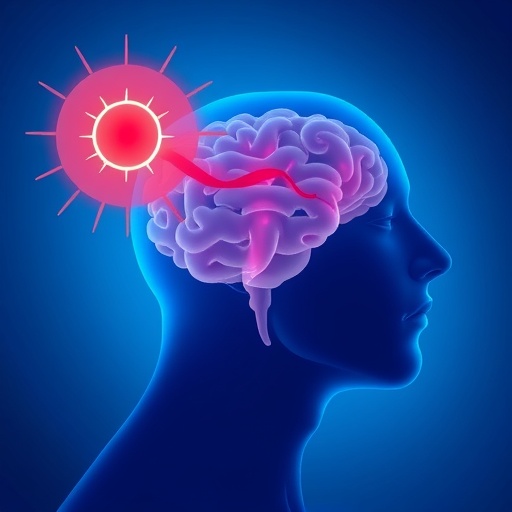
In a groundbreaking advancement poised to transform symptomatic treatment for men undergoing androgen deprivation therapy (ADT) for prostate cancer, researchers have illuminated remarkable benefits of self-help cognitive behavioural therapy (CBT) in alleviating the debilitating effects of hot flushes and night sweats. The meticulously conducted MANCAN2 randomized controlled trial offers compelling evidence positioning self-administered CBT as a viable, effective intervention to manage these vasomotor symptoms that severely impair quality of life and exacerbate psychological distress in prostate cancer patients.
Androgen deprivation therapy remains a pivotal treatment modality targeting androgen-sensitive prostate cancer by dramatically lowering circulating testosterone levels. However, this therapeutic suppression comes at the cost of inducing a constellation of unwanted side effects, chief among them vasomotor symptoms manifested as intense hot flushes and distressing night sweats. These episodes result from dysregulated thermoregulatory control in the hypothalamus, triggered by disrupted sex hormone feedback loops. Despite their prevalence and significant burden, therapeutic options have remained limited and often unsatisfactory, creating a pressing need for non-pharmacological interventions that can be readily disseminated.
The MANCAN2 trial builds decisively upon the earlier foundations of behavioural medicine by introducing a self-help format for CBT specifically tailored to the symptomatology experienced during ADT. This format involved structured cognitive and behavioural strategies delivered through self-administered manuals, supported by minimal external guidance, thus enabling patients to independently engage with therapeutic techniques. The study robustly tested whether this pragmatic approach could effect clinically meaningful reductions in the frequency and severity of hot flushes and night sweats, and whether such improvements would translate to enhanced psychological wellbeing.
From a methodological standpoint, the trial comprised a rigorously randomized cohort of men receiving ADT for prostate cancer, systematically assigned to either the self-help CBT group or a standard care control group. Evaluations incorporated validated patient-reported outcome measures alongside objective physiological monitoring, allowing an integrative analysis of symptom dynamics and the psychological milieu. This dual-pronged assessment elevated the scientific rigor of findings and firmly established causality rather than mere association.
Remarkably, data revealed that men engaging with self-help CBT experienced a substantial decrease in the average daily frequency and intensity of hot flush episodes, compared to controls. This therapeutic effect endured across the study duration, indicating sustained symptom amelioration rather than transient placebo responses. Patients also reported significant improvements in sleep quality, a critical downstream benefit given that nocturnal hot flushes disrupt restorative sleep and exacerbate fatigue and cognitive dysfunction.
Neuroscientific insights underpinning the efficacy of CBT in this context elucidate the interplay between cognitive appraisal, emotional processing, and autonomic nervous system regulation. By challenging maladaptive beliefs, reframing catastrophic interpretations of vasomotor sensations, and employing relaxation techniques, patients modulate central processing pathways that influence hypothalamic thermostat function. This neuropsychological recalibration reduces symptom perception intensity, breaks the vicious cycle of anxiety-driven symptom exacerbation, and promotes autonomic stability.
Moreover, the scalability and cost-effectiveness of self-help CBT are notable advantages. Unlike hospital-based psychotherapy demanding substantial healthcare resources and specialized personnel, this self-administered format empowers patients, engenders self-efficacy, and offers flexibility to integrate therapeutic learning into daily routines. Such features enhance accessibility, especially critical in healthcare systems burdened with rising prostate cancer survivorship and constrained specialist services.
Importantly, the MANCAN2 trial’s findings extend beyond symptom control to encompass mental health outcomes. Participants undergoing CBT demonstrated marked reductions in anxiety and depression scores, alongside improvements in overall quality of life indices. This holistic benefit underscores the interrelationship between physical symptom management and psychological resilience, affirming the biopsychosocial model of comprehensive cancer care.
The study’s success heralds a paradigm shift in managing therapy-induced side effects and opens new avenues for integrating behavioural medicine into oncological supportive care. Future research trajectories should investigate optimization of self-help CBT protocols, potential augmentation with digital health platforms for real-time support, and exploration of biomarkers predictive of treatment responsiveness. Furthermore, exploring applicability to other hormone-sensitive malignancies experiencing similar vasomotor symptoms could magnify therapeutic impact.
Clinicians and patients alike stand to gain from this validated, patient-centered intervention that alleviates one of the most distressing experiences during prostate cancer treatment. By providing a scientifically substantiated, non-pharmacological tool, the MANCAN2 trial advances a critical therapeutic frontier that aligns with the ethos of personalized medicine and holistic patient wellbeing.
In summation, this landmark study elucidates that self-help CBT represents an effective, sustainable, and accessible intervention that significantly mitigates hot flushes and night sweats during androgen deprivation therapy for prostate cancer. Its implementation into clinical practice promises to enhance symptom control, mental health outcomes, and ultimately, the quality of survivorship for countless men worldwide. As the oncology community embraces integrative psychosocial approaches, such work exemplifies the fusion of neurocognitive science, behavioural therapy, and clinical oncology in addressing complex treatment-related challenges.
The MANCAN2 trial thus serves as a beacon inspiring greater investment in rigorous behavioural research and underscores the potential for self-help modalities to transform cancer supportive care landscapes. By empowering patients with self-management skills and reducing reliance on pharmacological agents, it paves the way for innovative, patient-centric therapeutic pathways that improve lives through science and empathy.
Cite Scienmag News
Nathaniel Bowman. (March 25, 2026). CBT Eases Hot Flashes in Prostate Cancer Patients. Scienmag. https://scienmag.com/cbt-eases-hot-flashes-in-prostate-cancer-patients/
Nathaniel Bowman. "CBT Eases Hot Flashes in Prostate Cancer Patients." Scienmag, 25 March 2026, https://scienmag.com/cbt-eases-hot-flashes-in-prostate-cancer-patients/. Accessed 4 September 2026.
Nathaniel Bowman. "CBT Eases Hot Flashes in Prostate Cancer Patients." Scienmag. March 25, 2026. https://scienmag.com/cbt-eases-hot-flashes-in-prostate-cancer-patients/


