


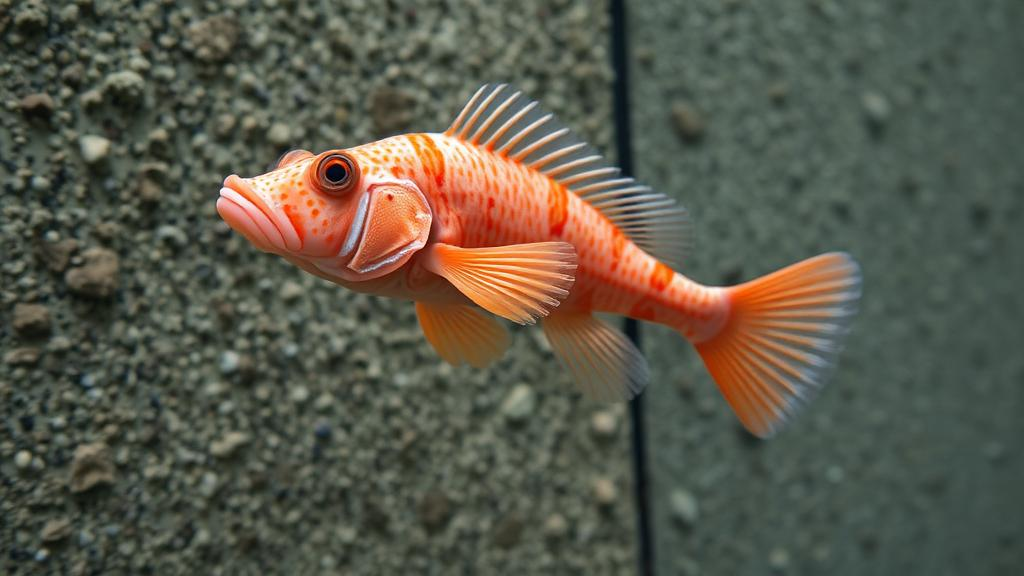
Pachón cavefish averaged a 14.8-degree inclination of their dorsoventral body axis away from the glass, while Tinaja cavefish averaged 10.4 degrees. Both values were significantly greater than the nearly vertical posture measured in surface fish in darkness. The observations were motivated partly by the distribution of food in flooded caves.
Bat guano is a major food source for adult Astyanax in passages accessible to bats, where particles may float on the surface or sink to the floor. Many cavefish populations, however, inhabit underwater passages beyond sumps that bats cannot reach. Explorations in January 2020 at Tinaja Cave, in February 2023 at Sabinos Cave and in November 2023 at the Calera system examined deeper or less accessible areas.
Divers using underwater lamps observed the first two sites, while remotely operated vehicles explored more than 120 metres of underwater gallery in the Calera system. These surveys identified the mysid shrimp Spelaeomysis quinterensis as a potential food source in galleries without bat droppings. The shrimp were abundant in some of the explored areas and were observed mainly crawling on walls and ceilings, with fewer on the floor.
Laboratory work cited by the researchers showed that Astyanax eat commercially supplied mysid shrimp, and earlier field observations had recorded cavefish consuming a mysid placed in a tank. The new field evidence therefore linked the distribution of a known prey type with the physical surfaces along which cavefish swim, although the study did not quantify how much of their diet these shrimp contribute or directly observe the shrimp being captured in the surveyed passages. To measure body posture, the researchers divided a 5-gallon tank with a vertical glass panel and placed a camera perpendicular to that panel.
Fish swimming parallel to the glass were therefore recorded moving toward or away from the camera. The enucleated fish had therefore navigated without eyes throughout their lives, allowing the researchers to compare experimentally blind surface fish with fish whose ancestors had evolved in darkness. After at least 30 minutes of acclimation, the researchers recorded each group for five minutes in each tank compartment.
From the recordings, the team extracted clips showing fish swimming parallel to the wall and measured the dorsoventral axis against the vertical. They also noted whether the left or right side of each fish faced the glass. The analysis comprised 170 clips from Pachón cavefish, 177 from Tinaja cavefish, 90 from surface fish and 91 from enucleated surface fish.
Mann–Whitney U tests compared the cave populations with surface fish and compared right-facing and left-facing swims within each population. Because the study sampled swimming posture rather than attacks or feeding outcomes, the resulting values describe the geometry of wall-associated swimming and do not by themselves demonstrate that the posture is a hunting strategy. Surface fish in darkness held their bodies at an average angle of 3.2 degrees from vertical, with a standard deviation of 11.6 degrees.
The enucleated surface fish had a similar mean of 3.1 degrees, with a standard deviation of 6.5 degrees, and their posture did not differ significantly from that of the eyed surface fish in darkness (P = 0.560). By contrast, Pachón cavefish tilted away from the wall by 14.8 ± 9.9 degrees and Tinaja cavefish by 10.4 ± 11.1 degrees. Each cave population differed from the surface-fish group with P < 0.00001.
These comparisons indicate that loss of vision alone did not reproduce the mean posture of cave-adapted fish under the laboratory conditions used in the experiment. Side-dependent differences appeared in both cave populations. Pachón cavefish averaged 16.6 degrees when their right side faced the wall, compared with 12.9 degrees when their left side faced it; the difference had P = 0.012.
Tinaja cavefish averaged 12.6 degrees with the right side toward the wall and 7.8 degrees with the left side toward it, again with P = 0.012. Surface fish did not show a statistically significant side difference: their means were 6.1 degrees with the right side facing the wall and 1.0 degree with the left, with P = 0.214. The study thus measured a consistent directional asymmetry in cavefish body inclination, while finding no comparable significant asymmetry in the sampled surface fish.
The authors proposed, but did not prove, a sensory explanation for the larger cavefish tilt. Astyanax can construct hydrodynamic images of their surroundings and detect changes in water flow around the body through the lateral-line system. In a previously described mathematical model of larval prey capture, the detection range on each side of the body was represented as a semicircle or hemisphere.
The researchers suggest that a fish swimming upright beside a wall can scan the nearby surface primarily with the field on the side facing it. Tilting the body away from the wall may bring part of the opposite side’s receptive field into the detectable area, potentially enlarging the wall region that can be scanned. Direct measurements of sensory coverage, flow detection or prey detection would be required to test that proposal.
A second hypothesis addresses why the measured angles differed between left- and right-facing swims. Earlier work found that the lateral-line receptive fields on the two sides of cavefish can have different radii and that strike performance differs between sides. Related observations include a leftward-biased bend in the dorso-cranial skeleton, a positive correlation between vibration-attraction behavior and the number of left-side superficial neuromasts in Pachón cavefish, and population-level “handedness” in approaches to vibrating sources.
Under the proposed model, a cavefish facing a wall with a smaller receptive field may gain a proportionally greater scanning benefit by tilting, whereas one facing the wall with a larger field may gain less. The present data are consistent with that prediction but do not establish that anatomical or physiological asymmetry caused the posture. Together, the laboratory measurements and field observations provide a broader picture of wall-associated behavior without demonstrating a complete foraging mechanism.
Cavefish are already known to prefer remaining near walls, and earlier experiments found that this preference can persist across straight, concave and convex surfaces. The current study adds precise measurements of body inclination and shows that the mean posture differs between cave-adapted fish and both sighted and experimentally enucleated surface fish. Its field observations also show that mysid shrimp can occupy walls and ceilings in passages beyond bat access.
Whether cavefish use the measured tilt to improve prey detection, what the complete receptive fields look like in adult wall swimmers, and which physiological or morphological factors produce the side-dependent angles remain open questions requiring direct behavioral and sensory testing.
Subject of Research: Laboratory measurements and field observations of wall-associated body inclination in Pachón and Tinaja Astyanax cavefish.
Article Title: Cavefish dorsoventral axis angle during wall swimming: laterality asymmetry
Article References: Espinasa, J., & Espinasa, L. (2024). Cavefish dorsoventral axis angle during wall swimming: laterality asymmetry. Subterranean Biology, 49, 19-29. https://doi.org/10.3897/subtbiol.49.121747
Image Credits: AI Generated
DOI: 10.3897/subtbiol.49.121747
Keywords: Astyanax cavefish, wall swimming, dorsoventral axis, laterality, Pachón cavefish, Tinaja cavefish, lateral line, underground ecology, mysid shrimp, sensory ecology, Cavefish, dorsoventral
Cite Scienmag News
Gavin Prescott. (October 20, 2026). Cavefish tilt differently by flank while swimming beside walls. Scienmag. https://scienmag.com/cavefish-tilt-differently-by-flank-while-swimming-beside-walls/
Gavin Prescott. "Cavefish tilt differently by flank while swimming beside walls." Scienmag, 20 October 2026, https://scienmag.com/cavefish-tilt-differently-by-flank-while-swimming-beside-walls/. Accessed 20 October 2026.
Gavin Prescott. "Cavefish tilt differently by flank while swimming beside walls." Scienmag. October 20, 2026. https://scienmag.com/cavefish-tilt-differently-by-flank-while-swimming-beside-walls/


