


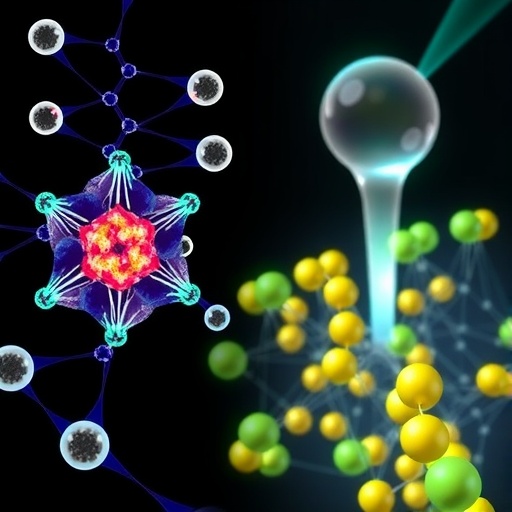
The electrochemical reduction of carbon dioxide (CO2) and carbon monoxide (CO) stands at the forefront of transformative energy technologies aimed at curbing greenhouse gas emissions and fostering a sustainable carbon economy. Among the many variables influencing this catalytic process, cations—positively charged ions present in the electrolyte—have emerged as pivotal yet enigmatic players governing both activity and selectivity in these reactions. Despite extensive research, the exact mechanisms through which cations affect the electrocatalytic reduction of CO2 and CO remain a subject of intense scientific scrutiny and lively debate, spurring new lines of inquiry and technological innovation.
Recent advancements dissect the multifaceted roles of cations by categorizing their influence at various molecular levels. Researchers now distinguish these roles as indirect mediators, energetic modulators, and direct participants in electron transfer events. Each classification not only reflects a distinct mode of interaction with the catalytic interface but also frames a unique perspective for understanding how cations facilitate or hinder specific catalytic steps. This nuanced approach allows for a more granular examination of the interfacial chemistry crucial to optimizing CO2 and CO reduction processes.
At the most subtle level, cations act primarily as indirect mediators, influencing the electrochemical environment without direct involvement in chemical bonding with reaction intermediates. These ions alter the structure and properties of the electric double layer at the electrode-electrolyte interface, thereby modulating local pH, electric field strength, and water orientation. Their presence can affect the stabilization or destabilization of charged intermediates, effectively tuning the reaction kinetics and product distributions. Such indirect effects underscore the significance of electrolyte composition, pointing toward tailored electrolyte formulations as powerful tools for enhancing catalysis.
Moving beyond these indirect influences, cations also serve as energetic modulators by actively shifting the free energy landscape of elementary reaction steps. By interacting electrostatically or through specific coordination, cations can change the activation barriers and intermediate binding energies involved in CO2 or CO reduction pathways. This modulation is crucial in determining which reaction routes are favored or suppressed, directly impacting the selectivity toward valuable products such as ethylene, ethanol, or formate. Understanding how different cation species—sodium, potassium, cesium, among others—affect these energetics allows for rational design of catalytic systems with improved efficiency.
The most direct role of cations involves their participation in electron-transfer processes, where they may transiently engage with electron-rich intermediates, influencing charge distribution and reaction dynamics at the molecular level. Such interactions can alter reaction rates and pathways in ways not achievable through purely electronic or structural catalyst modifications. These findings challenge the traditional view of cations as mere spectators and open up possibilities for engineering electrolyte-catalyst interactions to harness cations as tactical players in electrocatalysis.
Despite these advances, several contradictions and gaps persist in the understanding of cation effects on CO2 and CO reduction reactions. Discrepancies between experimental observations and theoretical predictions highlight the complexity of interface phenomena and the need for more sophisticated in situ characterization techniques. Additionally, the heterogeneity of catalyst surfaces and the dynamic nature of electrochemical interfaces further complicate the unraveling of definitive mechanistic insights, calling for integrative approaches combining spectroscopy, microscopy, and computational modeling.
Furthermore, the impact of cations is closely tied to the specific catalyst employed, with distinct catalyst morphologies, compositions, and electronic structures dictating different cation interactions and consequent effects on reaction pathways. This catalyst-dependent behavior necessitates a more systematic investigation encompassing a diverse set of catalytic materials to build comprehensive mechanistic frameworks. Bringing together such knowledge will be instrumental in bridging fundamental understanding with pragmatic catalyst development.
One promising direction highlighted is the elucidation of cation influence on elementary steps such as proton-coupled electron transfer, C–C coupling, and intermediate desorption. Pinpointing where and how cations intervene in these molecular transformations could unlock pathways to control product selectivity with unprecedented precision. Advances in operando experimental methods and multiscale simulations seem poised to play critical roles in this pursuit.
Understanding cation effects also bears implications for designing next-generation electrolyzers and reactor systems that optimally leverage electrolyte composition alongside catalyst architecture. The synergistic tuning of both components could enhance overall energy efficiency, reduce overpotentials, and maximize carbon utilization. This integrated perspective heralds a shift toward holistic electrochemical system engineering rather than isolated catalyst improvement.
Moreover, the diversity of electrolyte cations extends beyond conventional alkali metals to organic and multivalent ions, each bringing unique structural and electronic characteristics. Exploring their roles could unveil novel catalytic phenomena and expand the toolkit available for CO2 and CO reduction technologies. Such explorations potentially bridge fundamental electrochemistry with applied materials science and green chemistry.
The dynamic evolution of electrode surfaces under reaction conditions adds another layer of complexity, as cations may influence surface restructuring, oxidation states, and active site availability over time. Understanding these stability and durability aspects is crucial for developing robust catalysts and processes suitable for industrial applications. Long-term operando studies tracking cation-induced changes promise to shed light on these critical issues.
Importantly, unraveling cation roles intersects with broader themes such as the electrification of the chemical industry and the circular carbon economy. Efficient and selective electrochemical conversion of greenhouse gases into renewable fuels and chemicals aligns with global efforts to decarbonize energy systems and valorize carbon resources. Cations, once lightly considered electrolyte constituents, emerge as key enablers in this transformative vision.
The complex interdependency of cations, catalyst surfaces, and reaction intermediates exemplifies the frontier challenges in electrocatalysis, embodying a rich interplay of physics, chemistry, and materials science. Addressing these challenges necessitates interdisciplinary collaborations, advanced experimental platforms, and novel theoretical frameworks capable of capturing the subtleties of interfacial electrochemical environments.
In summary, the evolving understanding of cation roles in electrocatalytic CO2 and CO reduction unveils a multifaceted landscape where ions mediate, modulate, and participate at molecular levels, ultimately shaping catalytic outcomes. Capturing this complexity is not merely an academic pursuit but a critical step toward rational catalyst design and sustainable chemical manufacturing powered by renewable electricity. Future research poised at this frontier promises exciting breakthroughs with profound environmental and technological impacts.
Cite Scienmag News
Denise Maddox. (February 27, 2026). Cation Roles Unveiled in Electrocatalytic CO2 Reduction. Scienmag. https://scienmag.com/cation-roles-unveiled-in-electrocatalytic-co2-reduction/
Denise Maddox. "Cation Roles Unveiled in Electrocatalytic CO2 Reduction." Scienmag, 27 February 2026, https://scienmag.com/cation-roles-unveiled-in-electrocatalytic-co2-reduction/. Accessed 3 September 2026.
Denise Maddox. "Cation Roles Unveiled in Electrocatalytic CO2 Reduction." Scienmag. February 27, 2026. https://scienmag.com/cation-roles-unveiled-in-electrocatalytic-co2-reduction/


