


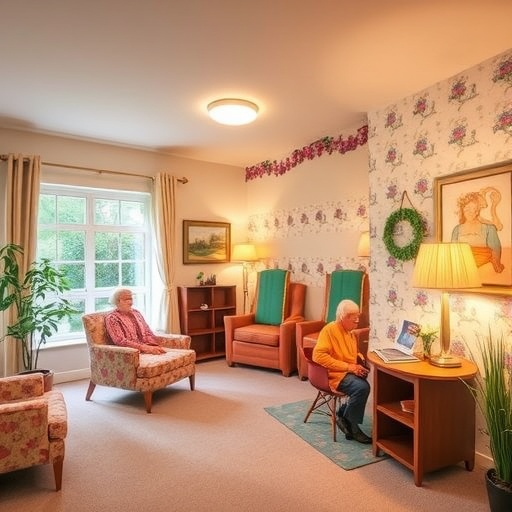
In an era marked by unprecedented global migration and evolving demographic landscapes, the intersection of dementia care and cultural diversity in care home environments has garnered increasing attention from researchers and healthcare practitioners alike. A groundbreaking integrative review set to appear in the International Journal for Equity in Health in 2026, conducted by Ramezani, Granberg, Kihlgren, and their colleagues, delves deep into how care home environments can be optimized to meet the culturally specific needs of residents living with dementia, particularly those from culturally and linguistically diverse (CALD) backgrounds. Utilizing the International Classification of Functioning, Disability and Health (ICF) framework, this comprehensive examination provides both theoretical insights and practical guidance toward equity-driven dementia care.
The aging populations in many countries now encompass significant proportions of individuals who originate from a wide range of cultural and linguistic groups. These residents often bring with them distinct communication patterns, dietary preferences, social norms, belief systems, and health-related values. When dementia impairs cognition and communication, these cultural factors intersect profoundly with the caregiving environment, influencing the residents’ well-being, behavioral symptoms, and quality of life. The review by Ramezani et al. emphasizes that culturally attuned care home environments must extend beyond superficial adaptations and instead embed culture-specific characteristics into every facet of service delivery, physical settings, and social engagement.
Fundamentally, the review integrates the ICF framework as a lens for understanding how environmental factors and personal attributes interact with the health condition—dementia, in this case—to determine levels of functioning and participation. The ICF conceptualizes disability as a dynamic process influenced by contextual elements including physical, social, and attitudinal factors. Applying this multidimensional perspective allows the review to systematically synthesize a wide array of studies, summarizing how tailored environments can reduce the disabling impact of dementia in CALD residents. The framework rigorously differentiates among environmental facilitators and barriers, which is critical for designing interventions that are both culturally respectful and clinically efficacious.
One of the pivotal insights highlighted is the importance of linguistic accessibility within care homes. Communication barriers between staff and residents with limited proficiency in the dominant language often result in social isolation, misunderstandings, and inappropriate care decisions. The review collates evidence demonstrating that multilingual staff, access to interpreters, and culturally relevant communication aids significantly enhance residents’ engagement and reduce behavioral disturbances. Moreover, the review discusses methods for embedding native language usage into signage, activity programming, and social interactions, promoting a sense of familiarity and identity preservation which is central for dementia care.
Beyond language, the physical environment plays a crucial role in mediating everyday functioning for dementia patients. The review reports on innovative approaches such as culturally designed common rooms, use of culturally significant artifacts, and food environments replicating ethnic culinary practices. These adaptations not only stimulate memory and recognition but also foster social cohesion among residents from similar backgrounds. The integration of sensory cues tied to cultural heritage, including music, scents, and visuals, is meticulously reviewed as a non-pharmacological intervention to alleviate agitation and enhance mood.
Culturally congruent care also extends into the patterns of caregiving relationships. The review highlights how care providers’ cultural competence—which involves awareness, knowledge, and skills to navigate cultural differences—can profoundly impact residents’ comfort and trust. Training programs that include modules on cultural values related to dementia, family involvement preferences, and culturally specific perceptions of illness are appraised as beneficial strategies. The presence of family and community members as cultural brokers is identified as an especially powerful facilitator of culturally specific care resonating with indigenous and immigrant populations.
Importantly, the review critiques numerous care homes for defaulting to a one-size-fits-all approach, neglecting cultural specificity due to systemic constraints such as limited funding, regulatory rigidities, and workforce shortages. The authors advocate for policy reforms championing cultural equity and inclusiveness at institutional and governmental levels. They argue that embedding cultural considerations into accreditation standards, funding models, and quality assurance protocols is essential for sustainable improvement in dementia care for CALD populations.
Interdisciplinary collaboration is another cornerstone emphasized. The review synthesizes literature indicating that partnerships between healthcare professionals, cultural consultants, community organizations, and families can generate more nuanced, person-centered care plans. Such collaborations are shown to enhance holistic understanding of residents’ life histories and cultural contexts, enabling tailored interventions that minimize disability and promote social participation.
From a technological standpoint, the review evaluates emerging digital tools designed to support culturally sensitive dementia care. These include culturally adapted cognitive assessment apps, virtual reality reminiscence therapy environments, and communication technology that integrates cultural content. While promising, the review cautions that technology must be thoughtfully adapted and implemented to avoid inadvertently reinforcing cultural stereotypes or alienating users.
The review also delves into challenges and gaps in research, pointing out the scarcity of longitudinal studies and culturally diverse sampling in dementia care research. Many existing studies are geographically concentrated in high-income countries, limiting cross-cultural generalizability. The authors call for more expansive, globally representative research collaborations that respect indigenous and minority epistemologies and methodologies.
Ethical considerations arise throughout the discussion, particularly concerning autonomy, consent, and privacy for residents with dementia who may experience varying degrees of cognitive decline. The review argues that culturally grounded ethical frameworks, sensitive to communal decision-making traditions and differing conceptions of personhood, are necessary for just care practices. This includes recognizing the role of family elders or community leaders in care decisions without undermining individual dignity.
Moreover, the importance of environmental modifications that respect culturally specific spirituality and rituals is explored. Dementia care environments that accommodate religious observances, culturally meaningful ceremonies, and spiritual objects contribute not only to comfort but also to existential well-being. The authors suggest that integrating chaplaincy services familiar with diverse cultural traditions is a key best practice.
In sum, this integrative review by Ramezani and collaborators represents a landmark contribution to understanding how care home environments can and should evolve to meet the complex cultural needs of dementia patients from CALD backgrounds. By systematically applying the ICF framework, the review establishes a rigorous conceptual and empirical foundation for culturally sensitive dementia care, linking environmental, social, and personal factors with functional outcomes. The findings pave the way for innovative care models grounded in equity, human rights, and cultural respect.
As dementia prevalence rises globally, especially among diverse aging populations, this work equips policy makers, care providers, researchers, and communities with vital insights and evidence-based strategies to transform care environments. The challenge ahead lies in translating this rich synthesis into practical actions that transcend traditional biomedical paradigms, fostering inclusive spaces where cultural identity and dignity thrive even in the face of cognitive decline.
This pioneering review ultimately serves as a clarion call: culturally responsive dementia care is not a peripheral consideration but a central pillar of quality care. Meeting this challenge requires courage, creativity, and commitment to equity and justice, to ensure that no resident’s culture becomes a casualty in the care journey.
Cite Scienmag News
Cassandra Pierce. (January 16, 2026). Care Home Designs for Diverse Dementia Cultures. Scienmag. https://scienmag.com/care-home-designs-for-diverse-dementia-cultures/
Cassandra Pierce. "Care Home Designs for Diverse Dementia Cultures." Scienmag, 16 January 2026, https://scienmag.com/care-home-designs-for-diverse-dementia-cultures/. Accessed 3 September 2026.
Cassandra Pierce. "Care Home Designs for Diverse Dementia Cultures." Scienmag. January 16, 2026. https://scienmag.com/care-home-designs-for-diverse-dementia-cultures/


