


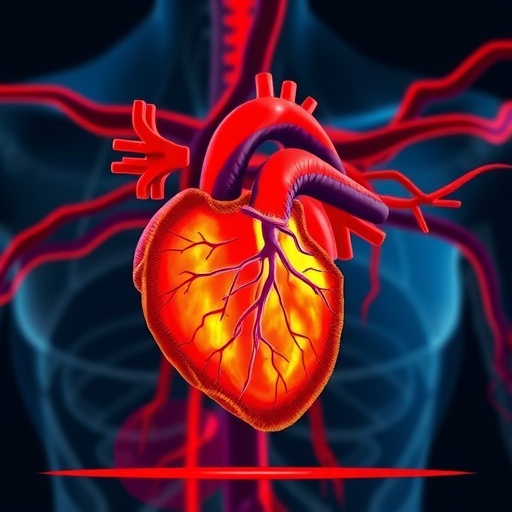
A groundbreaking longitudinal study analyzing data from 42,000 participants in the National Health and Nutrition Examination Survey (NHANES) has revealed a stark correlation between elevated bone lead levels and increased risk of cardiovascular disease mortality. This large-scale meta-analysis underscores the profound health consequences of lead exposure, a toxic heavy metal with no known safe threshold. The findings are profoundly significant, suggesting that lead toxicity remains a critical and underrecognized contributor to global cardiovascular mortality.
Lead, a pervasive environmental pollutant, accumulates in the human body primarily through chronic exposure to contaminated air, water, soil, and consumer products. Once absorbed, lead deposits preferentially in bones, persisting for decades and acting as an endogenous reservoir that can release lead back into the bloodstream under certain physiological conditions. This study’s use of bone lead measurements provides a more reliable biomarker for cumulative lead exposure than blood lead levels, which reflect only recent exposure.
The meticulous longitudinal approach employed by the investigators leverages decades of participant data, enabling the delineation of temporal relationships between bone lead burden and cardiovascular outcomes. Cardiovascular disease (CVD) remains the leading cause of death globally, making the identification of modifiable risk factors urgently important. By integrating data from multiple cohort studies via meta-analysis techniques, the researchers enhanced the robustness and generalizability of their conclusions.
Globally, the health burden attributed to lead exposure is staggering. In 2023 alone, the study estimates that lead toxicity was responsible for approximately 3.5 million deaths worldwide. Moreover, this exposure accounted for 71.6 million disability-adjusted life years (DALYs), reflecting not only mortality but substantial chronic disability associated with cardiovascular and other systemic effects of lead. These figures represent 5.8% of all deaths and 2.6% of DALYs globally, highlighting the widespread impact of environmental lead contamination.
This revelation has profound implications for public health policies and environmental regulation. Despite awareness of lead’s toxicity, many regions lack adequate surveillance, remediation, and regulatory frameworks capable of effectively reducing lead exposure risk. The persistence of legacy lead sources, combined with emerging contamination hotspots, means that millions remain at risk of elevated bone lead levels and associated cardiovascular mortality.
From a mechanistic perspective, lead’s cardiovascular toxicity is multifaceted. Lead disrupts endothelial function, promotes oxidative stress, and interferes with calcium signaling critical for vascular contractility and myocardial function. These pathological effects contribute to hypertension, atherosclerosis, and cardiac remodeling, all well-established precursors to fatal cardiovascular events. By quantifying bone lead, the study sheds light on the chronic, cumulative nature of these injurious processes.
In addition, the meta-analysis affirms that the relationship between bone lead and cardiovascular mortality persists across diverse populations and geographic contexts, underscoring the global relevance of this public health challenge. The researchers employed advanced statistical methodologies to mitigate confounding factors and ensure robustness, fortifying the evidence base for causal inference. This rigorous approach provides an authoritative foundation for advocacy and intervention.
Urgent calls emerge from the study for intensified lead exposure surveillance programs. Enhanced biomonitoring, particularly utilizing bone lead assessments, can better identify at-risk populations and facilitate targeted prevention efforts. Moreover, regulatory agencies must prioritize stringent lead exposure limits, enforce environmental cleanup, and integrate lead risk reduction into cardiovascular disease prevention frameworks.
The study also illuminates disparities in lead exposure and cardiovascular risk, often correlating with socioeconomic status and environmental justice concerns. Populations living in industrial or urbanized areas frequently face disproportionately high lead burdens, magnifying health inequities. Addressing lead toxicity, therefore, demands not only scientific and medical solutions but also social and policy interventions.
Moving forward, the integration of environmental toxicology with cardiovascular epidemiology exemplified by this research sets a precedent for multidisciplinary collaborations. It highlights the necessity of bridging environmental health and chronic disease fields to fully understand and mitigate complex risk factors driving global mortality trends.
In sum, this comprehensive analysis delivers a clarion call to the scientific community, policymakers, and public health stakeholders worldwide. Lead exposure, often overlooked in chronic disease contexts, emerges as a potent driver of cardiovascular mortality on a global scale. Enforcement of rigorous environmental policies, coupled with advanced biomonitoring and focused public health initiatives, is imperative to reduce the colossal burden of lead-induced cardiovascular deaths. The study advances our understanding of lead toxicity and charts a critical path for protecting human health in the decades ahead.
News Publication Date: Not provided.
Web References: Not provided.
References: doi:10.1001/jama.2026.2197
Cite Scienmag News
Frances Kline. (March 30, 2026). Cardiovascular Disease Burden Linked to Lead Exposure. Scienmag. https://scienmag.com/cardiovascular-disease-burden-linked-to-lead-exposure/
Frances Kline. "Cardiovascular Disease Burden Linked to Lead Exposure." Scienmag, 30 March 2026, https://scienmag.com/cardiovascular-disease-burden-linked-to-lead-exposure/. Accessed 3 September 2026.
Frances Kline. "Cardiovascular Disease Burden Linked to Lead Exposure." Scienmag. March 30, 2026. https://scienmag.com/cardiovascular-disease-burden-linked-to-lead-exposure/


