


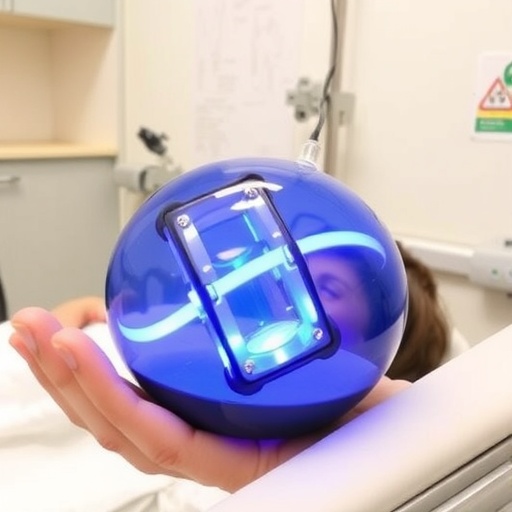
At the heart of biomedical innovation, a groundbreaking project undertaken by Texas A&M University’s biomedical engineering capstone team has offered new hope for pediatric patients suffering from severe obstructive sleep apnea (OSA) linked to craniofacial abnormalities. This ambitious endeavor culminated at the 2026 Engineering Project Showcase, where the inventive “JawDropper” device demonstrated the transformative potential of interdisciplinary engineering applied to complex medical challenges.
The subject of this pioneering project is young David Hardy, a five-year-old boy born with a rare constellation of craniofacial conditions, primarily hemifacial microsomia (HFM) and cleft lip and palate. These congenital anomalies, which affect structural development of the jaw and facial tissues, present daunting clinical hurdles. In David’s case, the lower right portion of his jaw was underdeveloped, severely affecting his airway stability and contributing to life-threatening nocturnal breathing difficulties. The pathophysiology of obstructive sleep apnea in such patients is characterized by anatomical obstructions causing intermittent airway collapse during sleep, leading to profound hypoxia.
Despite conventional interventions like rib-graft surgery and continuous positive airway pressure (CPAP), David’s quality of life remained affected, necessitating a novel solution that could mechanically stabilize and reposition his jaw to maintain a patent airway during rest. Addressing this challenge required a multidisciplinary approach combining biomedical engineering, pediatric medicine, and reconstructive surgery expertise. Carolyn Hardy, David’s mother, sought a solution that extended beyond available clinical devices—specifically, a custom facial brace capable of dynamically supporting her son’s jaw in a way that is safe, comfortable, and functional during sleep.
Upon reaching out to numerous academic institutions, Carolyn’s quest found a responsive collaborator in Dr. Charles Patrick, director of undergraduate programs at Texas A&M’s Department of Biomedical Engineering. Dr. Patrick’s background in reconstructive surgery engineering and personal experience with OSA made him an ideal partner. He connected Carolyn to an expert team led by faculty advisors Zachary Bujnoch and Balakrishna Haridas, who oversee capstone projects and pediatric device innovation, respectively. This alliance launched a focused research and development initiative grounded in rigorous biomedical engineering principles.
The capstone team, comprised of senior undergraduate students with a passion for translational healthcare technology, approached the problem by iterating designs that prioritized biomechanical efficacy alongside pediatric comfort and safety. The design pivoted on a noninvasive, adjustable brace that could exert targeted anterior force on the jaw, correcting lateral displacement without impeding natural facial movement or sleep quality. Material selection processes employed biocompatible, lightweight constituents evaluated for patient skin tolerance and minimal thermal conductivity to prevent irritation during extended nightly use. Prototyping involved CAD-driven modeling followed by rapid fabrication techniques to accelerate iterative testing cycles.
A significant engineering challenge was balancing the mechanical demands needed for airway patency with ergonomic considerations vital for pediatric compliance. The device required adaptability to accommodate David’s growth and subtle shifts in anatomy over time, mandating modular components that shared secure yet adjustable interfaces. Safety features incorporated fail-safes against overcorrection and ensured that any applied forces would not interfere with blood flow or nerve function. The team employed bench testing to simulate physiological forces, ensuring the device’s structural integrity and efficacy before clinical trials.
Throughout the development process, the capstone team maintained close communication with the Hardy family, conducting remote consultations to assess comfort feedback and functional improvements. This iterative dialogue was critical to ensuring that engineering solutions translated effectively into real-world usability, especially given the patient’s young age and sensitivity to medical devices. The emotional and humanistic dimension of the project imbued the team’s work with profound purpose, fostering a commitment to innovate responsibly for pediatric patient care.
The project’s public debut at the Texas A&M Engineering Project Showcase was a defining moment, highlighting the convergence of education, technology, and patient-centered design. The team’s presentation of “The JawDropper: A Pediatric Airway Support Device for HFM” received widespread acclaim among peers, faculty, and industry professionals. Not only did the device stand out for its technical ingenuity, but also for its direct humanitarian impact: enabling a child to breathe safely and comfortably during sleep, dramatically improving life quality and reducing long-term health risks associated with untreated sleep apnea.
Recognition extended beyond applause, with the JawDropper team clinching the Bray International Award for first place in the biomedical engineering category, triumphing over 34 competing projects. This accolade validated not only the students’ technical prowess but also their capacity to translate complex biomechanical concepts into viable medical interventions. Faculty advisor Dr. Patrick reflected on the team’s success as a testament to the ideal biomedical engineer’s trifecta—knowledge, passion, and manual skill—augmented by creativity and empathy.
The project stands as a beacon for future pediatric device innovation, emphasizing the critical role of student-led research in bridging gaps between theoretical engineering and clinical application. Its success underscores the necessity for adaptive, patient-specific solutions in craniofacial anomaly management and paves the way for subsequent clinical validation. The hope is that iterative refinement, coupled with expanded clinical trials, will accelerate the JawDropper’s pathway toward broader adoption and regulatory approval, ultimately benefiting a global patient population afflicted with similar airway impairments.
For the Hardy family, the collaboration with Texas A&M was more than a medical milestone; it was a deeply personal journey marked by trust, compassion, and scientific excellence. Carolyn Hardy has since become an advocate for ongoing development of pediatric airway support technologies, motivated by the profound difference the JawDropper demonstrated for her son. Her testimony highlights the essential human element behind biomedical engineering—where cutting-edge innovation meets the urgent needs of vulnerable individuals.
This exemplary project embodies the promise of biomedical engineering to enhance human health through interdisciplinary synthesis, pushing the frontier of personalized medical devices. As the field advances, the JawDropper serves as a model for how targeted engineering solutions can address complex anatomical and physiological challenges, heralding a new era in pediatric airway management and reconstructive therapy.
Cite Scienmag News
Courtney Benton. (June 9, 2026). Capstone Team Develops Innovative Device to Enhance Patient Breathing. Scienmag. https://scienmag.com/capstone-team-develops-innovative-device-to-enhance-patient-breathing/
Courtney Benton. "Capstone Team Develops Innovative Device to Enhance Patient Breathing." Scienmag, 9 June 2026, https://scienmag.com/capstone-team-develops-innovative-device-to-enhance-patient-breathing/. Accessed 4 September 2026.
Courtney Benton. "Capstone Team Develops Innovative Device to Enhance Patient Breathing." Scienmag. June 9, 2026. https://scienmag.com/capstone-team-develops-innovative-device-to-enhance-patient-breathing/


