


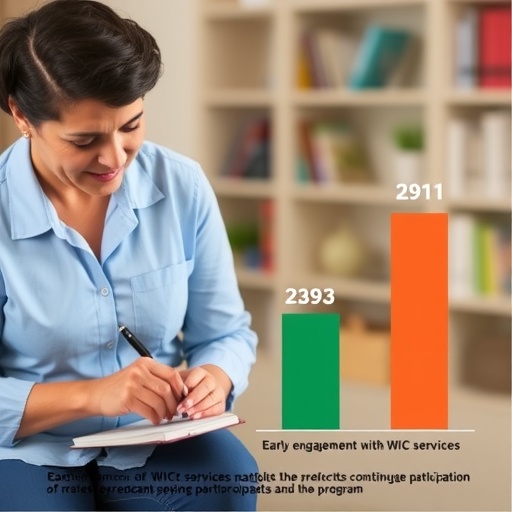
A family’s first months in the Special Supplemental Nutrition Program for Women, Infants, and Children may help determine whether it remains enrolled long enough to receive the program’s full benefits, according to a new study published in the Journal of Nutrition Education and Behavior. Researchers found that several early patterns of participation—including when a family enrolled during pregnancy, whether it redeemed available food benefits, and how often it used WIC for feeding guidance—were associated with the likelihood of leaving the program before a child reached 13 months of age.
The findings are based on an analysis of 1,851 participants in the nationally representative WIC Infant and Toddler Feeding Practices Study-2. The researchers examined families’ experiences with WIC during pregnancy and early infancy, then compared those experiences with whether participants remained enrolled through the child’s first year. Approximately 15 percent of the families in the analysis exited WIC early. The study offers a detailed look at engagement not simply as a measure of attendance, but as a collection of behaviors that may reveal whether families are successfully connecting with the resources WIC provides.
WIC is one of the largest public nutrition programs in the United States, supporting millions of pregnant and postpartum women, infants, and young children each month. Its services extend beyond the distribution of supplemental foods. Participants may receive individualized nutrition education, breastfeeding support, referrals to medical and social services, and guidance related to infant feeding and child development. Because the program is designed to operate throughout pregnancy, infancy, and early childhood, continued participation can provide an ongoing layer of nutritional and preventive support during a period of rapid growth.
The analysis showed that families who enrolled later in pregnancy were more likely to leave WIC before their child reached 13 months. Earlier enrollment may give participants more time to understand eligibility requirements, establish relationships with program staff, learn how benefits work, and connect with services before the demands of caring for a newborn intensify. It may also indicate that families who enter WIC earlier have fewer logistical barriers or are more likely to recognize the program as a continuing source of support rather than a short-term emergency resource.
Benefit redemption was another important marker. Participants who did not redeem all of their available WIC food benefits had a higher likelihood of exiting early. WIC benefits are carefully designed to provide foods such as fruits and vegetables, whole grains, milk, eggs, infant foods, and other items that support nutritional needs during pregnancy and early childhood. Failure to use benefits may reflect practical obstacles, including transportation problems, limited store access, changing household circumstances, confusion about eligible products, or difficulty fitting shopping into a family’s schedule. It may also signal that the program is not yet aligned with a household’s immediate needs.
The study also identified the importance of information and counseling. Families were more likely to leave early if they had not received breastfeeding information from WIC or had not relied on WIC for advice about feeding an infant. These findings suggest that nutrition education may influence retention in ways that are not captured by food assistance alone. When participants use WIC as a trusted source of technical guidance—particularly during the transition from pregnancy to newborn care—the program may become more relevant to daily decisions about breastfeeding, formula feeding, introducing solid foods, and responding to an infant’s changing nutritional requirements.
Infant feeding is a technically complex period for families. Newborn nutritional needs change quickly, breastfeeding can require skilled support, and caregivers must navigate questions about formula preparation, hunger and satiety cues, allergy prevention, and the timing and texture of complementary foods. WIC’s counseling and referral systems are intended to help families interpret this information and connect it to their own circumstances. The new findings do not prove that receiving counseling directly prevents families from leaving, but they indicate that early use of these services is linked with longer participation.
Participation in other public assistance programs also appeared to matter. Families who were not enrolled in other assistance programs were more likely to exit WIC early. This pattern may reflect differences in how households interact with public services, rather than a direct effect of receiving or not receiving another benefit. Families connected to multiple programs may have more established relationships with caseworkers, greater familiarity with eligibility procedures, or more frequent contact with systems that help them maintain enrollment. Those outside other assistance programs may face greater isolation from support networks or may encounter administrative barriers that make continued WIC participation more difficult.
The researchers emphasize that the results point toward opportunities to strengthen engagement during pregnancy and the earliest months of a child’s life. WIC agencies could potentially improve retention by offering clearer onboarding, making benefit redemption easier, expanding flexible appointment and communication options, and ensuring that breastfeeding and infant-feeding guidance is readily available. Early outreach may be especially valuable for families who enroll late, redeem few benefits, or do not initially seek nutrition information. Identifying these patterns quickly could allow staff to provide targeted assistance before a family disengages completely.
The study arrives as WIC marks its 50th anniversary and as public health researchers continue to examine how effectively the program reaches families over time. Its central message is that enrollment alone may not capture the quality of a family’s connection to nutrition assistance. The first months after birth can establish whether WIC becomes an integrated part of household health care or a benefit that is difficult to access and use. By helping families engage with food benefits, breastfeeding resources, nutrition education, and referrals early, the program may improve continuity of participation and increase the chance that children receive sustained nutritional support during a critical stage of development. The researchers caution, however, that the observed relationships are associations rather than proof of cause and effect; further studies will be needed to determine which specific interventions most effectively keep families enrolled.
News Publication Date: August 12, 2026
Web References: Journal of Nutrition Education and Behavior; https://doi.org/10.1016/j.jneb.2025.12.013
References: Hodges et al., “Less Engagement With the Special Supplemental Nutrition Program for Women, Infants, and Children (WIC) in Early Infancy Predicts Early Exits from the Program,” Journal of Nutrition Education and Behavior, DOI: 10.1016/j.jneb.2025.12.013
Cite Scienmag News
Courtney Benton. (August 12, 2026). Early engagement with WIC services predicts continued participation in the program. Scienmag. https://scienmag.com/early-engagement-with-wic-services-predicts-continued-participation-in-the-program/
Courtney Benton. "Early engagement with WIC services predicts continued participation in the program." Scienmag, 12 August 2026, https://scienmag.com/early-engagement-with-wic-services-predicts-continued-participation-in-the-program/. Accessed 4 September 2026.
Courtney Benton. "Early engagement with WIC services predicts continued participation in the program." Scienmag. August 12, 2026. https://scienmag.com/early-engagement-with-wic-services-predicts-continued-participation-in-the-program/


