


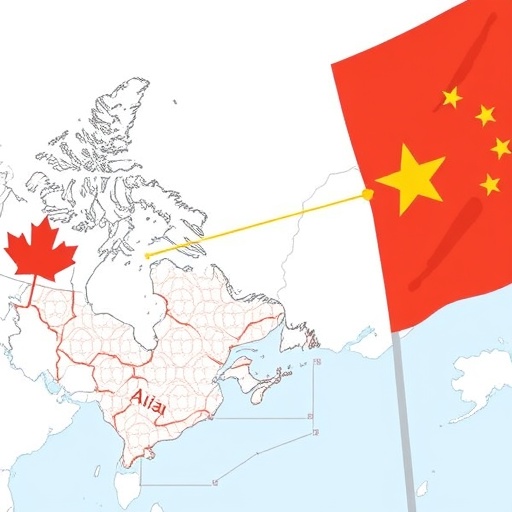
Geopolitical tensions between Canada and China have emerged as a critical factor influencing academic collaborations, particularly in the realm of joint research publications. This dynamic has raised questions about the future of scientific cooperation between these two nations, as shifting political landscapes and social climates impact scholarly endeavors. The recent study conducted by Wang and Zha delves deep into these tensions and investigates their ramifications for joint publications, providing insights that resonate across various scientific disciplines.
The landscape of international research collaborations often hinges on stable political relationships. However, the growing geopolitical tensions between Canada and China have introduced a layer of uncertainty that complicates collaboration efforts. These tensions have emerged from various issues, including trade disagreements, concerns about national security, and differing values and governance models. As a result, researchers in both countries are experiencing increased scrutiny and pressure to align their work with national interests, potentially influencing the nature and output of joint research efforts.
Wang and Zha’s analysis reveals a significant decline in the volume of joint research publications between Canada and China in recent years. This drop is not merely quantitative; it also reflects a qualitative shift in the types of collaborations being pursued. Researchers may increasingly shy away from topics that could be politically sensitive or subject to governmental review, opting instead for projects that are less likely to raise eyebrows. This shift may inadvertently lead to a lack of innovation and a narrowing of research focus, which can have long-lasting implications for the scholarly community and the outcomes of collaborative projects.
The contracts that bind researchers from these two countries illustrate a growing complexity in academic partnerships. Funding agencies and universities are beginning to implement new guidelines and ethical considerations when it comes to international collaboration. The fear of intellectual property theft or misuse of research findings is placing additional pressure on scholars to tread carefully in their partnerships, especially when navigating the bureaucratic landscapes of both nations. Institutions may find themselves caught in a balancing act, aiming to foster research collaboration while simultaneously safeguarding national interests.
Moreover, the role of social media and public discourse cannot be overlooked in this context. The rapid dissemination of information has made it easier for critics to target specific research initiatives or public figures, thereby heightening the stakes for scholars involved in joint research projects. The public outcry or backlash over certain collaborations can dissuade researchers from pursuing joint initiatives altogether, further contributing to the downward trend in Canada-China research partnerships. As the narrative surrounding geopolitical tensions evolves, its influence on academic research and collaboration remains a pressing concern.
These geopolitical influences extend beyond just collaborative ventures; they also affect individual researchers’ career trajectories. Scholars may find themselves facing difficulties in securing funding or publications due to their association with institutions in politically sensitive regions. This factor can create an environment of self-censorship, where researchers refrain from publishing certain findings or engaging with colleagues from countries experiencing heightened tensions. The long-term consequences of this self-limiting behavior can hamper academic diversity and innovation.
The study also underscores the importance of communication and transparency in maintaining academic collaborations in the face of geopolitical challenges. Institutions, organizations, and researchers must engage with one another more openly to navigate these turbulent waters effectively. Creating platforms for dialogue, understanding the nuances of each country’s concerns, and adopting a collaborative mindset could enhance mutual trust and minimize the impact of geopolitical divisions on research efforts.
In light of these pressures, there is a pressing need for researchers to adapt their strategies for collaboration. This may include diversifying their networks, exploring new partnerships with countries that maintain a neutral stance in geopolitical disputes, and being selective about the topics they choose to research. Resilience and adaptability will prove critical as researchers strive to innovate and maintain their academic integrity amid challenging geopolitical landscapes.
The implications of this study are significant, not only for Canada and China but also for the wider global academic community. As research becomes increasingly international, understanding the geopolitical pressures that shape collaborative efforts will be vital for ensuring the sustainability of innovative research. Scholars, policymakers, and institutions must work collaboratively to create an environment conducive to research freedom while managing the complexities of international relations.
Wang and Zha’s findings suggest that the trajectory of Canada-China joint research publications is at a crossroads. The path forward requires thoughtful navigation of political landscapes while remaining committed to scientific rigor and ethical research practices. As tensions ebb and flow, maintaining an open dialogue and fostering a collaborative spirit between countries will be crucial for the future of academic partnerships and the pursuit of knowledge.
In conclusion, the study illuminates the delicate balance between geopolitics and academic collaboration. Wang and Zha have contributed to a critical discourse that transcends national boundaries, reminding us that the pursuit of knowledge should ideally unite rather than divide. The future of collaborative research hinges on our ability to transcend political differences, paving the way for innovative partnerships that can address global challenges and foster mutual understanding.
As this narrative unfolds, it will be essential for researchers to remain aware of the shifting geopolitical landscape and actively seek out ways to sustain their collaborative efforts. By fostering resilience, embracing transparency, and nurturing a commitment to research integrity, scholars can continue to contribute to the global body of knowledge—transcending the challenges posed by geopolitical tensions.
Wang, Y.X., Zha, Q. Geopolitical tensions: impact on and trajectory of Canada-China joint research publications. High Educ (2025). https://doi.org/10.1007/s10734-025-01530-z
Cite Scienmag News
Courtney Benton. (October 14, 2025). Canada-China Research Collaborations Amid Geopolitical Tensions. Scienmag. https://scienmag.com/canada-china-research-collaborations-amid-geopolitical-tensions/
Courtney Benton. "Canada-China Research Collaborations Amid Geopolitical Tensions." Scienmag, 14 October 2025, https://scienmag.com/canada-china-research-collaborations-amid-geopolitical-tensions/. Accessed 3 September 2026.
Courtney Benton. "Canada-China Research Collaborations Amid Geopolitical Tensions." Scienmag. October 14, 2025. https://scienmag.com/canada-china-research-collaborations-amid-geopolitical-tensions/


