


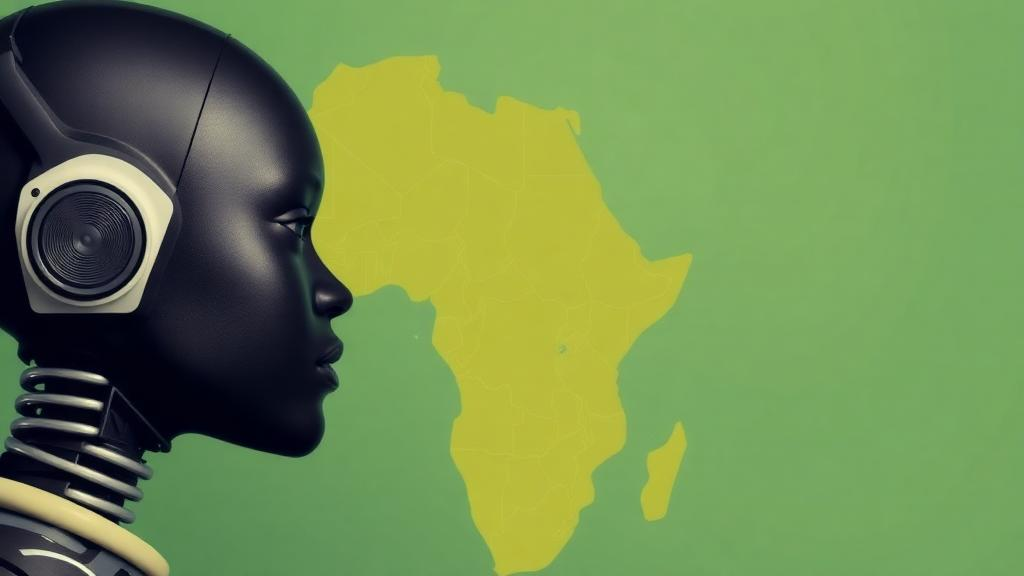
Artificial intelligence is being hailed as one of the most powerful tools yet for fighting poverty in Africa, but a new review argues that the technology is a double-edged sword: the same systems that can predict crop failures and extend microloans to the unbanked could also displace millions of low-skilled workers and deepen the very inequalities they are meant to erase. Writing in Frontiers in Human Dynamics, Emmanuel Ndhlovu of the University of Johannesburg and David Mhlanga of North-West University present a critical document analysis of AI’s role in poverty alleviation across the continent, weighing transformative opportunities against serious structural risks. Their conclusion is neither utopian nor dismissive: with the right policies, partnerships, and investments, AI could become a genuine catalyst for achieving the United Nations’ first Sustainable Development Goal, ending poverty in all its forms, but only if deployment is deliberately engineered for inclusion.
The scale of the challenge is sobering. According to the World Bank, more than 35 percent of Sub-Saharan Africa’s population lives below the international poverty line of $2.15 per day. The authors stress that poverty in Africa is multidimensional, extending beyond income deprivation to encompass gaps in education, healthcare, nutrition, housing, and access to clean water and sanitation. The African Development Bank defines it as the inability to meet basic needs due to a lack of resources, infrastructure, and opportunities for socioeconomic advancement. Traditional poverty alleviation strategies, though impactful in specific contexts, have struggled against systemic barriers such as resource constraints, corruption, and inadequate infrastructure. It is against this backdrop that the authors examine whether AI, with its capacity to analyse vast datasets, optimise resource allocation, and predict socioeconomic trends, can succeed where conventional interventions have stalled.
Agriculture emerges as the most immediate testing ground. The sector employs over 60 percent of Africa’s population and contributes significantly to GDP, yet it remains plagued by low productivity, resource mismanagement, and vulnerability to climate change. AI-powered precision agriculture deploys machine learning, drones, and sensors to monitor soil health, moisture levels, crop growth, and pest infestations in real time. AI-enabled drones capture aerial imagery that helps farmers identify exactly which patches of a field need replanting or irrigation, while soil sensors analyse nutrient levels and recommend precise fertiliser applications, cutting waste and boosting yields. Machine learning models trained on historical and real-time weather data deliver forecasts that let farmers plan planting and harvesting schedules around droughts and floods rather than being blindsided by them. Image recognition systems can detect diseases such as maize streak virus or cassava mosaic disease from photographs of crops, enabling timely interventions before outbreaks spread. AI-powered storage solutions that monitor temperature and humidity in real time tackle post-harvest losses, a major drain on food security, while mobile applications deliver personalised advice on crop management, market prices, and weather conditions in local languages, putting advanced agricultural knowledge within reach of the smallholder farmers who form the majority of the agricultural workforce.
Healthcare is the second pillar. In rural areas where medical professionals, facilities, and resources are scarce, AI algorithms are being used to forecast outbreaks of diseases such as malaria, cholera, and Ebola by processing epidemiological, environmental, and demographic data. Models that analyse weather conditions and mosquito breeding patterns have been used to predict malaria outbreaks, allowing early interventions in vulnerable regions. AI-enhanced telemedicine platforms enable remote diagnosis and consultation through smartphones, reducing the need for patients to travel long distances to urban centres, while AI chatbots provide preliminary health advice and triage services that ease the burden on overworked clinicians. Diagnostic tools powered by AI can examine chest x-rays to identify tuberculosis or analyse blood samples for signs of malaria, capabilities that are especially valuable where advanced equipment and specialists are limited. Beyond individual care, AI is improving public health at the systems level: algorithms predict demand for medicines and vaccines across regions, direct stock to areas at risk of shortages, automate administrative tasks such as scheduling and record-keeping, and aggregate data from electronic health records and disease surveillance systems to track vaccination coverage and evaluate the effectiveness of interventions.
Education, the authors argue, is a critical pathway out of poverty, and AI is reshaping how it is delivered. Machine learning algorithms analyse a student’s progress to identify strengths and weaknesses, then deliver customised lessons and exercises, an approach particularly valuable in overcrowded classrooms where teachers cannot give individual attention. AI-powered digital platforms deliver high-quality, multilingual, culturally relevant learning materials to remote regions, and some applications function offline, ensuring that learning continues where internet connectivity is limited. Skill-building programs in coding, data analysis, and digital marketing prepare young Africans for the digital economy, while AI-driven career guidance systems analyse individual aptitudes and market trends to recommend suitable paths. Teachers benefit too: virtual assistants automate grading and attendance tracking, freeing time for instruction, and professional development platforms give educators in even the most isolated areas access to up-to-date training.
The review also highlights AI’s role in infrastructure and finance. In rapidly urbanising African cities, AI-driven traffic management systems analyse data from cameras, sensors, and GPS devices to predict congestion and adjust signals dynamically, reducing travel times, fuel consumption, and carbon emissions. Machine learning optimises waste collection routes and recycling, while AI-powered smart grids analyse consumption patterns to match electricity supply with demand, reduce wastage, and integrate renewable sources such as solar and wind. Predictive analytics monitor water distribution systems, detect leaks in real time, and forecast demand to ensure equitable access in informal settlements. Perhaps most striking is the transformation of microfinance: predictive credit scoring models analyse non-traditional data such as mobile money transactions, utility payment histories, and smartphone usage patterns to assess the creditworthiness of entrepreneurs who lack formal financial records. Because these models rely on data patterns rather than subjective judgment, the authors note they are effectively gender-neutral, offering women entrepreneurs, who often face the greatest barriers to formal credit, a more equitable route to loans that can fund equipment, expansion, and hiring.
The authors also draw a useful conceptual distinction between precision AI and populist AI. Precision AI refers to highly specialised applications tailored to specific challenges, exemplified by the World Bank’s Development Impact Evaluation program, which uses AI to evaluate poverty-reduction programs in real time so policymakers can refine interventions dynamically. Populist AI, by contrast, focuses on democratising access, illustrated by India’s #AIforAll strategy, which embeds AI into everyday tools such as chatbots that provide government services in local languages. In Africa, similar approaches are emerging through mobile applications delivering agricultural advice, financial education, and healthcare to remote areas. The authors argue that combining the targeted effectiveness of precision AI with the inclusivity of populist AI is what allows benefits to reach even the most marginalised communities.
Yet the risks are substantial, and the review is unusually blunt about them. Job displacement tops the list: automation and robotics are replacing repetitive manual tasks across manufacturing, agriculture, and retail, and in a region where a significant share of the population depends on low-skilled work, AI-powered mechanisation could push farm labourers deeper into poverty if alternative livelihoods are unavailable. The absence of robust social safety nets in many African countries amplifies this vulnerability. Energy consumption presents a paradox: while AI can optimise energy distribution, training and running AI models demands enormous computational power, and data centres in regions reliant on coal or other polluting sources could worsen energy poverty and raise costs for the very households AI is meant to help. There is also a geopolitical dimension: as global companies automate, the demand for goods and services produced by low-cost African labour may decline, eroding a traditional comparative advantage, while high-income countries dominate AI research and capture most of the economic gains. The high cost of acquiring and deploying AI technologies further delays adoption in sectors where it could do the most good.
The policy prescriptions follow directly from the diagnosis. Governments must invest in education and vocational retraining to prepare workers for an AI-driven economy, and implement labour policies that ensure technology complements rather than replaces human labour. Public-private partnerships can pool resources and expertise, while dedicated AI research centres and incentives for private investment can build local innovation ecosystems tailored to African contexts. On the equity side, the authors call for social protection programs, including unemployment insurance and labour rights enforcement, income redistribution through progressive taxation, and inclusive policymaking that involves marginalised communities in decisions about how AI is deployed. Regulatory frameworks must enforce transparency and accountability so that algorithms are fair and unbiased, and international cooperation on technology transfer and capacity building is essential to prevent the AI divide from widening.
The bottom line, according to Ndhlovu and Mhlanga, is that AI’s poverty-fighting potential in Africa is real but conditional. The technology can improve food production, enhance credit access, alleviate food insecurity, address energy poverty, and promote financial inclusion, but it can just as easily displace workers, strain energy systems, and concentrate gains among those already advantaged. Whether AI becomes a catalyst for inclusive growth or a new engine of inequality depends on choices being made now, by governments, international organisations, and private stakeholders, about infrastructure, literacy, ethics, and equity. With those safeguards in place, the authors conclude, AI can serve as a powerful enabler of poverty alleviation and social transformation across the continent, aligned with the global commitment to end poverty by 2030.
Subject of Research: The role of artificial intelligence in poverty alleviation across Africa, covering its applications, risks, and policy pathways for inclusive deployment.
Article Title: Artificial Intelligence as a catalyst for poverty alleviation in Africa: challenges, opportunities, and pathways for inclusion
Article References: Ndhlovu, E., & Mhlanga, D. (2026). Artificial Intelligence as a catalyst for poverty alleviation in Africa: challenges, opportunities, and pathways for inclusion. Frontiers in Human Dynamics, 8, Article 1927376. https://doi.org/10.3389/fhumd.2026.1927376
Image Credits: AI Generated
DOI: 10.3389/fhumd.2026.1927376
Keywords: artificial intelligence, poverty alleviation, Africa, precision agriculture, financial inclusion, digital divide, Sustainable Development Goals, telemedicine, smart cities, microfinance, energy poverty, job displacement
Cite Scienmag News
Alan Morgan. (October 16, 2026). Can AI Really End Poverty in Africa? New Research Weighs the Promise Against the Peril. Scienmag. https://scienmag.com/can-ai-really-end-poverty-in-africa-new-research-weighs-the-promise-against-the-peril/
Alan Morgan. "Can AI Really End Poverty in Africa? New Research Weighs the Promise Against the Peril." Scienmag, 16 October 2026, https://scienmag.com/can-ai-really-end-poverty-in-africa-new-research-weighs-the-promise-against-the-peril/. Accessed 16 October 2026.
Alan Morgan. "Can AI Really End Poverty in Africa? New Research Weighs the Promise Against the Peril." Scienmag. October 16, 2026. https://scienmag.com/can-ai-really-end-poverty-in-africa-new-research-weighs-the-promise-against-the-peril/


