


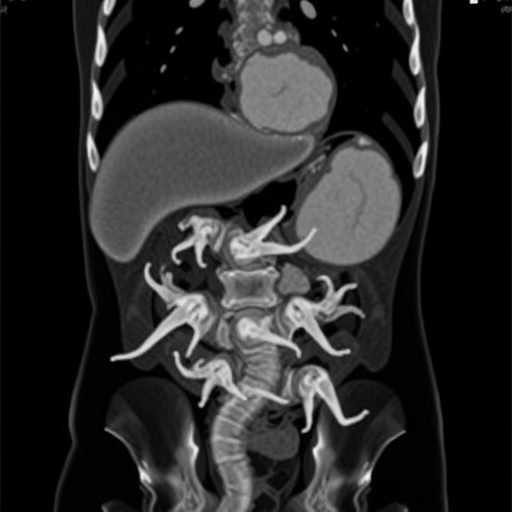
In a groundbreaking case that has caught the attention of the medical community, researchers have provided insights into a rare cause of small intestinal obstruction in children, specifically referencing the calcifying fibrous tumor (CFT). Small intestinal obstructions are common pediatric emergencies, often attributed to various conditions including hernias, conditions such as cystic fibrosis, and infections, but CFT represents an unusual entity that is rarely identified among the differential diagnoses.
The case in question, presented by Yang, Xie, and Wang—along with their colleagues—highlights the limitations of conventional diagnostic techniques when confronted with atypical tumors. In this study, the authors detail a young patient whose small intestinal obstruction was ultimately traced back to the presence of a calcifying fibrous tumor, a neoplasm characterized by collagenous stroma, calcifications, and a minimal inflammatory reaction. CFTs are generally considered benign but are known for their potential to cause significant morbidity.
In reviewing the medical history of the patient, the researchers elaborate on the patient’s presentation, which included abdominal pain, distention, and vomiting. Initial assessments indicated a surgical emergency, prompting further exploration. This case emphasizes the critical need for clinicians to maintain a high degree of suspicion when encountering young patients with unexplained gastrointestinal symptoms. Understanding the potential for CFTs to present in such contexts could markedly improve diagnostic accuracy.
The rarity of calcifying fibrous tumors, especially in the pediatric population, adds another layer of complexity to this case. These tumors have often been found in adults, and their manifestation in children is exceedingly rare. This case report serves as a reminder that pediatric surgeons and gastroenterologists should consider them in their differential diagnosis, even when faced with a straightforward scenario of bowel obstruction.
Further complicating the clinical picture is the pathophysiological nature of CFTs. These tumors are thought to arise from fibrous tissue and can often go unnoticed until they present with symptoms. The investigation conducted showed that the lesion in this instance had expanded sufficiently to obstruct the intestines. Such findings underscore the potential for delay in diagnosis, as the clinical features may masquerade as more common gastrointestinal disorders that are routinely encountered in pediatric practice.
Imaging plays a crucial role in the diagnosis of these tumors. While standard radiographic studies may provide initial insights, advanced imaging such as CT scans are imperative for accurate identification. In this case, radiological work-up revealed a distinct mass in the small intestine that prompted the surgical intervention. Such imaging techniques not only aid in diagnosis but also help determine the extent of the disease, guiding therapeutic strategies.
Ultimately, a surgical approach was adopted, leading to the excision of the CFT. Post-operative observations indicated a successful resolution of the bowel obstruction, reinforcing the effectiveness of prompt surgical intervention in managing such rare neoplasms. The case underscores that despite the rarity of CFTs, their implications can significantly impact patient outcomes, particularly when timely and effective treatment is administered.
Following the surgical excision, the pathological examination confirmed the diagnosis, providing a conclusive end to a diagnostic odyssey that justified the clinicians’ suspicion. The meticulous correlation of clinical, radiological, and pathological findings showcased the multidisciplinary efforts vital in managing complex cases.
The authors successfully advocate for a greater awareness of calcifying fibrous tumors among healthcare professionals who treat children, emphasizing the need for educational initiatives aimed at enhancing knowledge about rare causes of gastrointestinal obstruction. By doing so, they hope to foster a more informed approach to evaluation and treatment, ultimately leading to improved patient care.
As the medical community delves deeper into the nuances of this case, it serves as a poignant reminder of the challenges posed by rare conditions. Each instance of a rare tumor presents an opportunity for learning, and this particular narrative adds valuable insights into pediatric tumors, the spectrum of potential presentations, and the importance of remaining vigilant.
In conclusion, this case report captures a unique intersection of rarity and clinical complexity, reaffirming the invaluable role of thorough clinical assessment, timely imaging, and surgical intervention in managing obscure pediatric pathologies. As further studies explore the incidence and mechanisms of calcifying fibrous tumors, instances like this one will form a pivotal foundation for advancing medical knowledge and improving outcomes for future patients.
Advocacy for more research into CFTs is vital, as is the sharing of these case studies within medical literature. They facilitate the growth of an informed healthcare community, equipped to recognize and manage conditions that may otherwise go unconsidered. The impact of this case will potentially resonate beyond individual patient care, fostering a broader dialogue in pediatric surgical forums and academic discussions.
In the realm of pediatric care, awareness is key. This report contributes to a growing body of evidence that encourages healthcare providers to be mindful of rare tumors like calcifying fibrous tumors, ultimately paving the way for better diagnostic and therapeutic strategies. As the study of such rare conditions progresses, the hope is that fewer children will face the challenges inherent in misdiagnoses or delays in treatment.
This remarkable case emphasizes the continuing evolution of pediatric medicine and serves as an impetus for the medical community to persist in their pursuit of knowledge and excellence in care. Future publications and research may shed light on further nuances of CFTs and their role in pediatric pathology, driving home the necessity for thorough examination and exploration in every fevered case of abdominal distress.
In summary, the enlightening case of calcifying fibrous tumor as a rare cause of small intestinal obstruction reminds us of the complexity of clinical presentations in children. For healthcare providers everywhere, it reinforces the importance of combined vigilance, collaboration, and the thirst for knowledge in the face of clinical uncertainty.
Yang, Z., Xie, X., Wang, S. et al. A rare cause of small intestinal obstruction in children: a case report of calcifying fibrous tumor.
BMC Pediatr 25, 683 (2025). https://doi.org/10.1186/s12887-025-06149-8
Cite Scienmag News
Ophelia Keating. (September 19, 2025). Calcifying Fibrous Tumor: Uncommon Cause of Intestinal Obstruction. Scienmag. https://scienmag.com/calcifying-fibrous-tumor-uncommon-cause-of-intestinal-obstruction/
Ophelia Keating. "Calcifying Fibrous Tumor: Uncommon Cause of Intestinal Obstruction." Scienmag, 19 September 2025, https://scienmag.com/calcifying-fibrous-tumor-uncommon-cause-of-intestinal-obstruction/. Accessed 3 September 2026.
Ophelia Keating. "Calcifying Fibrous Tumor: Uncommon Cause of Intestinal Obstruction." Scienmag. September 19, 2025. https://scienmag.com/calcifying-fibrous-tumor-uncommon-cause-of-intestinal-obstruction/


