


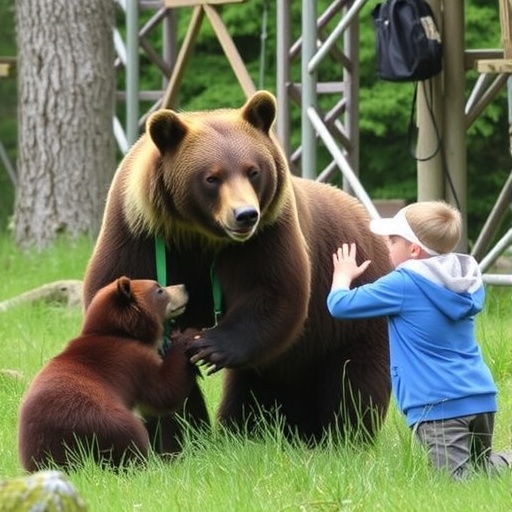
In the heart of Europe, where the picturesque landscapes of Poland cradle one of the continent’s most majestic creatures, the brown bear, a fascinating dialogue has emerged around wildlife management and human coexistence. The study led by a team of researchers, including Bautista, García-Rodríguez, and Berezowska-Cnota, delves into how compensation programs can serve as a bridge to build trust between wildlife conservation efforts and local communities. This initiative shines a light on the critical interplay between conservation strategies and human livelihoods, raising essential questions about the cohabitation of humans and apex predators.
Brown bears, although revered for their grace and strength, have often been seen as threats to agriculture and personal safety in rural regions. Farmers frequently express concerns over crop damage and livestock predation, leading to a complex web of human-wildlife conflict. The researchers argue that addressing these issues head-on through well-structured compensation programs can alleviate tensions, fostering a more harmonious relationship between the two parties. The findings of this compelling research are poised to change the conversation around wildlife conservation in Poland and potentially beyond.
Compensation programs can take various forms, from direct financial recompense for losses incurred due to wildlife activities to indirect support mechanisms aimed at bolstering local economies. These initiatives are not merely about financial payouts; rather, they represent a commitment to recognizing the value of wildlife and the importance of human perspectives in conservation planning. By implementing such programs, policymakers can signal to local communities that their agricultural pursuits and lifestyles are valued alongside biodiversity protection.
One of the critical components outlined in the research is the importance of transparency and communication in the compensation process. The researchers highlight that, often, the mere presence of a compensation program is insufficient. Effective communication helps to establish what can be expected from these programs, reducing uncertainty and fostering a more collaborative atmosphere. This transparency can also work in tandem with community involvement, empowering local voices and creating a sense of shared stewardship over both agricultural success and wildlife conservation.
Moreover, the study addresses the psychological aspects influencing human attitudes towards bears. Many residents live with the constant possibility of encountering a bear, which can instill fear and anxiety. By integrating compensation programs, local populations might experience an enhanced sense of perceived control. This feeling of control can transform their interaction with these animals from one of apprehension to one of coexistence. This shift is crucial for changing perceptions and achieving long-term success in conservation efforts.
As part of their research, Bautista and colleagues also examined existing compensation programs within Europe, noting varying levels of success. It became evident that when communities fully understand the benefits and mechanics of these initiatives, their willingness to tolerate and even support wildlife conservation efforts increases significantly. This finding suggests that a one-size-fits-all approach may not be effective; instead, designs must be tailored to reflect local circumstances and cultural contexts.
Another noteworthy aspect of the research is the potential for compensatory frameworks to serve as a catalyst for community cohesion. When neighbors understand they can collectively benefit from wildlife through compensation, there is a growing incentive to foster cooperation amongst themselves. This community solidarity can be crucial, especially during challenging seasons when wildlife interactions may spike.
Additionally, the findings reveal that the support of local government and conservation organizations plays a pivotal role in the sustainability of these compensation programs. When communities feel backed by these entities, their trust in both the compensation model and conservation efforts substantially increases. This relationship creates a synergistic effect where both biodiversity and human welfare can thrive, resulting in a win-win scenario for all stakeholders involved.
Advocating for wildlife does not mean hindering human development. On the contrary, when implemented effectively, the principles outlined in this research could inspire new economic opportunities within rural areas. For example, promoting eco-tourism where visitors come to observe brown bears in their natural habitat can serve as an additional revenue stream for communities. Such initiatives could sustain not only the animal populations but also the people who live among them, creating a symbiotic relationship.
Furthermore, international collaboration can bolster these efforts. Poland’s experience with compensation programs may serve as a valuable case study for neighboring countries facing similar challenges with apex wildlife. By sharing best practices and lessons learned, regions can avoid common pitfalls and enhance the efficacy of conservation measures across borders. This collaborative approach can lead to greater ecological resilience in the face of a changing climate, which is increasingly disrupting wildlife-human interactions.
As we navigate the complexities of wildlife management, the lessons from Bautista and colleagues’ study could inspire groundbreaking policies worldwide. Acknowledging that cohabitation is not only possible but also beneficial will be crucial to the success of conservation strategies in the years to come. Crafting nuanced policy frameworks that integrate economic, social, and ecological considerations will be necessary as humanity strives to share the planet with its diverse and magnificent wildlife.
The research ultimately provides a roadmap for policymakers looking to enhance human-wildlife coexistence while reinforcing the critical importance of local community engagement in conservation efforts. Through thoughtful implementation of compensation programs designed with both empathy and understanding, we can cultivate a future where humanity and wildlife coalesce in mutual respect, paving the way for sustainable coexistence.
Thus, in an era where biodiversity is under threat from myriad challenges, successful precedents like these stand as beacons of hope, illustrating that collaboration between humans and wildlife is not only essential but also entirely attainable.
Cite Scienmag News
Margaret Porter. (February 1, 2026). Building Trust: Compensation Aids Brown Bear Coexistence. Scienmag. https://scienmag.com/building-trust-compensation-aids-brown-bear-coexistence/
Margaret Porter. "Building Trust: Compensation Aids Brown Bear Coexistence." Scienmag, 1 February 2026, https://scienmag.com/building-trust-compensation-aids-brown-bear-coexistence/. Accessed 3 September 2026.
Margaret Porter. "Building Trust: Compensation Aids Brown Bear Coexistence." Scienmag. February 1, 2026. https://scienmag.com/building-trust-compensation-aids-brown-bear-coexistence/


