


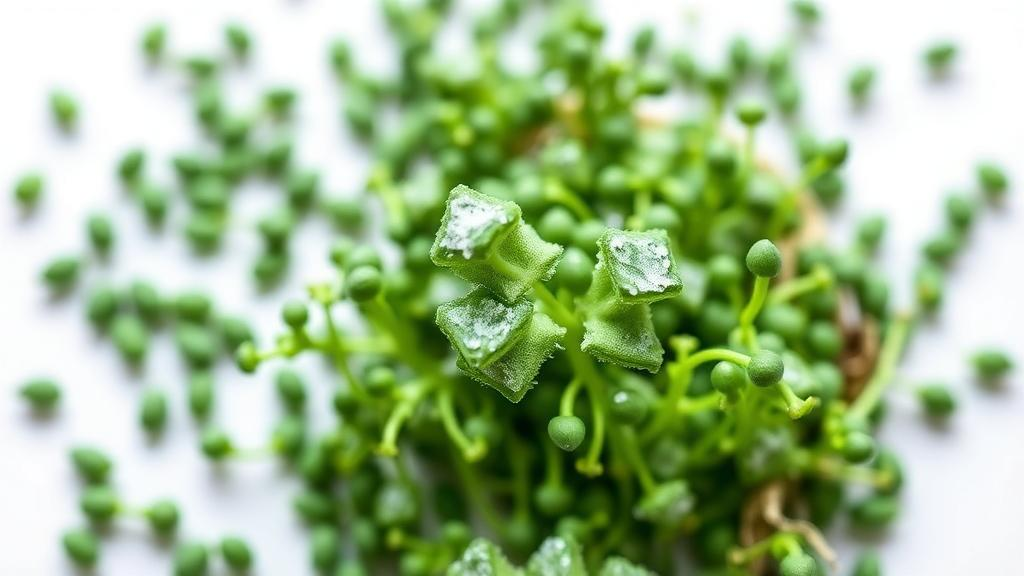
Microgreens have become the darlings of the culinary world, prized for their intense flavors, dense phytochemical content, and remarkably short journey from seed to plate. Harvested just seven to twenty-one days after germination, these tender seedlings are typically eaten raw, which means whatever contamination they carry reaches the consumer without any kill step in between. That vulnerability has long troubled food safety researchers, because the very conditions that make microgreens grow so fast—warm temperatures, high humidity, dense seeding, and nutrient-rich substrates—also create an ideal incubator for dangerous bacteria such as Salmonella enterica, a pathogen responsible for an estimated 1.35 million infections each year in the United States alone.
A new study published in the Journal of Agriculture and Food Research offers a promising preharvest answer. A team led by Samiksha Bhattarai and Jitendra Patel of the University of Maryland and the USDA Agricultural Research Service tested two plant-derived antimicrobial formulations as seed treatments before sowing: a nanoemulsion of benzyl isothiocyanate, or BIT, a pungent defense compound naturally produced by cruciferous vegetables, and Sporan, a commercial botanical fungicide built from essential oils. Across five Brassicaceae microgreen species—broccoli, mustard, red cabbage, red Russian kale, and daikon radish—the treatments significantly reduced Salmonella contamination on seeds, with the BIT nanoemulsion delivering reductions of up to 2.15 log CFU per gram, roughly a hundredfold drop in bacterial numbers.
The choice of BIT was no accident. Isothiocyanates are the sharp-tasting chemicals behind the bite of mustard and horseradish, formed when glucosinolates in Brassicaceae plants are enzymatically broken down. Previous work has shown they attack bacteria on multiple fronts: disrupting outer membranes, reacting with sulfur-containing amino acids in key metabolic enzymes, interfering with hydrogen ion transfer in the respiratory chain, and ultimately impairing ATP synthesis. Electron microscopy studies cited by the authors show BIT causing bacterial cells to shrink, leak their contents, and burst, while proteins inside the cell unfold and clump into aggregates. But BIT is hydrophobic and volatile, which has hampered its practical use—problems the researchers addressed by formulating it as a nanoemulsion with droplets measuring just 12 to 34 nanometers.
That nanoscale delivery matters. Nanoemulsions stabilize tiny oil droplets with food-grade surfactants, dramatically increasing the surface area available for microbial contact and improving dispersion across irregular seed surfaces. The tiny droplets can penetrate microscopic crevices in the seed coat where Salmonella cells hide, delivering the antimicrobial directly to attached bacteria that conventional washes often miss. In laboratory disk diffusion assays, the 1% BIT nanoemulsion produced inhibition zones of roughly 12 to 14 millimeters against five Salmonella serovars, consistently outperforming the 2% Sporan emulsion, which produced zones of 9 to 10.5 millimeters. The antibiotic gentamicin, used as a positive control, produced the largest zones of all, confirming the assay worked as intended.
For the greenhouse-scale experiments, the team inoculated seeds with a cocktail of four Salmonella serovars at realistic contamination levels, then soaked them in water, BIT nanoemulsion, or Sporan before planting. The results were striking but species-dependent. Mustard seeds saw Salmonella fall from 3.28 to 1.13 log CFU per gram under BIT treatment, while red Russian kale seeds dropped from 3.37 to 1.55 log CFU per gram. Broccoli seeds responded well to both treatments, and red cabbage responded to BIT alone. Only BIT significantly reduced Salmonella on daikon radish seeds. Plain water washing, notably, achieved nothing, confirming that the reductions came from genuine antimicrobial activity rather than mechanical rinsing.
The benefits carried through cultivation. On day 14, BIT-treated red cabbage microgreens showed Salmonella levels 1.21 log units lower than on day 7, and red Russian kale microgreens declined by 1.78 log units over the same period—declines the authors attribute to the gradual release of BIT from nanoscale droplets and its continued interaction with bacteria on the plant surface. Mustard microgreens maintained the lowest overall pathogen counts throughout the study, while daikon radish carried the highest, at around 4 log CFU per gram regardless of treatment. Soil populations, by contrast, were unaffected by any treatment, likely because BIT binds readily to soil particles and volatilizes, and essential oils degrade quickly in moist, organic-rich environments. The seed treatment, in other words, protects the seed and the seedling, not the substrate.
There was a trade-off. Germination assays revealed that BIT reduced germination in several species, most dramatically in red Russian kale, where only 7.3% of seeds germinated compared with nearly 80% in water controls, and mustard, which fell to 42.7%. Sporan showed a milder version of the same pattern, sparing broccoli and red cabbage while suppressing daikon radish to 32%. Yet here the story took an unexpected turn: by harvest on day 14, fresh biomass yields were essentially unchanged across nearly all treatments and species. Broccoli, the highest-yielding crop at around 240 grams per tray, showed no difference between treatments whatsoever. The authors suggest that organic potting soil, with its pH buffering and abundant organic matter, absorbs or degrades the phytotoxic compounds, allowing seedlings to recover from early setbacks. Only daikon radish suffered a genuine yield penalty under BIT, dropping to about 97 grams per tray.
The significance of the work lies in the gap it fills. Microgreen production currently lacks any validated microbial kill step. Chlorine and hydrogen peroxide washes, the traditional tools of seed sanitation, offer limited efficacy against internalized or biofilm-protected bacteria and can damage seed viability at effective concentrations. Physical interventions such as irradiation, steam, and dry heat are often impractical for delicate seeds or incompatible with controlled-environment operations, and postharvest washing is ruled out by the fragile tissues of the seedlings themselves. Because Salmonella can migrate from the seed coat into emerging plant tissues, where surface sanitizers cannot reach it, intervening at the seed stage—before the pathogen gains entry—represents one of the few realistic points of control.
The study also positions natural antimicrobials within the broader movement toward clean-label and organic food production. Sporan is already registered for use in organic horticulture, and BIT is a compound consumers effectively already eat every time they bite into arugula or cabbage. For organic and premium microgreen operations that market chemical-free produce, botanical seed treatments offer a path to meaningful pathogen reduction without synthetic residues, even if chemical sanitizers remain cheaper for conventional growers.
The authors are careful to note that complete pathogen elimination was not achieved, and they call for future research comparing these treatments head-to-head with chemical sanitizers on cost and efficacy, and for multi-hurdle approaches that combine seed treatments with other interventions. Still, the findings mark a meaningful step: a naturally derived compound, delivered at nanoscale, cutting Salmonella on seeds and keeping it lower on edible tissues throughout the growing cycle, all without sacrificing the harvest. In an industry where a single contaminated batch can sicken consumers and shutter a business, even a hundredfold reduction at the seed stage is a powerful new tool for one of fresh produce’s most safety-challenged niches.
Subject of Research: Preharvest natural antimicrobial seed treatments for controlling Salmonella enterica in microgreen production
Article Title: Preharvest seed treatment with natural antimicrobial formulations to control Salmonella enterica in microgreens
Article References: Bhattarai, S., Subedi, U., Pradhan, A. K., & Patel, J. (2026). Preharvest seed treatment with natural antimicrobial formulations to control Salmonella enterica in microgreens. Journal of Agriculture and Food Research, Article 103351. https://doi.org/10.1016/j.jafr.2026.103351
Image Credits: AI Generated
DOI: 10.1016/j.jafr.2026.103351
Keywords: microgreens, Salmonella enterica, benzyl isothiocyanate, nanoemulsion, seed treatment, food safety, Brassicaceae, essential oils, Sporan, preharvest intervention, controlled-environment agriculture, foodborne pathogens
Cite Scienmag News
Alan Morgan. (October 6, 2026). Broccoli-Derived Compound Turned Nanoemulsion Slashes Salmonella on Microgreen Seeds. Scienmag. https://scienmag.com/broccoli-derived-compound-turned-nanoemulsion-slashes-salmonella-on-microgreen-seeds/
Alan Morgan. "Broccoli-Derived Compound Turned Nanoemulsion Slashes Salmonella on Microgreen Seeds." Scienmag, 6 October 2026, https://scienmag.com/broccoli-derived-compound-turned-nanoemulsion-slashes-salmonella-on-microgreen-seeds/. Accessed 6 October 2026.
Alan Morgan. "Broccoli-Derived Compound Turned Nanoemulsion Slashes Salmonella on Microgreen Seeds." Scienmag. October 6, 2026. https://scienmag.com/broccoli-derived-compound-turned-nanoemulsion-slashes-salmonella-on-microgreen-seeds/


