


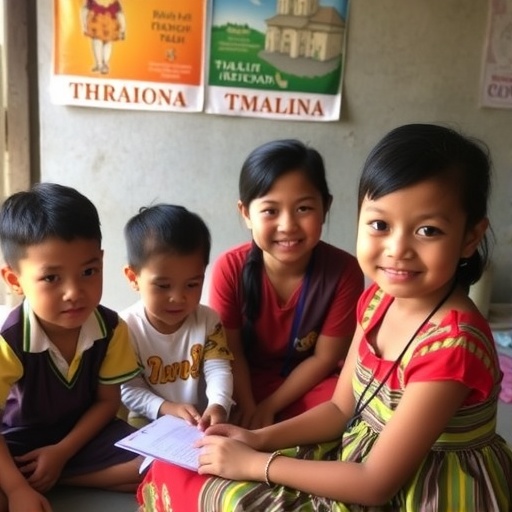
In the rapidly evolving landscape of early childhood education, the strategic deployment of teachers remains a critical yet often overlooked element, especially in countries facing developmental challenges. A recent groundbreaking study, led by Chea, Wang, Ogawa, and colleagues, meticulously dissects the complexities surrounding teacher allocation in Cambodian preschools. Published in the 2025 volume of ICEP, this research offers an unprecedented technical examination aimed at bridging systemic gaps that hinder the effectiveness of early education initiatives in Cambodia. The study’s implications stretch beyond regional boundaries, offering profound insights for educational planners, policymakers, and global development experts.
Cambodia, a Southeast Asian nation that has made remarkable strides in rebuilding its educational infrastructure post-conflict, continues to grapple with substantial obstacles related to human resources in education. The researchers begin by contextualizing the current demographic and socioeconomic dynamics that influence preschool education. With early education recognized globally for its foundational impact on cognitive and social development, the distribution and deployment of qualified teachers are paramount. Yet, in Cambodia, uneven teacher deployment contributes significantly to disparities in educational quality and accessibility, particularly in rural versus urban settings.
Utilizing comprehensive data collection strategies, including field surveys, administrative records, and structured interviews with education officials and school administrators, the research team mapped the patterns of teacher assignments nationwide. Their analysis reveals a multifaceted challenge: a persistent imbalance caused by insufficient incentives for teachers to work in remote areas, coupled with systemic deficits in teacher training and retention. This imbalance undermines curriculum implementation and student engagement, ultimately exacerbating educational inequity.
The study meticulously examines the Cambodian government’s current policy framework governing teacher recruitment and deployment. While there have been commendable efforts to decentralize education management and increase local autonomy, these policies have yet to effectively address the critical shortage of qualified preschool teachers in underdeveloped regions. Moreover, the mechanisms for tracking and optimizing teacher placement lack sophisticated data analytics capabilities, which hampers evidence-based decision-making at ministerial levels.
Technologically, the research underscores the potential of integrating Geographic Information System (GIS) tools and human resource information systems (HRIS) to create dynamic models for real-time monitoring of teacher deployment. Such integration could empower educational administrators with predictive analytics to optimize resource allocation efficiently. The findings recommend that Cambodia’s Ministry of Education invest in digital infrastructure capable of supporting these advanced analytical capacities, thereby enabling ongoing assessment and responsive policy adjustments.
In addressing teacher training, the paper highlights critical deficiencies in current pedagogical programs. Many preschool teachers in Cambodia enter the profession with limited formal education or specialized skills tailored to early childhood development principles. This gap is compounded by a lack of continuous professional development opportunities, which remain scarce particularly in remote locales. The authors argue that systematic upgrades in teacher education curricula are essential, particularly those incorporating culturally relevant content and child-centered pedagogies proven to foster developmental gains.
Retention emerges as a pivotal concern within the study, where high attrition rates among preschool teachers in rural areas are linked to poor working conditions, inadequate compensation, and limited career advancement pathways. The researchers recommend comprehensive policy reforms focusing on incentive frameworks, including financial bonuses, housing support, and professional growth programs tailored to motivate and retain educators in disadvantaged communities. Additionally, building stronger community engagement models could cultivate local support networks, thereby enhancing teachers’ social capital and job satisfaction.
Operational gaps in the supervision and mentoring of preschool teachers are another focal point. The research reveals that current supervisory protocols lack rigor and frequency, thus missing critical opportunities for instructional support and quality assurance. The study advocates for the institutionalization of robust mentoring systems, leveraging trained senior educators and educational specialists to provide ongoing guidance, performance evaluation, and feedback mechanisms aimed at continuous teacher improvement.
Importantly, this research addresses the systemic implications of teacher deployment mismanagement on student outcomes. By comparing pedagogical quality and attendance rates across diverse deployment scenarios, the study provides compelling evidence correlating educator availability and qualifications with positive developmental trajectories in early learners. The findings bolster the argument for prioritizing teacher deployment as a strategic lever for national education quality enhancement.
Funding and resource distribution are scrutinized in granular detail. The research unveils the fragmented nature of funding streams affecting preschool education, where budgetary allocations fail to sufficiently target human resource challenges. The authors caution that without synchronized financing mechanisms aligned with deployment strategies, progress in early education quality will remain stagnated. There is a call for integrated budget reforms aligned with sectoral priorities to address teacher shortages holistically.
Cultural and linguistic diversity within Cambodia further complicates teacher deployment logistics. The study sheds light on the necessity for deploying educators who are not only technically skilled but also culturally and linguistically competent to effectively engage diverse student populations, particularly among ethnic minorities. Adapting teacher qualifications to include these competencies is posited as critical for fostering inclusive education environments conducive to optimal learning.
In terms of policy recommendations, the research outlines a multi-pronged strategy combining immediate and long-term actions. Short-term measures include reassigning existing teacher cadres based on skills and region-specific needs, while long-term initiatives focus on expanding teacher education institution capacities and establishing comprehensive workforce planning systems. Such strategies aim to create a more agile and responsive teacher deployment framework capable of meeting Cambodia’s dynamic early childhood education demands.
The study also ventures into the broader socio-economic context, illustrating how improved preschool teacher deployment contributes to national development objectives. Enhanced early childhood education is linked to better health, economic productivity, and social equity outcomes. Thus, investments in teacher quality and distribution are framed not merely as educational priorities but as vital components of Cambodia’s sustainable development agenda.
Attention is paid to international best practices and potential scalability of successful models from other emerging nations. Comparative analyses of deployment strategies in neighboring countries inform viable policy adaptations for Cambodia. The exchange of knowledge and regional cooperation is emphasized as a pathway to accelerate progress in teacher deployment effectiveness.
Finally, the paper envisions future research trajectories, calling for longitudinal studies to track the long-term outcomes of implemented deployment reforms. Emphasizing evidence-based policy cycles, the authors advocate for sustained investment in data collection, monitoring, and evaluation systems to iteratively refine approaches to teacher workforce management in preschool education.
In sum, this meticulous examination of teacher deployment in Cambodian preschools is a landmark contribution to educational research, unearthing deep structural challenges while charting a path toward systemic solutions. The merging of technological innovation, policy reform, and cultural sensitivity as outlined in this study holds the transformative potential to enhance early education quality, thereby empowering Cambodia’s youngest learners and setting a precedent for nations confronting similar challenges.
Cite Scienmag News
Courtney Benton. (July 2, 2025). Bridging Preschool Teacher Gaps in Cambodia. Scienmag. https://scienmag.com/bridging-preschool-teacher-gaps-in-cambodia/
Courtney Benton. "Bridging Preschool Teacher Gaps in Cambodia." Scienmag, 2 July 2025, https://scienmag.com/bridging-preschool-teacher-gaps-in-cambodia/. Accessed 4 September 2026.
Courtney Benton. "Bridging Preschool Teacher Gaps in Cambodia." Scienmag. July 2, 2025. https://scienmag.com/bridging-preschool-teacher-gaps-in-cambodia/


