A purified antibody preparation derived from pooled human breast milk has demonstrated broad antiviral activity in laboratory assays and meaningful protection against influenza in mouse models, according to a new study published in Science Advances. The product, known as LCTG-001, is a polyclonal secretory immunoglobulin A, or secretory IgA, preparation purified from breast milk collected from 120 donors through milk banks in Indianapolis and Pittsburgh. Yona Tugg and colleagues report that the preparation neutralized several medically important respiratory viruses in vitro, including respiratory syncytial virus, human adenovirus type 5, and both H1N1 and H3N2 strains of influenza A virus, raising the prospect of a mucosally delivered passive immunization strategy built from a renewable human biological resource.
Secretory IgA occupies a distinctive position in the immune system’s defensive architecture. Unlike the circulating IgG that dominates blood-borne immunity, secretory IgA is the principal antibody class at mucosal surfaces, where most respiratory viruses first make contact with host tissue. It is produced locally by plasma cells in mucosal-associated lymphoid tissues and is transported across epithelial barriers by the polymeric immunoglobulin receptor, which attaches a secretory component that stabilizes the molecule in the harsh enzymatic environment of the airway lumen. This dimeric, secretory-component-bearing structure allows secretory IgA to trap viruses in mucus, cross-link them at the epithelial surface, and neutralize them before they gain access to target cells. Because breast milk is a naturally enriched source of secretory IgA tuned by the maternal immune system’s extensive history of mucosal exposures, pooled milk represents a uniquely diverse polyclonal antibody repertoire.
The breadth of activity observed in the new study reflects that diversity. In neutralization assays, LCTG-001 inhibited RSV, human adenovirus type 5, and two antigenically distinct influenza A subtypes, H1N1 and H3N2. The preparation also bound proteins and virus-like particles derived from H5N1 avian influenza viruses belonging to clade 2.3.4.4b, the lineage responsible for ongoing outbreaks in dairy cattle and sporadic human infections. Binding, however, did not translate into potent neutralization: against the H5N1 strain tested, LCTG-001 showed little neutralizing activity, and the authors did not test whether the preparation could protect animals against H5N1 challenge. The result illustrates a common distinction in antibody virology, where attachment to viral antigens does not necessarily correspond to functional inhibition of infectivity.
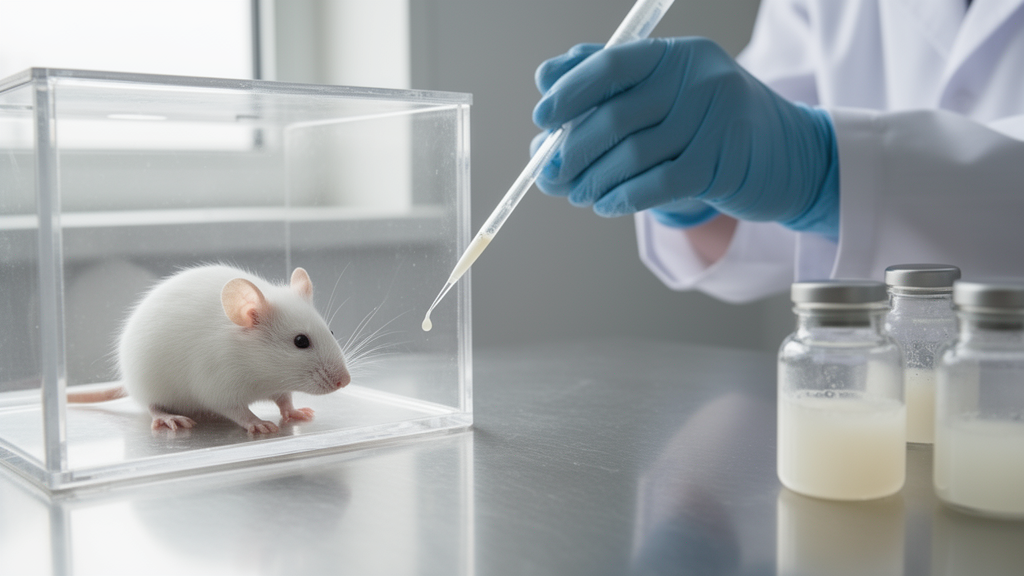
The central in vivo experiments used mouse models of H1N1 influenza infection. Animals received two intranasal doses of LCTG-001, one administered two hours before infection and a second given 24 hours after exposure, a schedule designed to establish antibody at the mucosal surface both before viral entry and during the early phase of replication. Treated mice in both immunocompetent and antibody-deficient backgrounds experienced reduced illness and less lung damage than untreated controls. The protective effect in antibody-deficient mice is particularly notable, because it demonstrates that the exogenously delivered IgA can function without support from the recipient’s own humoral immune system, a property directly relevant to patients with primary or secondary antibody deficiencies who cannot mount robust antibody responses to vaccination.
An intriguing pattern emerged from the virological measurements in immunocompetent mice. Lung viral loads were lower in treated animals early in infection, consistent with direct neutralization of inoculum virus at the respiratory mucosa, but by later time points the viral loads in treated and control mice were comparable. Despite this convergence in viral burden, treated animals retained less lung damage and better lung barrier integrity throughout. The authors suggest several non-mutually-exclusive explanations for this dissociation between viral load and pathology. Early neutralization may reduce the initial burst of replication and the inflammatory cascade it triggers, setting the disease trajectory on a milder course even if residual virus eventually replicates to similar levels. Alternatively, IgA-mediated immune complex formation may redirect antiviral responses toward less tissue-destructive pathways, or the antibody may directly modulate inflammatory signaling at the mucosal surface.
Two additional laboratory observations may bear on the mechanism of protection, although their in vivo contribution remains unresolved. First, LCTG-001 inhibited influenza neuraminidase activity in vitro. Neuraminidase, the surface glycoprotein targeted by the antiviral drugs oseltamivir and zanamivir, cleaves sialic acid residues and facilitates the release of newly formed virions from infected cells; antibody-mediated inhibition of this enzyme could plausibly slow viral spread within the lung. Second, when complexed with influenza antigens, LCTG-001 stimulated human neutrophils in vitro, hinting at a capacity to engage innate effector cells through Fc-dependent mechanisms. Polyclonal IgA immune complexes are known to interact with Fc-alpha receptors on neutrophils and other myeloid cells, and such interactions can promote phagocytosis or antiviral effector functions. Whether either of these activities contributes measurably to the protection observed in mice is a question the authors flag for future work.
The therapeutic concept underlying LCTG-001 is mucosal passive immunization, the direct delivery of ready-made antibodies to the respiratory tract rather than relying on the recipient to generate them through infection or vaccination. Passive immunization with monoclonal antibodies has become an established paradigm for several infectious and immunological indications, but most approved products are administered systemically and target a single antigen. A polyclonal secretory IgA preparation delivered intranasally offers a different profile: it acts at the portal of viral entry, it carries specificity against many epitopes simultaneously, and its polyclonal composition may reduce the risk that viral escape mutations abolish protection, since a virus would need to alter multiple antigenic sites at once to evade the full antibody mixture.
The donor pool is central to that breadth. The 120 donors whose milk fed the preparation carry antibodies shaped by decades of infections and vaccinations across genetically diverse immune systems, effectively compressing a population-level antibody repertoire into a single therapeutic lot. Milk banking infrastructure, already established for neonatal nutrition, provides a practical collection channel, although scaling production to a level suitable for widespread seasonal or pandemic use would pose substantial manufacturing, standardization, and regulatory challenges that the current study does not address.
The researchers position LCTG-001 as a candidate for two distinct applications. The first is prophylaxis and early treatment for individuals with antibody deficiencies, a population in which influenza and other respiratory viruses can cause severe, prolonged disease and in which vaccine responses are often blunted. For these patients, an intranasal product that works independently of the recipient’s B-cell function could fill an important gap. The second, more speculative application is broader public health use, either as a complement to seasonal vaccination or as a rapidly deployable countermeasure during the early phase of an influenza pandemic, when a matched vaccine is not yet available and a polyclonal preparation with activity against multiple subtypes could bridge the interval. The binding observed against H5N1 clade 2.3.4.4b antigens, even without strong neutralization, suggests the donor repertoire contains antibodies to avian influenza determinants, though the functional significance of that binding remains to be established.
Important caveats frame the findings. All in vivo results come from mice, and the dosing schedule used in the animal studies was tightly controlled, with antibody delivered both before and shortly after infection; real-world performance under less predictable exposure conditions is unknown. No human efficacy data exist, and the authors are explicit that efficacy in humans has not been established. The mechanisms linking early viral load reduction and preserved lung integrity to the observed clinical benefit, as well as the roles of neuraminidase inhibition and neutrophil stimulation, remain open questions. Nevertheless, the study provides a proof of concept that a polyclonal secretory IgA product purified from pooled human breast milk can deliver broad antiviral activity at the mucosal surface and protect against influenza-induced illness and lung injury in animal models, establishing a foundation for the further preclinical and, eventually, clinical evaluation of breast milk-derived antibodies as mucosal therapeutics for respiratory viral disease.
Subject of Research: Polyclonal secretory IgA derived from pooled human breast milk as a broad-spectrum mucosal passive immunization against respiratory viruses including influenza
Article Title: Breast milk antibodies show broad antiviral activity and protect mice against influenza
Article References: Breast milk antibodies show broad antiviral activity and protect mice against influenza. (n.d.). Original publication
Image Credits: AI Generated
DOI: Not provided
Keywords: breast milk antibodies, secretory IgA, influenza, H1N1, H5N1, respiratory syncytial virus, passive immunization, mucosal immunity, LCTG-001, neutralizing antibodies, pandemic preparedness, antibody deficiency
Cite Scienmag News
Kristina Jarvis. (October 15, 2026). Breast milk-derived antibody preparation shields mice from influenza infection. Scienmag. https://scienmag.com/breast-milk-derived-antibody-preparation-shields-mice-from-influenza-infection/
Kristina Jarvis. "Breast milk-derived antibody preparation shields mice from influenza infection." Scienmag, 15 October 2026, https://scienmag.com/breast-milk-derived-antibody-preparation-shields-mice-from-influenza-infection/. Accessed 15 October 2026.
Kristina Jarvis. "Breast milk-derived antibody preparation shields mice from influenza infection." Scienmag. October 15, 2026. https://scienmag.com/breast-milk-derived-antibody-preparation-shields-mice-from-influenza-infection/