


When a cancer cell doesn’t respond to traditional therapies, doctors may turn to a sort of viral biological warfare, by deploying ‘troops’ in the form of viral agents that are specifically engineered to target and eliminate cancer cells. The mode of attack is to transform the tumor into an immunologically “hot” environment, making it more visible and recognisable to our immune system.

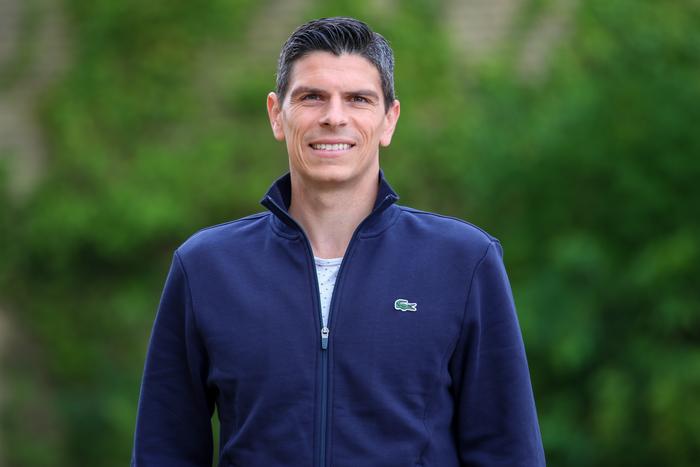
Credit: Simon Fischel. Aarhus University
When a cancer cell doesn’t respond to traditional therapies, doctors may turn to a sort of viral biological warfare, by deploying ‘troops’ in the form of viral agents that are specifically engineered to target and eliminate cancer cells. The mode of attack is to transform the tumor into an immunologically “hot” environment, making it more visible and recognisable to our immune system.
Now, researchers from the Department of Biomedicine at Aarhus University have found a way to make one strain of viral agents even more effective. And the results are groundbreaking says lead researcher, Associate Professor David Olagnier:
“We found that if we administer a specific viral agent called Vesicular Stomatitis Virus (VSVD51) along with a metabolite-drug called 4-Octyl-Itaconate (4-OI), we are able to treat cancers that are considered resistant to viral infections.”
In other words, by combining the drug and the viral agent, the researchers have managed to push the door open to possible treatments for cancers that have been immune to nearly all known treatments, including the viral agents. This is because some cancers have antiviral signaling, which enables them to combat the viral agents and resist the treatment.
The results are particularly surprising because the drug 4-OI has, in other combinations, shown to have the completely opposite effect on different types of viruses. 4-OI is normally antiviral – meaning it would actually stop viruses rather than boost them. But in this specific combination, 4-OI instead helps the cancer fighting viral agents to work better:
“It is the combination of the specific virus and the drug that brings about a completely unique proviral effect, which potentially can have a significant impact on patients affected by cancer that we are currently unable to treat”, explains David Olagnier.
The new findings are an important step towards a new form of treatment, and they underline the need for consistently working to find new ways to treat the many forms of cancer we face, says David Olagnier:
“Cancer is not a single disease but rather a hundred diseases with one name, so it is crucial that we develop multiple ways to eradicate the disease. The use of biologically active viral agents can potentially be a gamechanger for some currently incurable cancers. That’s why our findings are so exciting and groundbreaking,” he explains.
For the research team, the next step is a more extensive pre-clinical testing of the combinational use of VSVD51 and 4-OI.
“We are especially interested in testing this combination on tumours that have metastasised, which is when the cancer has started to spread, but also on liquid types of cancer like lymphomas,” explains David Olagnier.
Behind the research result – more information
- Study type: Basic research with a translational orientation and using patient-derived material.
- Collaboration partners:
Tommy Alain Department of Biochemistry Microbiology and Immunology,University of Ottawa and Children’s Hospital of Eastern Ontario Research Institute, Ottawa, Canada.
Henner Farin Georg-Speyer-Haus, Institute for Tumor Biology and Experimental Therapy, Frankfurt am Main, Germany. Frankfurt Cancer Institute, Goethe University, Frankfurt am Main, Germany. Faculty ofBiological Sciences, Goethe University, Frankfurt am Main, Germany.
Nadine van Montfoort Department of Gastroenterology and Hepatology, Leiden University Medical Center, Leiden, The Netherlands
Thomas B Poulsen Department of Chemistry, Aarhus University, 8000 Aarhus C, Denmark - External funding:
Lundbeckfonden (through a Lundbeck Fellowship to David Olagnier)
NovoNordiskfonden (trough a project grant to David Olagnier)
Danish Cancer Society (Kræftens Bekempelse through a grant to David Olagnier)
DNRF (through the support of the Center of Excellence CiViA headed by Søren R. Paludan) - Conflicts of interest: The authors report no conflicts of interest
- Read more in the scientific paper
Contact
Associate Professor, David Pierre Christophe Olagnier
Department of Biomedicine, Health, Aarhus University
Phone: (+45) 31410750
Mail: olagnier@biomed.au.dk
Journal
Nature Communications
Subject of Research
Animals
Article Title
Octyl itaconate enhances VSVΔ51 oncolytic virotherapy by multitarget inhibition of antiviral and inflammatory pathways
Article Publication Date
15-May-2024
COI Statement
The authors report no conflicts of interest
Cite Scienmag News
Nathaniel Bowman. (June 28, 2024). Breakthrough research makes cancer-fighting viral agent more effective. Scienmag. https://scienmag.com/breakthrough-research-makes-cancer-fighting-viral-agent-more-effective/
Nathaniel Bowman. "Breakthrough research makes cancer-fighting viral agent more effective." Scienmag, 28 June 2024, https://scienmag.com/breakthrough-research-makes-cancer-fighting-viral-agent-more-effective/. Accessed 4 September 2026.
Nathaniel Bowman. "Breakthrough research makes cancer-fighting viral agent more effective." Scienmag. June 28, 2024. https://scienmag.com/breakthrough-research-makes-cancer-fighting-viral-agent-more-effective/

