


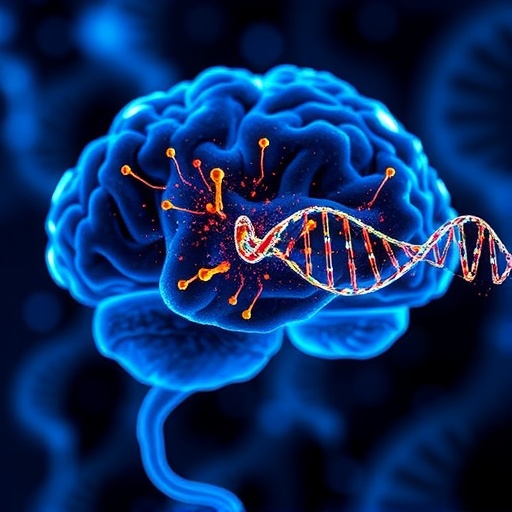
In a landmark advancement that could redefine the future of genetic medicine, researchers have successfully employed gene editing technology to repair the genetic mutation responsible for Dravet syndrome, a rare and devastating form of childhood epilepsy. Demonstrating this breakthrough in a mouse model, the team utilized adenine base editing (ABE), a cutting-edge gene editing technique, to precisely correct a single DNA letter without introducing double-strand breaks, thereby maintaining genomic stability and minimizing off-target risks. This pioneering preclinical study marks a pivotal step toward transformative treatments that address neurological disorders at their genetic roots rather than merely managing symptoms.
Dravet syndrome, characterized by severe and drug-resistant epilepsy beginning in infancy or early childhood, affects approximately 15,000 to 20,000 individuals in the United States alone. It manifests with spontaneous and fever-induced seizures alongside profound developmental impairments, dramatically shortening life expectancy primarily due to sudden unexpected death. Until now, therapeutic options have been limited to symptomatic relief through repeated dosing regimens, lacking the capacity to alter the disease’s underlying cause. This gene editing achievement, therefore, embodies a potential paradigm shift by offering a durable correction at the molecular level.
The pivotal mutation targeted in this study is a nonsense variant in the SCN1A gene, identified as R613X. This mutation disrupts the synthesis of the essential Nav1.1 sodium channel, a key regulator of neuronal excitability. The resultant disruption precipitates a neuronal imbalance where inhibitory neurons fail to function properly, rendering the brain hyperexcitable and prone to seizures. The challenge lay in precisely correcting this mutation across a dispersed network of specialized inhibitory neurons throughout the brain—a feat previously considered daunting in gene therapy.
The research team deployed adenine base editors, which enzymatically convert adenine to guanine without cleaving both DNA strands, thereby rewriting the erroneous genetic code with high fidelity. This gentler editing approach is particularly suited to neurological disorders, where preserving the brain’s delicate genomic architecture is paramount. Delivery of the base editor complex was achieved via a single intracranial injection administered during the critical early developmental window—namely, either on the first day or twelfth day after birth.
Remarkably, the intervention corrected nearly 60% of mutated alleles in the treated mice, a level sufficient to restore endogenous gene expression nearly to normal. This robust correction is complemented by the cell’s intrinsic quality control mechanisms, which degrade defective mRNA transcripts from uncorrected genes, thereby enhancing the functional recovery. As a result, the treated animals exhibited a dramatic reduction in seizure frequency and significant extension of survival compared to untreated controls.
An especially compelling aspect of the study is the efficacy demonstrated by treatments administered on postnatal day twelve, when the brain is more developed and mirrors the typical age of Dravet diagnosis in human patients. This finding challenges previous assumptions that gene correction must occur at birth to be effective, opening an encouraging therapeutic window for clinical interventions after symptoms have manifested. The safety profile also appears favorable, with minimal off-target edits or adverse effects recorded in neural tissues.
This work emerges amid growing regulatory momentum supporting gene editing therapies for rare diseases. The U.S. Food and Drug Administration’s Plausible Mechanism Framework, released in early 2026, acknowledges the unique challenges in conducting large-scale clinical trials for ultra-rare genetic conditions and provides pathways for individualized treatments predicated on well-defined biological mechanisms. The success of this study helps lay the groundwork for harnessing such frameworks to translate base editing therapies from bench to bedside.
The collaboration behind this breakthrough involves luminaries from The Jackson Laboratory’s Rare Disease Translational Center and the Broad Institute, including geneticists and neurologists who have previously spearheaded related efforts in treating rare liver and neurological disorders. Their collective expertise accelerated progress, transforming sophisticated gene editing concepts into tangible therapeutic strategies targeting human diseases with genetic heterogeneity.
Looking ahead, the researchers emphasize the necessity of tailoring editing approaches to the myriad unique mutations causing Dravet syndrome across different patients. A critical component of this precision medicine platform is the design of guide RNAs, which navigate the base editor to specific genetic loci. Establishing a standardized, adaptable platform that separates universal molecular tools from mutation-specific elements will be vital to scaling this approach for broader clinical application.
The implications extend beyond Dravet syndrome alone. Base editing technology holds promise for a spectrum of neurological and genetic disorders where conventional therapies falter. Restoring the natural architecture and function of disease-affected neurons through precise DNA correction offers hope for truly curative interventions. Moreover, this work exemplifies how interdisciplinary collaboration and regulatory innovation can synergize to expedite breakthroughs for patients with rare, currently untreatable conditions.
As the scientific community builds upon these findings, parallel efforts are underway to refine delivery mechanisms, enhance editing specificity, and confirm long-term safety in larger animal models. Together, these endeavors propel gene editing closer to fulfilling its transformative potential, offering the prospect of durable genetic cures rather than ongoing symptom management. For families impacted by Dravet syndrome, this breakthrough signals a future where gene correction strategies may finally bring lasting relief from a historically intractable disease.
Cite Scienmag News
Juliet Wilcox. (May 13, 2026). Breakthrough Precision DNA Editing Tackles Root Cause of Severe Childhood Epilepsy in Preclinical Study. Scienmag. https://scienmag.com/breakthrough-precision-dna-editing-tackles-root-cause-of-severe-childhood-epilepsy-in-preclinical-study/
Juliet Wilcox. "Breakthrough Precision DNA Editing Tackles Root Cause of Severe Childhood Epilepsy in Preclinical Study." Scienmag, 13 May 2026, https://scienmag.com/breakthrough-precision-dna-editing-tackles-root-cause-of-severe-childhood-epilepsy-in-preclinical-study/. Accessed 4 September 2026.
Juliet Wilcox. "Breakthrough Precision DNA Editing Tackles Root Cause of Severe Childhood Epilepsy in Preclinical Study." Scienmag. May 13, 2026. https://scienmag.com/breakthrough-precision-dna-editing-tackles-root-cause-of-severe-childhood-epilepsy-in-preclinical-study/


