


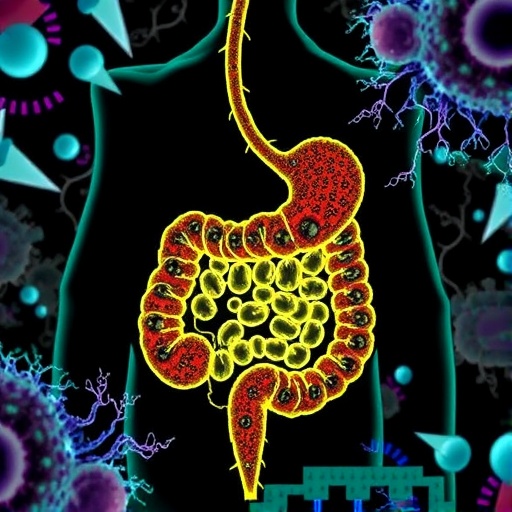
Recent research has unveiled groundbreaking insights into the complex nitrogen metabolism facilitated by gut bacteria, elucidating their pivotal role in promoting human health and potentially reducing cancer risk. This study, recently published in The FEBS Journal, represents a significant advance in understanding how intestinal microbes interact with dietary nitrates and nitrites, metabolizing these compounds to inhibit the formation of carcinogenic nitrosamines—compounds historically linked to cancers of the digestive tract.
Nitrogen compounds such as nitrates and nitrites, common components of many diets, have long been scrutinized for their dualistic nature—while essential in various biological functions, their improper metabolism can lead to the synthesis of nitrosamines, potent chemical carcinogens. The gut microbiota, an intricate community of microorganisms residing in the human gastrointestinal tract, plays an essential role in modulating these pathways. The current research pinpoints key bacterial players, notably Escherichia coli, alongside significant contributions from members of Lactobacillus, Bacteroides, and Phocaeicola, in efficiently processing these nitrogen compounds.
Fundamentally, the study dives into the enzymatic systems present within these microbes—specifically nitrate and nitrite reductases—that catalyze the reduction of nitrates and nitrites into less harmful or beneficial forms. These reductases are not uniformly distributed across microbial species; instead, their activity profiles reveal a sophisticated microbial ecosystem capable of adapting to the nitrogenous substrates available in the gut milieu. The metabolic efficiency displayed by E. coli and, to a lesser extent, other genera, establishes a biochemical barrier preventing the escalation towards carcinogenic intermediates, thus highlighting a previously underappreciated protective mechanism intrinsic to gut microecology.
What elevates the importance of this discovery is the dual role of this metabolic capability: not only does it curb the formation of toxic nitrosamines, but it also fosters microbial colonization and survival within the intestine. This metabolic versatility probably contributes to maintaining a resilient and balanced gut microbiome, preventing dysbiosis—disruptions in microbial composition that have been linked to a variety of intestinal disorders and systemic inflammatory diseases. Essentially, these nitrogen transformations by the microbiota are indispensable to sustaining a stable intestinal environment conducive to health.
The implications of these findings extend beyond microbiology, interfacing deeply with nutritional science and oncology. The intricate crosstalk between dietary components, microbial metabolism, and host physiology emphasizes the gut microbiota as a biochemical hub mediating diet-induced health outcomes. By mitigating nitrosamine formation, the microbiota acts as a metabolic shield, potentially lowering the incidence and progression of gastrointestinal cancers.
From a molecular biology perspective, this research provides detailed characterization of nitrate and nitrite reductase enzymes encoded by gut bacteria, elucidating their gene distribution, regulation, and catalytic capacities within the intestinal ecosystem. Such comprehensive profiling advances our understanding of microbial gene function in vivo and reinforces the concept that bacterial enzymatic networks are finely tuned to the host environment, optimizing metabolic fluxes and minimizing toxic byproduct accumulation.
Moreover, these revelations foster new avenues for probiotic and microbiome-modulating therapies targeting nitrogen metabolic pathways. By enhancing the colonization and activity of bacteria proficient in nitrate and nitrite reduction, it may be feasible to design interventions that reinforce this natural cancer-preventive mechanism. Such strategies could be invaluable in populations afflicted with high exposure to dietary nitrates or those with predispositions to gut cancers.
Additionally, the methodological approach of the study underscores the power of integrative microbial ecology techniques, combining genomic sequencing, enzyme activity assays, and metabolic flux analyses, to decode microbial functions in situ. This integrative paradigm is crucial for dissecting the complex biochemical interactions within the gut and translating microbial physiology into systemic health effects.
The study’s corresponding author, Professor Uwe Deppenmeier from the University of Bonn, aptly summarized the findings as evidence for a protective microbial mechanism that extends benefits from the gut lumen to systemic health. This recognition of the microbiota’s role transforms traditional views of intestinal bacteria from passive passengers to active metabolic contributors pivotal to maintaining homeostasis and preventing disease.
In spatial and temporal terms, the distribution of nitrate and nitrite reductases across different bacterial populations indicates that nitrogen metabolism is a dynamic feature shaped by microenvironmental conditions in the gut, such as oxygen gradients and substrate availability. Understanding these spatial heterogeneities further informs the development of targeted therapies and nutritional recommendations optimized for maintaining a healthy microbiota.
Conclusively, this research underscores the sophisticated nature of gut microbial nitrogen metabolism, situating it as a central factor in human health maintenance and disease prevention. By decoding the enzymatic pathways and microbial actors involved, scientists can better harness the microbiome’s potential to counteract harmful dietary compounds and promote intestinal resilience. This study not only broadens our biological knowledge but also ignites renewed interest in microbiota-focused strategies for cancer prevention and nutrition-based therapeutics.
News Publication Date: 5-Nov-2025
Web References:
https://febs.onlinelibrary.wiley.com/journal/17424658
http://dx.doi.org/10.1111/febs.70299
Cite Scienmag News
Nathaniel Bowman. (November 5, 2025). Breakthrough Discoveries on Gut Microbes That Inhibit Cancer-Causing Compounds. Scienmag. https://scienmag.com/breakthrough-discoveries-on-gut-microbes-that-inhibit-cancer-causing-compounds/
Nathaniel Bowman. "Breakthrough Discoveries on Gut Microbes That Inhibit Cancer-Causing Compounds." Scienmag, 5 November 2025, https://scienmag.com/breakthrough-discoveries-on-gut-microbes-that-inhibit-cancer-causing-compounds/. Accessed 4 September 2026.
Nathaniel Bowman. "Breakthrough Discoveries on Gut Microbes That Inhibit Cancer-Causing Compounds." Scienmag. November 5, 2025. https://scienmag.com/breakthrough-discoveries-on-gut-microbes-that-inhibit-cancer-causing-compounds/


