


In a remarkable convergence of scientific discovery and visual artistry, researchers at Rice University have broken new ground in the field of nanomaterials engineering by elucidating how boron nitride nanotubes (BNNTs) can spontaneously organize into ordered liquid crystalline phases within aqueous environments. This revelation not only advances the fundamental understanding of nanorod-based lyotropic liquid crystals but also introduces a versatile and scalable methodology for aligning BNNTs in water using the bile-salt surfactant sodium deoxycholate (SDC). Their findings, published in the prestigious journal Langmuir, represent a significant leap towards the development of next-generation materials tailored for demanding applications ranging from aerospace engineering to cutting-edge electronics.
Among the myriad attributes that make BNNTs compelling for scientific and industrial exploration are their extraordinary mechanical strength, high thermal stability, and electrical insulating properties. Unlike their well-studied carbon nanotube counterparts, BNNTs possess relative optical transparency, a feature that opens new avenues for investigation through visible light microscopy techniques previously inhibited by the darkness and opacity of carbon nanotube dispersions. Professor Matteo Pasquali, the study’s lead investigator and esteemed A.J. Hartsook Professor of Chemical and Biomolecular Engineering at Rice, emphasizes this advantage, describing BNNTs as ideal model systems for probing the dynamics and phase behaviors of nanorod liquid crystals.
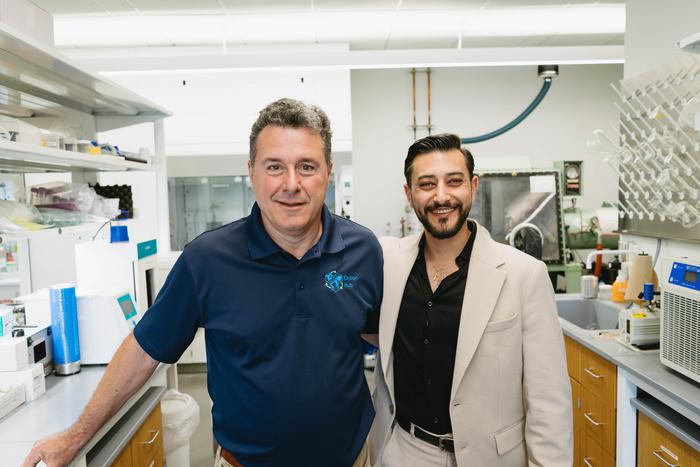
This breakthrough originated from the sharp observational acumen of first author Joe Khoury, whose unique transition from architecture to chemical engineering endowed him with an unconventional perspective on nanomaterial phenomena. During a purification step involving filtration of BNNT dispersions, Khoury noticed the material’s viscosity increased and that it exhibited birefringence under polarized light—a classic indicator of liquid crystalline structure. Motivated by this unexpected visual cue, the research team postulated that manipulating the concentration of sodium deoxycholate could coax BNNTs toward nematic order, a liquid crystalline phase marked by aligned yet fluid rod-like particles.
To validate this hypothesis, the researchers meticulously prepared a comprehensive series of BNNT-SDC dispersions across a wide range of concentration ratios. Utilizing polarized light microscopy, they tracked the evolution from isotropic, disordered suspensions to arrays exhibiting partial alignment, culminating in strongly ordered nematic phases. Complementary cryogenic electron microscopy offered nanoscale resolution, concisely confirming the orientation and positional arrangement of BNNTs within these structured phases. This multi-modal experimental approach provided unequivocal evidence of liquid crystal formation, a phenomenon that had eluded prior studies constrained by limited concentrations or insufficient surfactant presence.
Notably, the team succeeded in constructing the first detailed phase diagram for BNNTs dispersed in surfactant solutions, a predictive map that correlates the concentration of nanotubes and surfactant to resultant ordering states. This roadmap offers researchers a critical tool to anticipate and control the self-assembly behavior of BNNTs, enabling precision tailoring of materials with bespoke properties without resorting to harsh chemical treatments or complex processing methods. Such an advance addresses long-standing challenges in the scalable fabrication of nanostructured films and composites.
The implications of this work extend well beyond academic inquiry. The scientists refined a facile, reproducible shear-coating technique in which BNNT-SDC dispersions were spread uniformly over glass substrates using a calibrated blade, aligning nanotubes into transparent, mechanically robust films. These films exhibit attributes promising for thermal management and structural reinforcement, particularly vital in high-performance industries such as aerospace and electronics where weight, strength, and thermal conductivity critically impact functionality and efficiency. Structural analyses via X-ray diffraction and electron microscopy verified that nematic alignment observed in solution translated directly to the solid state, a pivotal accomplishment for practical applications.
Khoury elucidates that the capacity to lock in solution-phase order into durable thin films transforms the BNNT platform into a scalable manufacturing avenue suitable for diverse high-tech applications. This method paves the way for producing lighter, stronger components with enhanced thermal resistance, potentially revolutionizing material selections in devices ranging from portable electronics to aircraft structures. The benign synthesis conditions — free from strong acids or aggressive solvents — democratize access to this technology, positioning it for widespread adaptation across academic and industrial laboratories globally.
Scientific intrigue coexists with aesthetic allure in this research. The striking polarized-light micrographs, evocative of surrealist paintings, have captured imaginations beyond the chemistry community. According to Pasquali, the images recall masterpieces reminiscent of Dalí or Van Gogh and invite parallels to iconic cultural imagery such as the towering spires of Barad-dûr from “The Lord of the Rings.” This fusion of beauty and function exemplifies the elegance inherent in nanoscience, where visual phenomena reflect intricate molecular organization.
Collaboration and mentorship were instrumental in this achievement. Aside from Pasquali and Khoury, the team included Ángel Martí, chair of chemistry and professor of bioengineering and materials science at Rice University; Cheol Park from NASA Langley Research Center; Lyndsey Scammell of BNNT LLC; and Yeshayahu Talmon of the Technion-Israel Institute of Technology. Their combined expertise bridged synthesizing, characterizing, and interpreting complex nanomaterials to realize a cohesive understanding of BNNT phase behavior.
The study was generously supported by the Welch Foundation, BNNT LLC, the Technion Russell Berrie Nanotechnology Institute, and Rice University’s Electron Microscopy Center and Shared Equipment Authority. Such institutional backing underscores the significance of the findings and fosters continued exploration into the physics and engineering of nanomaterials.
Looking forward, Pasquali emphasizes that their work is merely a foundation for deeper investigations into nanorod lyotropic liquid crystals. With a comprehensive phase diagram and scalable alignment protocol established, future research can concentrate on fine-tuning nanotube orientation, exploring different surfactants or functionalization strategies, and expanding the functionality of BNNT films for niche technological applications. Understanding these fundamental aspects may unlock new classes of materials possessing unique optical, mechanical, or thermal profiles.
In sum, this pioneering research not only demystifies the self-assembly processes of boron nitride nanotubes in aqueous environments but also offers a pragmatic pathway to harness their ordered phases in manufacturable, high-performance films. By bridging fundamental colloidal physics with materials engineering innovation, the study sets an inspiring precedent for creating next-generation nanomaterials that combine form and function at the smallest scales.
News Publication Date: 5-May-2025
Web References:
– https://pubs.acs.org/doi/full/10.1021/acs.langmuir.5c00563
– https://profiles.rice.edu/faculty/matteo-pasquali
– https://pasquali.rice.edu/group-members/
Keywords
Materials science; Material properties; Materials engineering; Crystallography; Liquid crystals; Colloidal crystals
Cite Scienmag News
Denise Maddox. (June 24, 2025). Breaking New Ground: The Remarkable Versatility of Boron Nitride Nanotubes in Art and Science. Scienmag. https://scienmag.com/breaking-new-ground-the-remarkable-versatility-of-boron-nitride-nanotubes-in-art-and-science/
Denise Maddox. "Breaking New Ground: The Remarkable Versatility of Boron Nitride Nanotubes in Art and Science." Scienmag, 24 June 2025, https://scienmag.com/breaking-new-ground-the-remarkable-versatility-of-boron-nitride-nanotubes-in-art-and-science/. Accessed 4 September 2026.
Denise Maddox. "Breaking New Ground: The Remarkable Versatility of Boron Nitride Nanotubes in Art and Science." Scienmag. June 24, 2025. https://scienmag.com/breaking-new-ground-the-remarkable-versatility-of-boron-nitride-nanotubes-in-art-and-science/


