

Thursday, July 16, 2026
Science
No Result
View All Result
  • Login
  • HOME
  • SCIENCE NEWS
  • CONTACT US
  • HOME
  • SCIENCE NEWS
  • CONTACT US
No Result
View All Result
Scienmag
No Result
View All Result
Home Science News Social Science

Brain Signal Associated with Communication Difficulties in Autism

July 16, 2026
in Social Science
Reading Time: 2 mins read
0
Brain Signal Associated with Communication Difficulties in Autism

Brain Signal Associated with Communication Difficulties in Autism

65
SHARES
587
VIEWS
Share on FacebookShare on Twitter
ADVERTISEMENT

Some children with autism communicate more easily than others, even when they understand and hear the same spoken words. A new study from the University of Virginia (UVA) suggests that part of this variation may be written into the brain’s electrical dynamics—subtle patterns that current behavioral tests may miss.

The researchers focused on how autistic and typically developing youths process speech. By recording brain activity while participants listened to streams of spoken nonsense syllables, the team isolated neural responses related to speech processing rather than language knowledge or vocabulary.

High-density electroencephalography (EEG) was used with 128 sensors. In total, 306 participants aged 7 to 18 took part: 162 autistic youths and 144 typically developing peers. This large dataset allowed the team to look beyond classic EEG wave features and examine a more recent metric of brain activity.

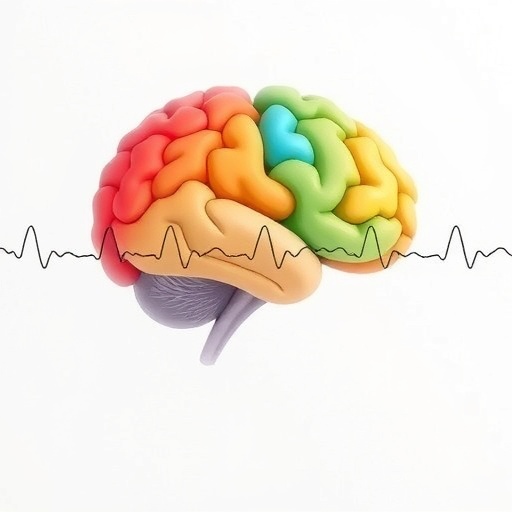
Instead of concentrating on traditional oscillatory rhythms alone, the study analyzed the brain’s “aperiodic” signal—a component reflecting the balance between neural excitation and inhibition. In practical terms, it provides a window into how much of the recorded activity behaves like structured signal versus background “noise.”

The results showed that autistic participants exhibited altered aperiodic patterns, consistent with increased neural noise during speech listening. Importantly, the degree of noisier activity correlated with poorer performance on measures of everyday verbal communication.

Crucially, these EEG-derived markers were not tied to standard language competencies such as grammar or vocabulary. That pattern suggests the neural difference is linked more to real-world communicative processing than to learned linguistic rules.

The authors emphasize that this work is not a diagnostic test for autism. However, it may point to objective biological markers that could help track communication changes over time or evaluate whether therapies genuinely shift underlying brain function.

The study also highlights the growing role of advanced data science in neuroscience, showing how modern computational methods can separate meaningful neural structure from complex electrophysiological background.

Still, generalization remains an open question. Many participants had average or above-average verbal abilities, and future research must test whether the same neural signals appear in minimally verbal autistic individuals.

Subject of Research: Neural correlates of communication variability in autism using high-density EEG; aperiodic signal analysis.
Article Title: (Not provided in the provided content)
News Publication Date: (Not provided in the provided content)
Web References: https://www.nature.com/articles/s41598-026-59415-9
References: 10.1038/s41598-026-59415-9
Image Credits: University of Virginia
Keywords: autism; communication; EEG; aperiodic signal; neural noise; speech processing; data science; neuroscience; Scientific Reports; developmental neurobiology

Tags: aperiodic brain signals in autismautism and brain signal abnormalitiesAutism speech processingbrain activity in autismEEG analysis in autismEEG markers for speech comprehensionhigh-density EEG in developmental studiesneural dynamics and communication difficultiesneural excitation-inhibition balanceneural noise in autismneurophysiological basis of communication challengesspeech perception neural correlates
Share26Tweet16
Previous Post

New Advances in ALS and Alzheimer’s Treatments

Next Post

Study Explains Why Some Colorectal Cancers Respond Better to Immunotherapy

Related Posts

Study Reveals Mixed Links Between Breastfeeding and Childhood Allergies
Social Science

Study Reveals Mixed Links Between Breastfeeding and Childhood Allergies

July 16, 2026
Endometriosis Shows Symptom Patterns Extending Far Beyond Pain
Social Science

Endometriosis Shows Symptom Patterns Extending Far Beyond Pain

July 16, 2026
Stirling Study Shows People Overestimate Legal Protections for Dogs
Social Science

Stirling Study Shows People Overestimate Legal Protections for Dogs

July 16, 2026
AI Tool Goes Beyond Translation, Creating New Languages
Social Science

AI Tool Goes Beyond Translation, Creating New Languages

July 16, 2026
Joint human-machine learning boosts noninvasive BCI performance
Social Science

Joint human-machine learning boosts noninvasive BCI performance

July 16, 2026
Adolescent Social Media Limits May Cut Harms but Shift Others, Experts Warn
Social Science

Adolescent Social Media Limits May Cut Harms but Shift Others, Experts Warn

July 15, 2026
Next Post
Study Explains Why Some Colorectal Cancers Respond Better to Immunotherapy

Study Explains Why Some Colorectal Cancers Respond Better to Immunotherapy

  • Mothers who receive childcare support from maternal grandparents show more

    Mothers who receive childcare support from maternal grandparents show more parental warmth, finds NTU Singapore study

    27656 shares
    Share 11059 Tweet 6912
  • University of Seville Breaks 120-Year-Old Mystery, Revises a Key Einstein Concept

    1061 shares
    Share 424 Tweet 265
  • Bee body mass, pathogens and local climate influence heat tolerance

    682 shares
    Share 273 Tweet 171
  • Researchers record first-ever images and data of a shark experiencing a boat strike

    546 shares
    Share 218 Tweet 137
  • Groundbreaking Clinical Trial Reveals Lubiprostone Enhances Kidney Function

    531 shares
    Share 212 Tweet 133
Science

Embark on a thrilling journey of discovery with Scienmag.com—your ultimate source for cutting-edge breakthroughs. Immerse yourself in a world where curiosity knows no limits and tomorrow’s possibilities become today’s reality!

RECENT NEWS

  • Modular In Vivo Antibody–ADC Click Reaction Reverses Tumor Drug Resistance
  • Study Links Early PFAS Exposure to Childhood Intestinal Inflammation at Mount Sinai
  • Blood Test Detects 90% of Early-Stage Pancreatic Cancer
  • Repurposed Antiplatelet Prasugrel Shows Neuroprotective Effects in Parkinson’s, Proteomics Reveal

Categories

  • Agriculture
  • Anthropology
  • Archaeology
  • Athmospheric
  • Biology
  • Biotechnology
  • Blog
  • Bussines
  • Cancer
  • Chemistry
  • Climate
  • Earth Science
  • Editorial Policy
  • Marine
  • Mathematics
  • Medicine
  • Pediatry
  • Policy
  • Psychology & Psychiatry
  • Science Education
  • Social Science
  • Space
  • Technology and Engineering

Subscribe to Blog via Email

Enter your email address to subscribe to this blog and receive notifications of new posts by email.

Join 5,146 other subscribers

© 2025 Scienmag - Science Magazine

Welcome Back!

Login to your account below

Forgotten Password?

Retrieve your password

Please enter your username or email address to reset your password.

Log In
No Result
View All Result
  • HOME
  • SCIENCE NEWS
  • CONTACT US

© 2025 Scienmag - Science Magazine

Discover more from Science

Subscribe now to keep reading and get access to the full archive.

Continue reading
