


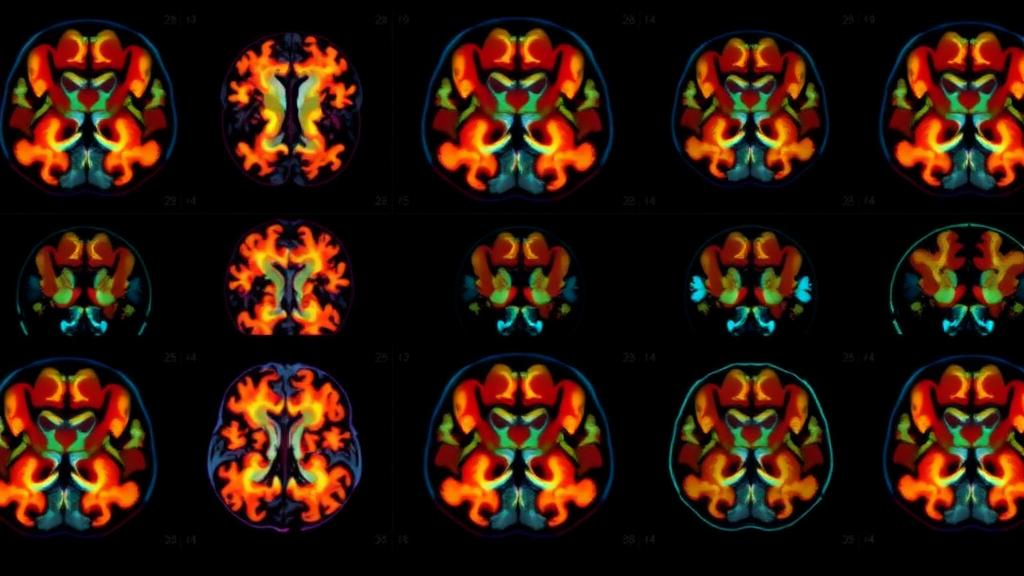
Why does one traumatic event shatter one person’s mental health while leaving another seemingly untouched? It is one of the most urgent questions in psychiatry, and one of the hardest to answer. Post-traumatic stress disorder, or PTSD, affects millions worldwide, yet scientists have never been able to watch the brain in the critical moments when trauma takes hold. Traumatic events are, by their very nature, unpredictable. In humans, researchers can only scan the brain long after the fact, when the damage has already been done and the neural trace of the original moment has been blurred by time, memory and coping. A new study in mice has now closed that gap, capturing whole-brain activity before, during and after a severe stressor, and revealing for the first time how the brains of vulnerable and resilient individuals diverge at every stage of the ordeal.
The research, published in the journal Translational Psychiatry by a team at Radboud University Medical Center in the Netherlands together with collaborators at the Icahn School of Medicine at Mount Sinai, tackled the problem with a controlled animal model of severe stress. Because the timing of the stressor is known in advance in such a model, the researchers could time-lock their brain measurements to the traumatic event itself, something that is essentially impossible in clinical settings. Male mice were exposed to the stress protocol and then classified according to their behavioral outcome: some animals proved susceptible to the effects of stress, while others were resilient. This individual-level sorting is crucial, because it turns the experiment from a simple before-and-after comparison into a genuine search for the neural signatures that separate those who break from those who bend.
Technically, the study relied on whole-brain mapping of neuronal activity across three time windows: before the stress exposure, during or immediately surrounding it, and afterward. On top of the activity maps, the team analyzed functional connectivity, the statistical synchrony of activity between brain regions, within and between three large-scale networks that are well characterized in both rodents and humans. These are the salience network, which flags behaviorally important stimuli and coordinates responses to threat; the default mode network, which is active during internally directed thought, memory consolidation and self-referential processing; and the executive control network, known in rodents as the lateral cortical network, which governs flexible, goal-directed regulation of behavior. Comparing how these networks behaved in susceptible versus resilient mice offered a systems-level view of stress vulnerability rather than a picture confined to any single brain region.
The first major finding concerns what was already different before the stress ever happened. Stress-susceptible mice showed pre-existing hyperactivity in a region called the lateral orbital area, part of the prefrontal cortex involved in evaluating rewards and guiding decisions. In other words, some aspect of these animals’ baseline brain function marked them out as vulnerable before any trauma occurred. This is a striking result, because it suggests that stress susceptibility is not purely a consequence of the traumatic experience itself; at least in this model, the seeds of vulnerability are visible in advance. If such a pre-existing signature could be detected in humans, it might open the door to identifying individuals at elevated risk for stress-related psychopathology before they encounter trauma, whether soldiers before deployment, emergency workers before a career of critical incidents, or patients facing frightening medical procedures.
During and after the stressor, a second region took center stage: the retrosplenial cortex, an area deep in the posterior brain that is heavily implicated in spatial memory, contextual processing and the integration of memory with environmental cues. Susceptible mice showed heightened retrosplenial activity both during and after stress, a pattern the researchers interpret as potentially contributing to a maladaptive memory of the stressful event. The idea is compelling: PTSD is fundamentally a disorder of traumatic memory, in which the past intrudes relentlessly on the present. An overactive memory-integration hub at the moment of trauma could plausibly help stamp the experience in with excessive strength and emotional charge, laying the groundwork for the intrusive recollections and flashbacks that define the disorder.
The two groups also diverged sharply in how they recruited the rest of the brain when stress hit. Susceptible mice mounted a strong activation of visual and memory-related areas, as if their brains were locked onto the sensory and mnemonic details of the threatening experience. Resilient mice told the opposite story. In these animals, the researchers observed marked reductions in retrosplenial cortex activity alongside increased activation of the agranular insula, a region involved in interoception and the integration of bodily states with salient events, and the ventral striatum, a core node of the brain’s reward and motivation circuitry. Resilience, in this reading, is not the absence of a brain response to stress but a different kind of response: less amplification of the traumatic memory trace, and more engagement of circuits that evaluate and regulate the emotional and motivational meaning of what is happening.
Perhaps the most clinically resonant results came from the network-level analyses. Susceptible mice displayed enhanced connectivity within the salience network itself, and strengthened coupling between the salience network and the default mode network. Both patterns have been observed before in human neuroimaging studies of people with PTSD, which lends the mouse findings immediate translational weight. The parallel suggests that the circuit rearrangements seen in the stressed animals are not artifacts of the animal model but recapitulate genuine features of the human disorder. Moreover, the susceptible mice showed aberrant connectivity between the default mode network and the lateral cortical network both before and during stress, hinting that faulty communication between internally directed and executive control systems may be another pre-existing ingredient of vulnerability, one that could undermine the brain’s ability to regulate its own rumination and threat processing when trauma arrives.
Taken together, the study sketches a two-part architecture of stress susceptibility. There are trait-like risk factors, such as lateral orbital hyperactivity and abnormal default mode-executive connectivity, that exist before trauma and presumably bias the system toward a maladaptive response. And there are state-like responses that unfold during and after the trauma, such as retrosplenial overactivation, excessive recruitment of visual and memory circuits, and salience network hyperconnectivity, which may actively construct the pathological memory. Resilience, by contrast, appears to involve a quieter memory system and stronger engagement of insular and ventral striatal circuits. The distinction matters for therapy: pre-existing markers could guide prevention and risk stratification, while the peri- and post-stress dynamics point to windows of opportunity for intervention, moments when the trajectory toward PTSD might still be redirected.
The authors emphasize that these findings reveal circuit-level signatures of stress susceptibility that mirror human PTSD and point toward novel potential biomarkers and targets for mechanistic intervention. Translating that promise into the clinic will take further work, including studies in female animals, validation of the candidate biomarkers, and tests of whether normalizing the identified circuit dysfunctions can prevent stress-related symptoms. But the conceptual advance is already significant. For the first time, researchers have watched, across the entire brain and in fine temporal alignment with the traumatic event itself, how vulnerability and resilience unfold as distinct neural trajectories. What was previously a retrospective mystery, pieced together from the brains of people already suffering, has become a process that can be observed, dissected and, ultimately, targeted. In the effort to understand and eventually prevent PTSD, that shift in perspective may prove to be the study’s most enduring contribution.
Subject of Research: Brain-wide neural activity and functional connectivity differences between stress-susceptible and resilient male mice before, during and after severe stress
Article Title: Brain-wide circuit dynamics underlying stress susceptibility and resilience in male mice
Article References: Dirven, B. C. J., Negwer, M., Botan, A., Maas, R., van Melis, L., Merjenburgh, S., van Rijn, R., Grandjean, J., Homberg, J. R., Kozicz, T., & Henckens, M. J. A. G. (2026). Brain-wide circuit dynamics underlying stress susceptibility and resilience in male mice. Translational Psychiatry. https://doi.org/10.1038/s41398-026-04477-6
Image Credits: AI Generated
DOI: 10.1038/s41398-026-04477-6
Keywords: PTSD, stress susceptibility, resilience, functional connectivity, salience network, default mode network, retrosplenial cortex, prefrontal cortex, mouse model, neuroimaging, traumatic memory, translational psychiatry
Cite Scienmag News
Cassandra Pierce. (October 10, 2026). Brain Scans Reveal Why Some Mice Break Under Stress While Others Bounce Back. Scienmag. https://scienmag.com/brain-scans-reveal-why-some-mice-break-under-stress-while-others-bounce-back/
Cassandra Pierce. "Brain Scans Reveal Why Some Mice Break Under Stress While Others Bounce Back." Scienmag, 10 October 2026, https://scienmag.com/brain-scans-reveal-why-some-mice-break-under-stress-while-others-bounce-back/. Accessed 10 October 2026.
Cassandra Pierce. "Brain Scans Reveal Why Some Mice Break Under Stress While Others Bounce Back." Scienmag. October 10, 2026. https://scienmag.com/brain-scans-reveal-why-some-mice-break-under-stress-while-others-bounce-back/


