


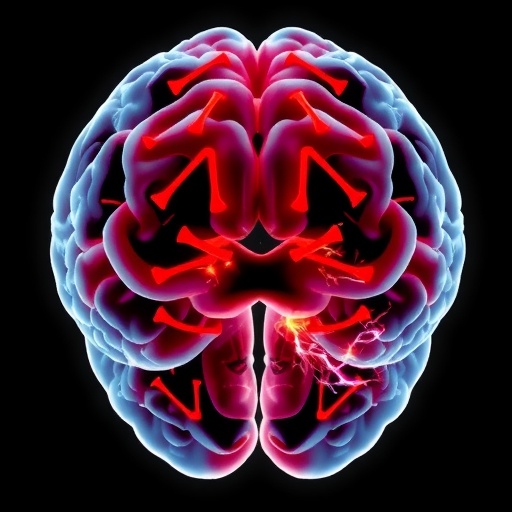
A new study in Translational Psychiatry sheds light on why obsessive-compulsive disorder (OCD) may involve disruptions in the brain’s behavioral braking and driving systems. Researchers report that the balance between behavioral inhibition and behavioral activation—mechanisms that normally help people restrain unwanted actions and initiate appropriate ones—maps onto measurable differences in brain structure. The findings also suggest that these morphometric patterns may carry prognostic information about how patients respond to treatment.
The work focuses on the behavioral inhibition/activation system (BIS/BAS), a framework often used to interpret individual differences in threat sensitivity, reward responsiveness, and action control. While BIS and BAS have been explored behaviorally, their neuroanatomical correlates in OCD have remained unclear. Using brain morphometry, the authors tested whether volumetric or shape-related characteristics in targeted circuits align with BIS/BAS features and clinical symptom trajectories.
Participants underwent high-resolution structural brain imaging, and analyses evaluated morphometric metrics across regions previously implicated in OCD, including fronto-striatal and limbic-linked networks. Rather than treating OCD as a single-category structural anomaly, the study examines how graded neuroanatomical variation relates to underlying motivational control systems. In this framing, compulsive behavior may reflect altered competition between “stop” and “go” signals, with downstream effects on learning and decision-making.
Crucially, the study also reports associations between brain morphometry and treatment outcomes. Patients who exhibited neuroanatomical patterns consistent with BIS/BAS dysregulation appeared to differ in how their symptoms evolved after clinical intervention. Although the exact therapeutic modality is detailed in the original paper, the headline implication is clear: brain-based signatures may help anticipate who benefits most, and when.
Methodologically, the team uses correlation and predictive modeling approaches common in modern neuroimaging research, aiming to link structural measures to both motivational constructs and longitudinal clinical data. Such analyses must be interpreted carefully, since morphometric correlates can be influenced by multiple factors, including illness duration, comorbidities, and medication status. Still, the study strengthens the biological case for BIS/BAS as a useful lens on OCD.
The results align with a broader neurocomputational view in which psychiatric symptoms emerge from circuit-level imbalances rather than isolated brain regions. By translating BIS/BAS into structural signatures, the study offers a bridge between cognitive-motivational theories and neuroanatomy. It also creates testable hypotheses for future work using functional imaging and connectivity models to clarify how “brake” and “accelerator” signals interact during real-world decision-making.
For patients and clinicians, the potential impact is practical. If morphometric BIS/BAS markers can reliably predict treatment response, they could eventually support personalized care strategies—helping clinicians match interventions to expected neural profiles. The finding is also timely: as OCD treatment increasingly considers mechanisms, neuroimaging biomarkers may become part of routine prognostic assessment.
Overall, the study advances a viral-worthy message for the field: OCD may not simply be “too much control” or “too little control,” but instead a specific imbalance between inhibition and activation systems that leaves a structural footprint—and, importantly, a trail toward improved outcome prediction. As replication and validation expand, BIS/BAS morphometric markers may become a cornerstone for mechanistic, data-driven OCD care.
Cite Scienmag News
Cassandra Pierce. (July 14, 2026). Brain Morphometry Links Behavioral Inhibition Activation System to OCD Treatment Outcomes. Scienmag. https://scienmag.com/brain-morphometry-links-behavioral-inhibition-activation-system-to-ocd-treatment-outcomes/
Cassandra Pierce. "Brain Morphometry Links Behavioral Inhibition Activation System to OCD Treatment Outcomes." Scienmag, 14 July 2026, https://scienmag.com/brain-morphometry-links-behavioral-inhibition-activation-system-to-ocd-treatment-outcomes/. Accessed 4 September 2026.
Cassandra Pierce. "Brain Morphometry Links Behavioral Inhibition Activation System to OCD Treatment Outcomes." Scienmag. July 14, 2026. https://scienmag.com/brain-morphometry-links-behavioral-inhibition-activation-system-to-ocd-treatment-outcomes/


