


In a groundbreaking exploration of brain architecture in youth diagnosed with conduct disorder (CD), researchers from the University of Bath have unveiled compelling evidence suggesting profound neurobiological distinctions linked to histories of childhood abuse. This pioneering study illuminates the nuanced interplay between environmental adversity and neurodevelopmental trajectories, disclosing that the white matter microstructure—the brain’s intricate network of neural pathways—varies significantly between abused and non-abused adolescents living with CD. Such findings challenge conventional clinical perspectives, opening avenues for targeted therapeutic strategies that consider the individual neurodevelopmental context.
Conduct disorder, a psychiatric diagnosis typically identified in childhood or adolescence, characterizes individuals exhibiting persistent antisocial and often aggressive behaviors, including fighting, theft, and truancy. It represents a substantial mental health burden globally, affecting approximately three percent of the young population and frequently predisposing affected individuals to more chronic antisocial personality disorders and related criminality in adulthood. Despite its prevalence, the precise neurobiological underpinnings of CD remain elusive, necessitating in-depth research into how environmental and genetic factors shape the disorder.
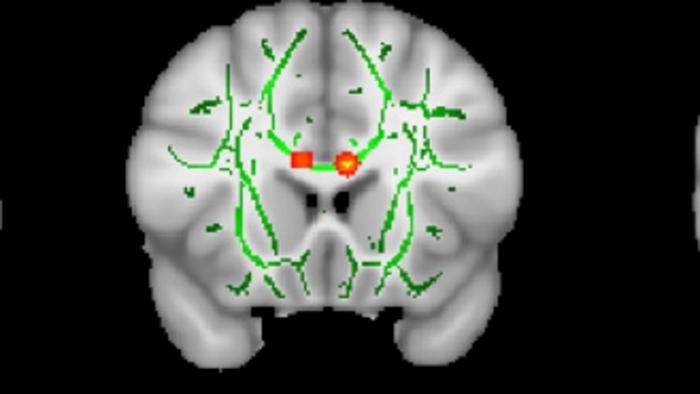
The recent study distinguishes itself by focusing on the microstructural properties of white matter, the dense consortium of myelinated axonal fibers responsible for facilitating rapid electrical communication between disparate brain regions. White matter integrity is fundamental to cognitive and emotional regulation; thus, perturbations in these neural highways have been implicated in various psychiatric conditions. Intriguingly, the researchers identified an absence of white matter differences between abused youth with CD and healthy controls. Conversely, non-abused youth with CD exhibited significant white matter disruptions, particularly in pathways critical for interhemispheric communication.
This divergence signals a potentially dualistic etiological model: one subtype of CD may derive primarily from environmental insults, such as maltreatment during sensitive developmental windows, while another might arise from inherent neurodevelopmental variations, potentially genetic in origin. The research team postulates that maltreatment predominantly affects grey matter regions—where the neuronal cell bodies reside—altering brain areas linked to emotion processing and executive functions. On the other hand, non-maltreated youth’s brain differences appear more concentrated in white matter, hinting at developmental anomalies in neural connectivity that could predispose them to conduct disorder manifestations.
Utilizing advanced diffusion tensor imaging (DTI) techniques, the researchers quantified water molecule movement within white matter tracts, a proxy for microstructural integrity and organization. This methodological choice enabled high-resolution mapping of white matter alterations specific to maltreatment status, revealing critical insights. Notably, the superior longitudinal fasciculus—a central white matter tract integral to emotional regulation, social cognition, and learning—showed distinct changes when comparing maltreated and non-maltreated CD groups. This evidence aligns with prior grey matter studies yet challenges the assumption that maltreatment universally impairs white matter microstructure in youth with conduct disorder.
These revelations have far-reaching implications. They underscore that conduct disorder is not a monolithic entity but encompasses heterogenous neurodevelopmental phenotypes potentially warranting distinct diagnostic and intervention frameworks. Dr. Sophie Townend, lead author and cognitive neuroscientist at Bath, emphasized that discriminating between these neurobiological subtypes could revolutionize treatment, promoting tailored interventions that address the unique etiological pathways and neuropsychological profiles of affected youth. For example, maltreated individuals might benefit from therapies addressing trauma-related grey matter alterations, while non-abused patients may require different neurocognitive approaches aimed at enhancing white matter connectivity.
The study also highlights the pressing need to integrate comprehensive maltreatment histories into clinical assessments of young people with CD. Historically, childhood abuse has been under-recognized or insufficiently factored into diagnostic criteria, limiting personalized care. By explicitly delineating neurobiological differences according to maltreatment exposure, this research advocates for a paradigm shift in psychiatric evaluation and management, emphasizing the intersection of genetic predisposition and environmental experience.
Intriguingly, the findings provoke fundamental questions regarding causality and developmental timing. While the precise mechanisms remain to be elucidated, it is plausible that genetic vulnerabilities manifest as early white matter microstructural anomalies, subsequently facilitating behavioral dysregulation characteristic of CD. Concurrently, maltreatment during critical neurodevelopmental periods may trigger grey matter remodeling, yielding similar behavioral phenotypes via alternate neural pathways. This dual-hit or ecophenotype hypothesis warrants further investigation, especially longitudinal studies tracing brain development trajectories alongside behavioral and environmental assessments.
A critical strength of this research lies in its robust sample size and international collaboration, encompassing brain imaging data from 100 children and adolescents diagnosed with CD—39 of whom reported abuse histories—and comparison with 169 typically developing peers. Maltreatment was meticulously assessed through parental reports and child disclosures, enhancing methodological rigor. The sophisticated use of MRI and DTI modalities allowed precise detection of subtle microstructural white matter differences, setting a new standard for neuroimaging studies in psychiatric populations.
Beyond its immediate clinical relevance, this study contributes profound insights into the broader understanding of how adversity sculpts the developing brain. It reinforces the premise that childhood maltreatment exerts far-reaching effects beyond well-known psychological sequelae, imprinting neurobiological signatures with consequences for behavior and mental health that endure into adolescence and adulthood. Emphasizing the biological consequences of abuse underscores the urgency of early prevention and intervention efforts to mitigate long-term neurodevelopmental harm.
However, the authors caution that the study does not establish causality; rather, it identifies associative patterns requiring further exploration. Determining how these neurobiological differences interact dynamically with environmental factors, genetic predispositions, and psychosocial contexts remains an ongoing challenge. Future research leveraging multimodal neuroimaging, genetic profiling, and comprehensive longitudinal designs will be essential to unravel the complex etiological tapestry of conduct disorder.
In summary, this seminal investigation into the white matter microstructure of youth with conduct disorder stratified by maltreatment history breaks new ground in psychiatric neuroscience. It challenges existing conceptualizations of CD, highlighting the disorder’s heterogeneous neurobiological landscape shaped by divergent developmental pathways. By elucidating distinct brain structural profiles underlying seemingly similar behavioral phenotypes, the study propels a more nuanced understanding of CD that could drive paradigm shifts in diagnosis, treatment, and prevention. As mental health professionals strive for precision medicine approaches, integrating neurobiological and environmental factors will be critical to optimizing outcomes for vulnerable youth worldwide.
News Publication Date: 26-May-2025
Web References:
https://dx.doi.org/10.1017/S0954579425000367
https://researchportal.bath.ac.uk/en/persons/sophie-townend
https://researchportal.bath.ac.uk/en/persons/graeme-fairchild
Cite Scienmag News
Cassandra Pierce. (May 27, 2025). Brain Differences in Children with Conduct Disorder Vary According to Abuse History. Scienmag. https://scienmag.com/brain-differences-in-children-with-conduct-disorder-vary-according-to-abuse-history/
Cassandra Pierce. "Brain Differences in Children with Conduct Disorder Vary According to Abuse History." Scienmag, 27 May 2025, https://scienmag.com/brain-differences-in-children-with-conduct-disorder-vary-according-to-abuse-history/. Accessed 4 September 2026.
Cassandra Pierce. "Brain Differences in Children with Conduct Disorder Vary According to Abuse History." Scienmag. May 27, 2025. https://scienmag.com/brain-differences-in-children-with-conduct-disorder-vary-according-to-abuse-history/


