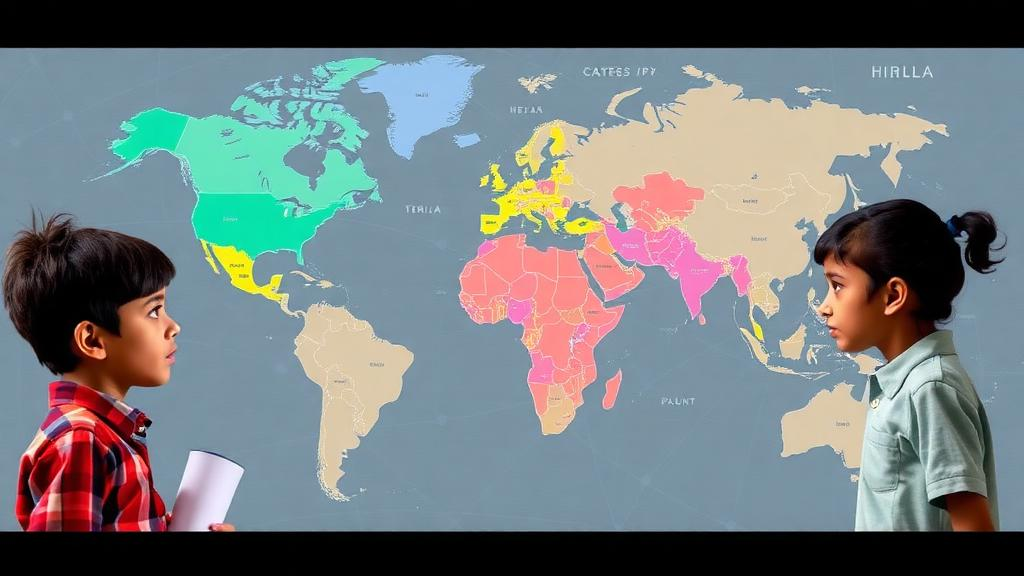
Adolescence is often described as the storm and stress of human development, but a sweeping new study from India suggests the storm strikes boys and girls in strikingly different ways. Surveying more than 5,000 school-going teenagers across 19 schools, researchers report that the architecture of adolescent maladjustment—how emotional distress, behavioral problems, physical health, and social support interlock—is shaped by sex in patterns that do not simply mirror those documented in Western populations. The findings, published in PLOS Mental Health, carry weight for any country grappling with how to protect the mental health of its young people during the formative years that set the trajectory for adulthood.
The research team, led by Varsha Singh with colleagues Harish Chaudhury and Mahim Sagar, set out to fill a conspicuous gap in the scientific literature. Most of what psychologists know about adolescent mental health comes from Western, industrialized nations, yet the majority of the world’s adolescents live elsewhere, often in societies with very different family structures, gender norms, and resource constraints. In developing countries with patriarchal traditions, early gender inequity can shape everything from nutrition to freedom of movement, potentially leaving distinct fingerprints on physical health, family life, and the social worlds teenagers inhabit. Whether the well-established Western patterns of sex differences in psychological problems hold in such contexts was, until now, an open question.
To answer it, the researchers administered the Indian Adolescent Health Questionnaire alongside the widely used Strengths and Difficulties Questionnaire to 5,121 students. The sample was 48 percent male and 39 percent female, with 13 percent of respondents not reporting sex. The health questionnaire captured physical health, nutrition, hygiene, safety attitudes, substance use, academics, and perceptions of family and school environments, while the Strengths and Difficulties Questionnaire measured adjustment problems along two broad axes: internalizing difficulties, which turn distress inward as emotional symptoms, peer problems, and withdrawal, and externalizing difficulties, which turn it outward as conduct problems, hyperactivity, and risk-taking.
The physical health results alone reveal how early and how differently gender inequity can register in the body. Male adolescents reported better overall physical health and better nutrition than their female classmates. Female adolescents, by contrast, reported more favorable attitudes toward safety, substance use, and academics. In a society where girls may eat last, move less, and enjoy less autonomy, the researchers argue, these divergences are not trivial quirks of self-report but early markers of a gender gap in health that can widen across the lifespan. Notably, the sexes did not differ on every dimension: hygiene attitudes and perceptions of the family environment were statistically indistinguishable between boys and girls, suggesting that some foundations of adolescent wellbeing are shared even where risks diverge.
Correlation analyses confirmed that the domains of adolescent life do not operate in isolation. Physical health, family environment, school environment, and broader social environment were all significantly intercorrelated, with correlations reaching significance at p = .00. In other words, a teenager who is physically run down is more likely to be embedded in strained family or school contexts, and vice versa. Independent-samples t-tests showed significant sex differences in nearly every subdomain measured, with hygiene and family environment the only exceptions. This dense web of associations underscores a central premise of the study: adolescent maladjustment cannot be understood as a purely psychological phenomenon detached from the body, the household, and the classroom.
The scale of psychological difficulty the survey uncovered is sobering. Using standard cutoffs on the Strengths and Difficulties Questionnaire, the researchers found that 22.8 percent of the school students fell into the borderline range for adjustment problems, while 16 percent were categorized as highly problematic—roughly one in six adolescents showing clinically concerning levels of difficulty. Contrary to the pattern often reported in Western samples, where girls predominate in internalizing problems and boys in externalizing ones, this study found no significant sex difference in internalizing problems. Boys and girls were equally likely to report emotional symptoms and peer difficulties. Externalizing problems, however, did show the expected male skew, with boys displaying higher overall maladjustment and more outward-directed difficulties.
One of the most intriguing findings concerns what drives boys’ internalizing distress. In Western literature, girls’ emotional problems are typically attributed to relational and internal pressures, while boys’ difficulties are framed as behavioral. Here, the researchers found that male students’ internalizing problems were linked specifically to their peer relationships. This suggests that in the Indian school context, boys’ emotional lives may be more vulnerable to peer dynamics than conventional frameworks anticipate—a finding with direct implications for how anti-bullying programs, friendship interventions, and school counseling are designed. If peer problems are the gateway to boys’ emotional distress, interventions targeting peer culture may pay dividends in both internalizing and externalizing outcomes.
The study also quantified the protective role of family with unusual precision. Using partial correlations that statistically controlled for both sex and grade level, the researchers found that family support was negatively correlated with emotional problems (r = -.05, p < .05), meaning that adolescents reporting stronger family support reported fewer emotional difficulties even after accounting for demographic differences. Interestingly, hygiene attitude showed a small positive correlation with hyperactivity problems (r = .033, p < .05), a counterintuitive association the authors note as a target for further investigation. The effect sizes are modest, as is typical in large correlational studies, but the direction of the family finding is consistent with a broad literature: the household remains a critical buffer against the development of emotional disorders during adolescence.
The practical implications the authors draw are twofold. First, school-based interventions that actively involve families may shield adolescents from mental health problems, leveraging the demonstrated protective association between family support and emotional wellbeing. Second, prevention efforts should be sex-specific in their targets: nutrition and physical activity for girls, whose physical health and dietary status lag behind boys’ in this sample, and drug awareness and safety for boys, whose externalizing risks and substance-related attitudes are more concerning. Rather than a one-size-fits-all mental health curriculum, the data argue for calibrated programs that address the distinct risk profiles each sex carries into adolescence in this cultural context.
The researchers are careful to frame their work as a foundation rather than a final word. They call for the use of standardized health measures that would allow longitudinal follow-up, enabling researchers to track how the health gender gap evolves across developmental phases from adolescence into adulthood. They also emphasize the need to account for the urban-rural divide that accentuates health disparities in developing countries, and for samples that reflect the diversity of national populations. With nearly four in ten adolescents in their own sample showing borderline or clinically significant difficulties, the stakes of that research agenda are clear. Adolescence, the study reminds us, is not merely a turbulent phase to be survived; it is the period in which the biological, psychological, and social foundations of adult health are poured—and in India’s classrooms, those foundations are being laid unevenly along lines of sex, family, and circumstance.
Subject of Research: Sex-specific associations between physical health, social support, and mental health maladjustment among school-going adolescents in India
Article Title: Association between physical and mental health in school-going adolescents: Sex-specific patterns of maladjustment in formative years of life
Article References: Singh, V., Chaudhury, H., & Sagar, M. (2026). Association between physical and mental health in school-going adolescents: Sex-specific patterns of maladjustment in formative years of life. PLOS Mental Health, 3(9), e0000708. https://doi.org/10.1371/journal.pmen.0000708
Image Credits: AI Generated
DOI: 10.1371/journal.pmen.0000708
Keywords: adolescent mental health, internalizing problems, externalizing problems, sex differences, physical health, family support, school environment, Strengths and Difficulties Questionnaire, India, gender inequity, nutrition, peer problems
Cite Scienmag News
Glenn Wilkins. (October 8, 2026). Boys and Girls Break Down Differently: Giant Study Maps Teen Mental Health in India. Scienmag. https://scienmag.com/boys-and-girls-break-down-differently-giant-study-maps-teen-mental-health-in-india/
Glenn Wilkins. "Boys and Girls Break Down Differently: Giant Study Maps Teen Mental Health in India." Scienmag, 8 October 2026, https://scienmag.com/boys-and-girls-break-down-differently-giant-study-maps-teen-mental-health-in-india/. Accessed 8 October 2026.
Glenn Wilkins. "Boys and Girls Break Down Differently: Giant Study Maps Teen Mental Health in India." Scienmag. October 8, 2026. https://scienmag.com/boys-and-girls-break-down-differently-giant-study-maps-teen-mental-health-in-india/