


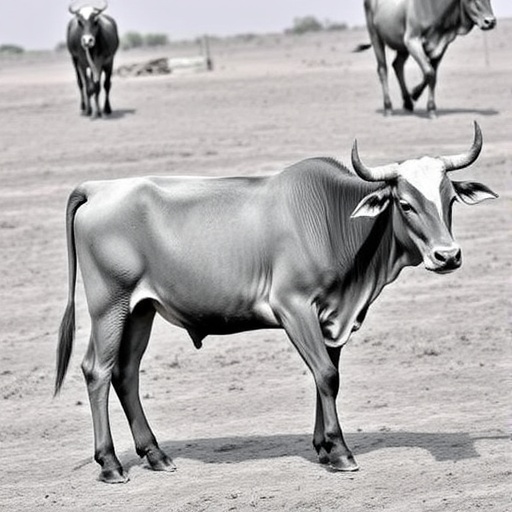
The silent scourge stalking Egyptian cattle has been brought into sharp scientific focus by a recent comprehensive study that unravels the complex ecology of bovine Trypanosoma infections across key agricultural regions. In an era where livestock health directly correlates with the socio-economic vitality of farming communities, understanding the prevalence and epidemiology of such parasitic diseases is not merely academic; it is an urgent necessity. The newly published research led by Selim, Marzok, Gattan, and colleagues hailing from Egypt’s veterinary and parasitology sectors presents a pivotal investigation into how trypanosomiasis impacts cattle populations in three distinct governorates, shedding light on the interplay between environment, vector ecology, host susceptibility, and disease dynamics.
Trypanosomiasis, commonly referred to as sleeping sickness in humans and nagana in livestock, is caused by protozoan parasites belonging to the genus Trypanosoma. These flagellate organisms are notorious for their relentless ability to evade host immune responses via antigenic variation, leading to chronic infections that undermine animal health and productivity. Among domesticated animals, cattle are especially vulnerable due to their socioeconomic importance and the intensity of exposure to tsetse flies and other biting vectors that facilitate transmission. The Egyptian context introduces additional complexity, given the climatic shifts, agricultural expansion, and water resource management that influence vector habitats and parasite transmission cycles.
By delving into field data collected systematically across the three governorates, the study meticulously quantifies infection prevalence through parasitological examination, serological assays, and molecular techniques, painting a nuanced picture of spatial heterogeneity and temporal variation in disease burden. The diagnostic methodologies employed combine traditional microscopic identification of trypanosomes in blood smears with the enhanced sensitivity of polymerase chain reaction (PCR) assays targeting species-specific genetic markers. This dual-pronged approach mitigates the limitations inherent in each method and yields robust epidemiological insights, revealing infection rates that have remained elusive in prior surveys.
The research emphasizes geographical variability in Trypanosoma species distribution, highlighting that while Trypanosoma evansi predominates in certain arid and semi-arid zones, closely related species such as Trypanosoma vivax and Trypanosoma congolense are more frequent in areas with relatively higher humidity and vegetative cover. This spatial delineation aligns with the ecological preferences of their respective vectors—mechanical transmission via hematophagous flies in the case of T. evansi and cyclical transmission through tsetse flies for others—underscoring the critical role of environmental parameters in shaping disease epidemiology. Such findings bear profound implications for vector control strategies, which need to be finely tailored to local entomological and ecological realities.
Risk factor analysis conducted in tandem with prevalence assessment extends our understanding beyond pathogen identification to encompass cattle demographics, husbandry practices, and landscape features. Variables such as animal age, breed, sex, grazing patterns, and housing conditions were statistically correlated with infection status, enabling the construction of predictive models that identify high-risk groups and behaviors. Younger animals, for example, exhibited increased susceptibility, potentially reflecting immature immune defenses or management practices that expose them to greater vector contact. Similarly, indigenous breeds displayed different infection rates compared to exotic or crossbreeds, pointing toward genetic factors influencing host resistance.
The temporal dimension of the study, spanning multiple seasons, unravels the influence of climatic fluctuations on vector populations and trypanosome transmission dynamics. Peak infection periods coincided with rainy seasons when vector density and activity spike due to favorable breeding conditions. These seasonal trends not only help forecast outbreak risks but also provide crucial timing cues for implementing control interventions such as insecticide application, vector habitat modification, and prophylactic treatments. Moreover, climate change projections hint at future shifts in vector habitats that could expand or shift trypanosomiasis foci, making continuous surveillance indispensable.
At the molecular level, genetic characterization of trypanosome isolates uncovers notable heterogeneity within and between regions, suggesting multiple introductions and possible local adaptations. Population genetic analyses employing microsatellite markers reveal differing levels of genetic diversity and inbreeding, which might correlate with transmission intensity and parasite virulence. The presence of mixed infections in individual cattle further complicates the disease ecology, potentially exacerbating clinical outcomes and challenging diagnostic specificity. These molecular insights can inform vaccine development efforts by identifying conserved antigenic targets amid the parasites’ extensive surface protein variability.
From a clinical standpoint, the study documents a spectrum of disease manifestations, ranging from asymptomatic carriers to animals exhibiting lethargy, anemia, weight loss, and decreased milk production, all of which impair agricultural productivity and economic returns. Chronic infection can lead to immunosuppression, predisposing cattle to secondary infections and heightening mortality risks. The silent nature of many infections underscores the need for heightened awareness among farmers and veterinary professionals to enable early detection and targeted therapeutic interventions before irreversible losses occur.
Control strategies emerging from this investigation emphasize an integrated approach combining vector management, chemoprophylaxis, host resistance promotion, and educational outreach. Vector control remains paramount, employing insecticide-treated targets and traps, biological control agents, and environmental management to reduce breeding sites. Chemotherapeutic agents, while effective, face challenges including drug resistance and side effects, necessitating prudent use and monitoring. Breeding programs that enhance genetic resistance could offer sustainable mitigation, although this requires long-term investment and multidisciplinary collaboration.
The socio-economic ramifications of bovine trypanosomiasis in Egypt cannot be overstated. Given the centrality of cattle in rural livelihoods for meat, milk, draft power, and cultural value, the disease compromises food security and income stability. The study advocates for policy integration that aligns veterinary services with agricultural development frameworks, emphasizing community engagement and capacity building. Empowering farmers with knowledge and resources to implement prevention and control measures could radically alter the disease landscape.
At the broader One Health interface, this research adds to the understanding of zoonotic potential and ecosystem health, as trypanosomes also affect wildlife reservoirs and incidental human infection cases. Monitoring and managing these cross-species interactions are critical to preventing emergent spillover events and ensuring sustainable coexistence of humans, domestic animals, and wildlife. The intricate interaction networks comprising vectors, hosts, parasites, and environment require holistic research approaches that transcend disciplinary boundaries.
Technological advances in diagnostics, such as portable PCR devices and point-of-care serological tests, showcased within the study’s context, promise to revolutionize field epidemiology by enabling rapid, accurate detection in resource-limited settings. Coupled with geospatial mapping and predictive modeling, these tools facilitate real-time surveillance and targeted response. The study’s application of such techniques in an endemic setting exemplifies the translational potential of cutting-edge science for tangible health outcomes.
In conclusion, the work by Selim and collaborators stands as a landmark contribution to veterinary parasitology and tropical disease control. By illuminating the multifaceted epidemiology of bovine trypanosomiasis within Egypt, it lays the groundwork for evidence-based interventions tailored to local realities and anticipates future challenges amidst environmental change. The resonance of this research extends beyond its immediate geographic scope, offering valuable lessons for trypanosomiasis-endemic regions worldwide striving to alleviate the burden of this insidious cattle disease.
Cite Scienmag News
William Thompson. (August 19, 2025). Bovine Trypanosoma Infection Risks in Egyptian Cattle. Scienmag. https://scienmag.com/bovine-trypanosoma-infection-risks-in-egyptian-cattle/
William Thompson. "Bovine Trypanosoma Infection Risks in Egyptian Cattle." Scienmag, 19 August 2025, https://scienmag.com/bovine-trypanosoma-infection-risks-in-egyptian-cattle/. Accessed 4 September 2026.
William Thompson. "Bovine Trypanosoma Infection Risks in Egyptian Cattle." Scienmag. August 19, 2025. https://scienmag.com/bovine-trypanosoma-infection-risks-in-egyptian-cattle/


