


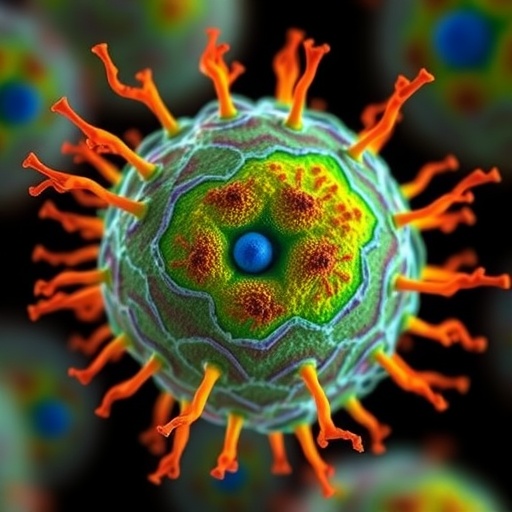
In a groundbreaking study that sheds light on one of the most intricate steps in brain development, scientists at the University of Virginia School of Medicine have uncovered how errors during the final stage of cell division, known as abscission, can precipitate serious repercussions for neural progenitor cells. This discovery not only elucidates mechanisms underlying cancer formation but also offers profound insights into developmental brain disorders, thereby opening potential avenues for innovative therapeutic interventions.
Cell division, a fundamental process indispensable to life, orchestrates growth, tissue repair, and reproduction. The last phase of this process, abscission, entails severing the slender cytoplasmic bridge that physically links two daughter cells following mitosis. While previously understudied in the context of developing neural tissue, errors in this precise cleavage can yield cells with abnormal morphologies and genomic contents, dramatically impacting brain formation.
Focusing on the developing cerebral cortex, the research team investigated how abscission failures distort the architecture of emergent neural cell sheets. Under normal circumstances, neural progenitors, arranged akin to a honeycomb lattice, rapidly proliferate to produce the vast array of neurons required for a functional brain. Abscission failures stall this process, causing two cells to remain fused temporarily before merging into a single larger cell, triggering programmed cell death. However, when this apoptotic elimination is hindered, these bi-nucleated cells attempt subsequent divisions, resulting in severely aberrant cells that compromise tissue integrity.
At the heart of these cellular abnormalities lies an imperative protein named p53, often heralded as the “guardian of the genome.” Known for its critical role in detecting DNA damage and initiating apoptosis, p53 serves as a cellular quality-control checkpoint. Through meticulous experimentation involving genetically engineered mice, researchers demonstrated that disabling p53’s apoptotic function permitted abscission-defective neural cells to escape elimination. These cells not only persisted but exhibited exacerbated defects, including multinucleation and the generation of multiple primary cilia, structures vital for receiving extracellular signals essential for cellular communication and development.
The morphological anomalies extend beyond simple structural aberrations. The enlarged cell membranes and multiple elongated cilia disrupt the honeycomb pattern crucial for proper cortical organization. This disruption hints at possible pathological cascades where defective cellular architecture contributes to impaired brain circuitry development and, eventually, to cancerous growth or neurodevelopmental disorders.
Graduate student Kaela S. Lettieri, a pivotal contributor to this research, emphasized that the subtle cellular changes observed initially were likely underestimated due to active clearance of aberrant cells via apoptosis. The severity of cellular defects became dramatically evident once p53-mediated cell death was inhibited, endorsing the notion that natural cellular mechanisms guard against accumulating mitotic errors.
The implications of these findings extend far beyond developmental biology. Since similar protein networks regulate cell division fidelity in other tissues, the amplification of abscission errors alongside impaired p53 activity may underpin tumorigenesis in diverse organs. In the brain, where rapid and precise neurogenesis is imperative, such failures likely underpin the genesis of certain aggressive brain cancers and congenital disorders.
Moreover, this research underscores the notion that the developing brain possesses specialized, highly sensitive regulatory mechanisms during cell division. These mechanisms ensure rapid production of billions of neurons while guarding against mutational errors that could derail normal development. The delicate balance maintained by p53’s surveillance highlights a critical evolutionary adaptation safeguarding neural tissue integrity.
Targeting the pathways governing abscission and p53-mediated apoptosis offers an enticing therapeutic strategy. By enhancing p53 function or correcting abscission processes, scientists might devise interventions that halt early tumor initiation or ameliorate neurodevelopmental anomalies before they manifest clinically. Such advances could revolutionize treatment paradigms for birth defects and cancers rooted in cell division errors.
The UVA Comprehensive Cancer Center, recognized nationally for its cutting-edge oncology research and patient care, supports this line of investigation, positioning it at the forefront of translational science. Simultaneously, the UVA Brain Institute champions multidisciplinary approaches to decode the complexities of brain function and dysfunction, reinforcing the collaborative effort behind these discoveries.
Published in the renowned journal Molecular Biology of the Cell (MBoC), this study represents a significant stride in cell biology and neuroscience. The detailed characterization of abscission-related defects and their pathological ramifications provides a framework for further research into the molecular choreography underlying brain development and disease.
With continued exploration, understanding how these cellular guardianships break down may unlock novel therapeutic avenues. Enhanced molecular insights into the intersection of cell division fidelity, apoptosis regulation, and neural development stand to transform our grasp of both cancer biology and regenerative medicine.
As research delves deeper into the mechanisms by which abscission errors are detected and mitigated in the brain, the potential to intercept malignant transformations or neurodevelopmental disruptions at their molecular inception becomes increasingly tangible, heralding a new frontier in medical science.
Web References:
- Published article: https://doi.org/10.1091/mbc.E25-09-0444
- UVA Making of Medicine blog: http://makingofmedicine.virginia.edu/
References:
Lettieri, K. S., McNeely, K. C., & Dwyer, N. D. (2024). [Article Title]. Molecular Biology of the Cell. DOI: 10.1091/mbc.E25-09-0444
Cite Scienmag News
Nathaniel Bowman. (May 20, 2026). New Discovery Reveals How Cancer Progresses During Cell Division. Scienmag. https://scienmag.com/new-discovery-reveals-how-cancer-progresses-during-cell-division/
Nathaniel Bowman. "New Discovery Reveals How Cancer Progresses During Cell Division." Scienmag, 20 May 2026, https://scienmag.com/new-discovery-reveals-how-cancer-progresses-during-cell-division/. Accessed 3 September 2026.
Nathaniel Bowman. "New Discovery Reveals How Cancer Progresses During Cell Division." Scienmag. May 20, 2026. https://scienmag.com/new-discovery-reveals-how-cancer-progresses-during-cell-division/


