


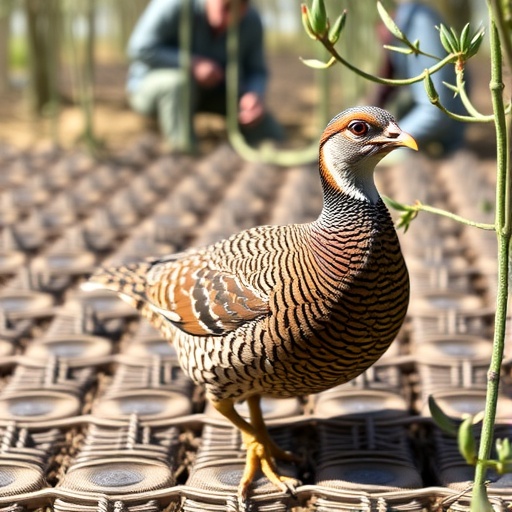
In a significant advancement within poultry nutrition and sustainable food technology, researchers have embarked on an exploration into the valorisation of olive pomace, a by-product of olive oil production, through its incorporation into the diets of Jumbo quail. The study, which utilizes the spawn of the edible mushroom Pleurotus ostreatus, seeks to determine the impact of this novel dietary intervention on several crucial parameters, including amino acid digestibility, growth performance, physiological responses, and meat quality. This exploration is not merely academic; it addresses both the ecological challenge posed by food waste and the modern necessity for sustainable animal feeding strategies.
The consideration of olive pomace, traditionally regarded as waste, has gained traction due to the growing interest in nutrient recycling within agricultural systems. Olive pomace is rich in phenolic compounds, dietary fibers, and other nutrients that could contribute positively to animal health and growth. The study’s authors, K.P. Mathabela, C.F. Egbu, and C.M. Mnisi, posit that incorporating olive pomace into quail diets may support not only the birds’ growth and health but also provide a sustainable solution for managing agricultural by-products.
Utilizing Pleurotus ostreatus spawn represents a dual strategy: this mushroom species is known for its ability to yield high-quality protein and enhance nutrient profiles in various substrates. When used to valorize olive pomace, the spawn could potentially break down complex compounds, increasing the bioavailability of amino acids and other vital nutrients. This combination presents an exciting opportunity to enhance the feeding value of a material that would otherwise contribute to landfill waste.
The research team conducted a series of controlled experiments to observe the effects of dietary treatments on the growth performance of Jumbo quail. They meticulously designed trials to assess various parameters such as weight gain, feed conversion ratios, and overall health indicators, as influenced by the inclusion of olive pomace and mushroom spawn in their diet. Initial findings suggest that birds fed diets enriched with olive pomace exhibit improved growth rates compared to those on conventional feeds, indicating a promising avenue for future poultry feed formulations.
Moreover, amino acid digestibility was a key focus in this study. Nutrient absorption is critical in poultry nutrition, directly affecting the efficiency of growth and overall production metrics. The integration of Pleurotus ostreatus spawn into diets may enhance the breakdown of nutrients and promote better absorption rates, leading to healthier birds and potentially higher meat quality. Such outcomes could revolutionize feeding practices, particularly in systems where traditional feedstocks are becoming increasingly expensive or limited.
From a physiological standpoint, the researchers diligently monitored the health responses of the Jumbo quail throughout the study. Notably, they observed several beneficial outcomes, including improved gut health and reduced stress markers in birds fed the experimental diets. These physiological improvements may attribute themselves to the antioxidant properties of the phenolic compounds present in the olive pomace, known for their health-promoting benefits across various species.
The implications of such findings extend beyond mere academic interest; they may foster real-world applications that encompass both environmental sustainability and agricultural efficiency. By repurposing olive pomace and integrating it into poultry diets, farmers could affordably and sustainably produce high-quality meat while simultaneously reducing waste. This could lead to a more circular economy within the agricultural sector, where outputs are continually transformed into inputs.
Furthermore, this research elevates the discourse surrounding alternative feed sources in the poultry industry, potentially paving the way for additional studies. Understanding the optimal ratios of olive pomace and mushroom spawn incorporation could refine feed formulations even further, facilitating broader acceptance among poultry producers. The initial success highlighted in this study may serve as a catalyst for increased investment in research surrounding underutilized agricultural by-products.
Concurrently, the meat quality parameters were thoroughly examined. The researchers conducted comprehensive analyses to determine how the dietary modifications influenced the sensory characteristics of the quail meat. Early results indicate that meat sourced from quail fed olive pomace diets may exhibit superior flavor profiles and enhanced nutritional attributes, aligning with consumer preferences for healthier and more flavorful poultry products.
In conclusion, the study conducted by Mathabela, Egbu, and Mnisi is a pioneering step towards integrating sustainable practices within poultry nutrition. The valorisation of olive pomace through Pleurotus ostreatus not only offers bright prospects for enhancing growth performance and meat quality in Jumbo quail but also addresses crucial environmental concerns linked with food waste. As the demand for sustainable and nutritious food sources continues to rise, this research highlights how innovative solutions can transform traditional practices and pave the way for a greener agricultural future.
The findings of this study await further validation through larger scale trials, but they emphasize the potential of unconventional feed sources and underscore the importance of interdisciplinary approaches in addressing global food security challenges. As we move forward, the intersection of sustainability, nutrition, and animal husbandry will undoubtedly shape the future of food production systems worldwide, ensuring a robust platform for research and application that serves both the environmental and nutritional needs of our growing population.
Mathabela, K.P., Egbu, C.F. & Mnisi, C.M. Valorisation of dietary olive pomace with Pleurotus ostreatus spawn on amino acid digestibility, growth performance, physiological responses, and meat quality parameters in Jumbo quail.
Discov Anim 2, 16 (2025). https://doi.org/10.1007/s44338-025-00061-2
Cite Scienmag News
Daisy Hatcher. (August 30, 2025). Boosting Jumbo Quail Growth with Olive Pomace. Scienmag. https://scienmag.com/boosting-jumbo-quail-growth-with-olive-pomace/
Daisy Hatcher. "Boosting Jumbo Quail Growth with Olive Pomace." Scienmag, 30 August 2025, https://scienmag.com/boosting-jumbo-quail-growth-with-olive-pomace/. Accessed 4 September 2026.
Daisy Hatcher. "Boosting Jumbo Quail Growth with Olive Pomace." Scienmag. August 30, 2025. https://scienmag.com/boosting-jumbo-quail-growth-with-olive-pomace/


