


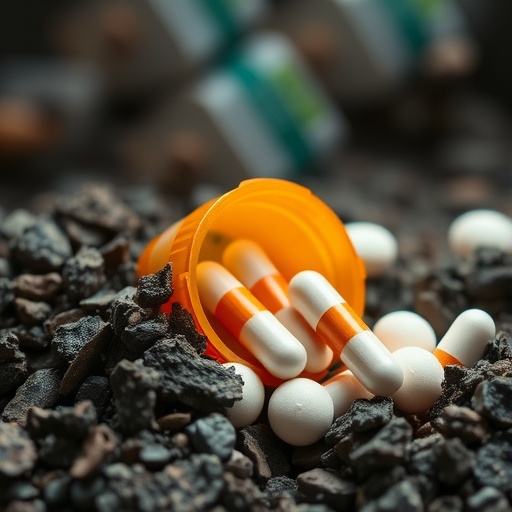
In recent years, the alarming presence of pharmaceutical contaminants in the environment has raised significant concern among researchers and regulatory bodies alike. Among these contaminants, ibuprofen, a widely used nonsteroidal anti-inflammatory drug (NSAID), has emerged as a prominent focus due to its potential adverse effects on aquatic organisms and overall ecosystem health. A groundbreaking study conducted by Saini, Kumar, and Kumar introduces a novel approach to tackling this issue through enhanced biodegradation using bacterial consortia isolated from landfill leachate. This research signifies a substantial advancement in the field of environmental microbiology and the fight against pharmaceutical pollution.
The study underscores the critical need for effective remediation strategies that can mitigate the impacts of pharmaceutical pollutants in natural water bodies. Conventional wastewater treatment systems often struggle to adequately degrade such compounds, leading to their accumulation in the environment. By harnessing the capabilities of specific bacteria from landfill leachate, the researchers demonstrated the potential for a more efficient biodegradation process. These bacterial consortia possess unique metabolic pathways that enable them to break down ibuprofen more effectively than commonly employed strains.
Detailed investigations into the bacterial composition of the leachate revealed a rich diversity of microorganisms, each contributing to the overall degradation process. The researchers employed metagenomic analyses to identify and characterize the dominant bacterial species present in the samples. Notably, certain strains exhibited heightened tolerance to ibuprofen, exhibiting the metabolic versatility required to adapt and thrive in the presence of such pollutants. This adaptability is a key factor in the success of the biodegradation process, as it allows the bacteria to continue to function effectively amid fluctuating environmental conditions.
Through a series of controlled laboratory experiments, Saini et al. optimized the conditions for ibuprofen biodegradation performed by the isolated bacterial consortia. Parameters such as temperature, pH, and nutrient availability were meticulously tested. Remarkably, the results indicated a significant increase in the degradation rate of ibuprofen when these optimized conditions were employed. This performance enhancement surpassed that of traditional bacterial strains, showcasing the transformative potential of utilizing landfill-derived bacteria for environmental applications.
The researchers employed advanced analytical techniques to quantify the degradation products of ibuprofen, shedding light on the biochemical pathways involved. Accumulating data suggested that the bacterial consortia employed a sequential degradation strategy, initially breaking down ibuprofen into intermediate metabolites before further mineralizing these compounds into less harmful substances. Understanding these pathways not only enhances our comprehension of microbial metabolism but also lays the groundwork for potential biotechnological applications in bioremediation.
The implications of this study extend far beyond the immediate degradation of ibuprofen. By identifying and utilizing microbial communities capable of breaking down pharmaceutical compounds, researchers can expand the toolkit available for environmental clean-up efforts. This research opens doors to the possibility of not only tackling ibuprofen pollution but also addressing a broader spectrum of contaminant classes ranging from antibiotics to personal care products.
Moreover, the environmental conditions of landfills, often seen as a negative aspect of waste management, are now revealed as potential hotspots for microbial diversity. The presence of various waste products creates unique habitats that foster the evolution of specialized microbial communities. This underscores the importance of viewing landfills not merely as waste disposal sites but as reservoirs of biological potential that, if harnessed correctly, could lead to innovative methods of pollutant degradation.
In light of these findings, it becomes increasingly imperative for policymakers to develop guidelines and frameworks that promote the utilization of biological remediation strategies. Supporting research initiatives aimed at understanding microbial interactions and their roles in pollutant degradation can lead to more sustainable waste management practices. As public awareness grows regarding the dangers of pharmaceutical contamination, there exists a pressing need for effective solutions that can be implemented on a larger scale.
Additionally, the study highlights the importance of interdisciplinary collaboration in addressing environmental challenges. By combining the expertise of microbiologists, environmental scientists, and regulatory bodies, comprehensive strategies can be developed to tackle the multifaceted issue of pharmaceutical pollution. Encouraging partnerships between academia, industry, and government can yield innovative solutions that are pragmatic and effective in real-world applications.
In conclusion, the pioneering work by Saini and colleagues encapsulates the essence of modern environmental research: the fusion of science and technology to solve pressing global challenges. As we venture deeper into the complexities of environmental degradation, studies like this illustrate the critical role of microbial consortia in promoting eco-friendly cleanup methods. The enhanced biodegradation of ibuprofen not only presents a solution to a specific pollution problem but also sets a precedent for future research concentrating on the capabilities of natural systems to combat human-induced environmental changes.
The implications of these breakthroughs are profound. As researchers continue to explore the potential of microbial biodegradation, we stand at the threshold of a new era in environmental remediation. The integration of biotechnology into waste management and pollution control strategies could redefine our approach to safeguarding ecosystems and preserving public health. By embracing the power of nature through the intelligent application of science, we can ensure a healthier and more sustainable planet for generations to come.
As the journey to harnessing microbial power takes shape, continued research and public engagement will be essential. The collaboration between scientific communities and the public can enhance awareness of the significance of biodegradation processes, thereby fostering a culture of sustainability. The lessons learned from the biodegradation of ibuprofen can serve as a model for future endeavors, one that emphasizes the potential of harnessing nature’s ingenuity in the face of growing environmental crises.
In summary, this innovative study serves as a call to action for scientists, policymakers, and the global community to prioritize sustainable practices and implement proactive measures against pharmaceutical pollution. With ongoing research and a commitment to understanding and utilizing microbial capabilities, we can pave the way toward a cleaner, more resilient future.
Cite Scienmag News
Morgan Morrow. (November 4, 2025). Boosting Ibuprofen Breakdown with Landfill Bacteria. Scienmag. https://scienmag.com/boosting-ibuprofen-breakdown-with-landfill-bacteria/
Morgan Morrow. "Boosting Ibuprofen Breakdown with Landfill Bacteria." Scienmag, 4 November 2025, https://scienmag.com/boosting-ibuprofen-breakdown-with-landfill-bacteria/. Accessed 4 September 2026.
Morgan Morrow. "Boosting Ibuprofen Breakdown with Landfill Bacteria." Scienmag. November 4, 2025. https://scienmag.com/boosting-ibuprofen-breakdown-with-landfill-bacteria/


