


For the more than 18 million Americans who have survived cancer, the number that matters most at the doctor’s office may not be the one printed on the scale. A new population-based study suggests that a little-known measure called the body shape index, or ABSI, outperforms the familiar body mass index when it comes to forecasting death risk among adults with a self-reported history of cancer. The findings, published in BMC Endocrine Disorders, add to a growing body of evidence that where fat sits on the body may matter far more than how much of it there is overall.
The research team, led by investigators at the Comprehensive Breast Care Center of the Second Affiliated Hospital of Xi’an Jiaotong University in China, analyzed data from 3,230 US adults who reported a previous cancer diagnosis in the National Health and Nutrition Examination Survey, or NHANES, between 2003 and 2018. NHANES is a nationally representative program run by the National Center for Health Statistics, part of the Centers for Disease Control and Prevention, that combines questionnaires with standardized physical examinations at a mobile examination center. By linking survey participants to National Death Index records through the end of 2019, the researchers could track who died, and of what, over the years that followed.
During a survey-weighted median follow-up of 7.9 years, 937 deaths from any cause occurred among the participants, including 315 deaths from cancer and 197 from cardiovascular disease. The team used survey-weighted Cox proportional hazards models, the standard statistical tool for estimating how a characteristic changes the rate of death over time, adjusting for a broad set of confounders including age, sex, race and ethnicity, socioeconomic status measured by the poverty-to-income ratio, smoking and drinking behavior, physical activity, and cancer-related factors. This careful adjustment matters because people with cancer differ from the general population in many ways that could otherwise distort the apparent effect of body composition.
The headline result was striking. Each one-standard-deviation increase in ABSI was associated with a 24 percent higher risk of death from any cause, with a hazard ratio of 1.24 and a 95 percent confidence interval of 1.11 to 1.38. The association with cardiovascular mortality was even stronger: a 55 percent increase in risk per standard deviation, with a hazard ratio of 1.55 and a confidence interval of 1.26 to 1.90. Cancer mortality, by contrast, showed only a weak and statistically uncertain link, with a hazard ratio of 1.12 that included the possibility of no effect in its confidence interval of 0.96 to 1.29.
ABSI, short for a body shape index, was developed to capture something that BMI cannot: the degree to which a person’s waist circumference is large for their height and weight. Mathematically, it divides waist circumference by a combination of height raised to a power and the square root of BMI. A high ABSI signals a disproportionately large belly relative to overall body size, which in turn points toward visceral adiposity, the accumulation of fat around internal organs. Visceral fat is metabolically active tissue that secretes inflammatory molecules, disrupts insulin signaling, and is thought to promote the atherosclerosis and metabolic dysfunction that drive cardiovascular disease. The companion measure examined in the study, the body roundness index or BRI, estimates body roundness from waist circumference and height and, like ABSI, attempts to encode body shape rather than sheer mass.
Yet the results for these newer indices were not uniform. While ABSI emerged as a clear risk marker, continuous BRI and BMI showed no independent association with any of the mortality outcomes in the primary models. The picture for BMI was more nuanced, however. When the researchers categorized participants by standard BMI bands, those classified as underweight faced dramatically elevated mortality, with a hazard ratio of 2.44 and a confidence interval of 1.46 to 4.08 compared with normal-weight participants. Restricted cubic spline analysis, a technique that allows the statistical model to trace a curved rather than straight-line relationship, revealed that BMI had a genuinely nonlinear association with all-cause mortality, with a P value for nonlinearity of 0.002. In other words, the relationship between BMI and death risk in cancer survivors is not a simple upward slope but a curve, with risk concentrated at the low end and the familiar obesity signal largely absorbed by the shape-based measures.
This pattern echoes a well-known phenomenon in oncology and cardiology called the obesity paradox, in which patients with chronic disease sometimes appear to fare better at higher body weights, possibly because higher BMI can reflect greater nutritional reserves and muscle mass rather than harmful fat, and because unintentional weight loss may itself signal aggressive disease. The strong penalty for underweight BMI in this cohort, more than a doubling of death risk, is consistent with that interpretation. Cancer and its treatments can drive cachexia, the wasting syndrome marked by loss of muscle and fat tissue, and low body mass in a cancer survivor may flag poor nutritional status, advanced disease, or reduced physiological reserve.
The authors performed a series of sensitivity analyses to probe the robustness of their findings, and the ABSI results remained similar across these tests, lending confidence that the association is not an artifact of a single modeling choice. The study also applied false discovery rate correction to account for multiple statistical comparisons, a safeguard against spurious findings when many associations are tested simultaneously. Still, the researchers are careful about causality. As an observational cohort study, the analysis can establish association but not proof that reducing ABSI would lower mortality, and the authors explicitly call for further studies to confirm the findings.
Several limitations deserve attention. The cancer histories were self-reported, which can introduce misclassification, and the NHANES sample of 3,230 adults with a cancer history, while nationally representative, pools together many tumor types with very different prognoses. Residual confounding, the possibility that unmeasured factors such as cancer stage, treatment intensity, or detailed dietary patterns drive part of the observed association, cannot be excluded. The follow-up period, though nearly eight years at the median, may not capture longer-term risks. And because ABSI, BRI, and BMI were measured at a single point in time, changes in body composition after diagnosis could not be tracked.
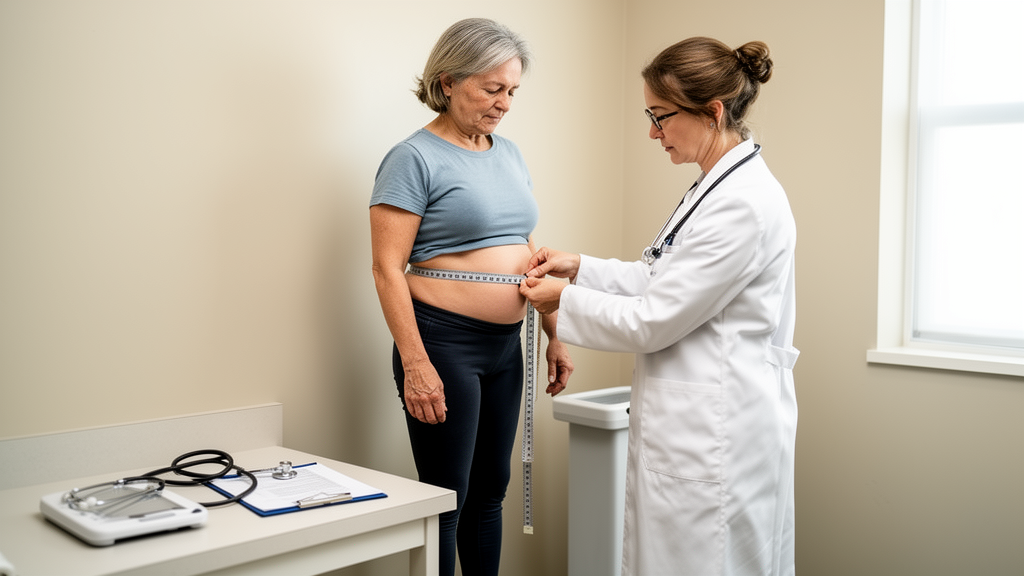
Even with those caveats, the study carries a practical message that is already resonating in clinical circles: for the growing population of cancer survivors in the United States, a tape measure around the waist, interpreted through the lens of body shape indices, may reveal risks that the bathroom scale conceals. Cardiovascular disease is a leading cause of death among long-term cancer survivors, rivaling cancer itself as treatments improve and more people live for decades after diagnosis. If the ABSI findings are confirmed in prospective studies and across cancer types, clinicians may eventually add body shape indices to the standard toolkit for survivorship care, using them to identify patients who would benefit from targeted interventions for central adiposity, from exercise programs to metabolic screening, long before a heart attack or stroke makes the risk undeniable.
Subject of Research: Associations of body shape and anthropometric indices with mortality among US adults with a history of cancer
Article Title: Associations of anthropometric indices with all-cause and cause-specific mortality among US adults with a self-reported history of cancer: a population-based cohort study
Article References: Associations of anthropometric indices with all-cause and cause-specific mortality among US adults with a self-reported history of cancer: a population-based cohort study. (n.d.). https://doi.org/10.1186/s12902-026-02652-w
Image Credits: AI Generated
DOI: 10.1186/s12902-026-02652-w
Keywords: body shape index, body mass index, body roundness index, cancer survivors, mortality, NHANES, obesity, cardiovascular disease, visceral fat, epidemiology, Cox proportional hazards, survivorship
Cite Scienmag News
Nathaniel Bowman. (October 15, 2026). Body Shape Index, Not BMI, Predicts Death Risk in US Cancer Survivors, Study Finds. Scienmag. https://scienmag.com/body-shape-index-not-bmi-predicts-death-risk-in-us-cancer-survivors-study-finds/
Nathaniel Bowman. "Body Shape Index, Not BMI, Predicts Death Risk in US Cancer Survivors, Study Finds." Scienmag, 15 October 2026, https://scienmag.com/body-shape-index-not-bmi-predicts-death-risk-in-us-cancer-survivors-study-finds/. Accessed 15 October 2026.
Nathaniel Bowman. "Body Shape Index, Not BMI, Predicts Death Risk in US Cancer Survivors, Study Finds." Scienmag. October 15, 2026. https://scienmag.com/body-shape-index-not-bmi-predicts-death-risk-in-us-cancer-survivors-study-finds/


