


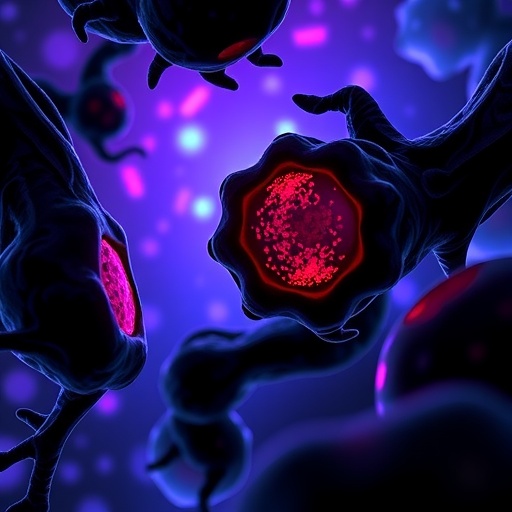
A recent study has unveiled significant insights into the mechanisms by which the immune system identifies and disposes of dead cells, particularly focusing on the role of macrophages and a specific compound known as BMS794833. The findings highlight not only how certain interventions can inhibit this critical process, referred to as efferocytosis, but also how they might have broader implications for understanding autoimmune diseases and therapeutic strategies targeting inflammation.
Macrophages, a type of white blood cell, play a vital role in the body’s immune response. They are responsible for engulfing and digesting cellular debris, including dead and dying cells. This process is crucial for maintaining tissue homeostasis and preventing inflammatory responses that could lead to further damage. The ability of macrophages to efficiently clear apoptotic cells is linked to various diseases, including atherosclerosis, neurodegeneration, and autoimmune disorders.
The molecule BMS794833 has been identified as a potent inhibitor of the efferocytosis process in macrophages. This small molecule operates by directly binding to Mertk, a receptor tyrosine kinase that is essential for the uptake of apoptotic cells. By inhibiting Mertk activity, BMS794833 prevents macrophages from performing their essential function of clearing dead cells, which can have vast implications for how chronic inflammation is managed.
Understanding the specific interaction between BMS794833 and Mertk opens new avenues for therapeutic approaches. When macrophages lose their ability to clear apoptotic cells effectively, it can lead to prolonged inflammatory states and contribute to the pathogenesis of various diseases. Consequently, utilizing BMS794833 may offer a method to selectively modulate macrophage function, potentially providing new strategies for treating autoimmune conditions characterized by excessive inflammation.
The experimental studies conducted by Bae et al. have illuminated the mechanistic aspects of this inhibition. The study employed a combination of in vitro and in vivo methodologies to assess the effects of BMS794833 on macrophage behavior. It was revealed that treatment with BMS794833 significantly reduced the phagocytic capacity of macrophages, suggesting that therapeutic targeting of Mertk could influence the resolution of inflammation.
Additionally, the implications of impaired efferocytosis extend beyond straightforward inflammatory responses. In conditions such as atherosclerosis, where dead cells accumulate within arterial walls, inhibited clearance can lead to plaque instability and subsequent cardiovascular events. Therefore, research such as this not only advances our understanding of basic immunology but also underscores the potential of small molecule inhibitors in disease modulation.
The findings emphasize the need for a balanced approach to modulating macrophage activity. While there is potential for therapeutic interventions using inhibitors like BMS794833, it’s critical to consider the broader implications of inhibiting cell death clearance. A robust immune response depends on the finely-tuned interactions between various cellular components, and an overactive blockade of efferocytosis may lead to unintended consequences.
Consequently, further research will be necessary to explore the long-term effects of using BMS794833 as a therapeutic agent. Understanding the optimal dosage, treatment duration, and potential side effects are paramount in developing a safe and effective therapeutic regimen. Moreover, parallel studies should aim to determine the impact of Mertk inhibition on different macrophage populations, as distinct subsets may respond uniquely to treatment.
In conclusion, the work by Bae and colleagues offers groundbreaking insights into the role of BMS794833 as an efferocytosis inhibitor by directly influencing Mertk activity in macrophages. This research lays a foundation for future studies aimed at elucidating the implications of macrophage dysfunction on various diseases. As we delve deeper into the intricate mechanisms of cellular interactions in our immune system, we edge closer to developing targeted therapies that can enhance disease outcomes and improve patient health.
Ultimately, uncovering the precise dynamics between macrophages, apoptotic cells, and therapeutic compounds like BMS794833 could give rise to innovative strategies for managing inflammatory diseases, paving the way for a new era in immunotherapy research. The era of personalized medicine may benefit greatly from such advancements, potentially changing how we approach the treatment of chronic inflammatory conditions in the future.
Bae, SH., Kim, JH., Park, T.H. et al. Author Correction: BMS794833 inhibits macrophage efferocytosis by directly binding to MERTK and inhibiting its activity.
Exp Mol Med (2026). https://doi.org/10.1038/s12276-026-01638-x
Cite Scienmag News
Nathaniel Bowman. (January 19, 2026). BMS794833 Disrupts Macrophage Efferocytosis via MERTK Inhibition. Scienmag. https://scienmag.com/bms794833-disrupts-macrophage-efferocytosis-via-mertk-inhibition/
Nathaniel Bowman. "BMS794833 Disrupts Macrophage Efferocytosis via MERTK Inhibition." Scienmag, 19 January 2026, https://scienmag.com/bms794833-disrupts-macrophage-efferocytosis-via-mertk-inhibition/. Accessed 4 September 2026.
Nathaniel Bowman. "BMS794833 Disrupts Macrophage Efferocytosis via MERTK Inhibition." Scienmag. January 19, 2026. https://scienmag.com/bms794833-disrupts-macrophage-efferocytosis-via-mertk-inhibition/


