


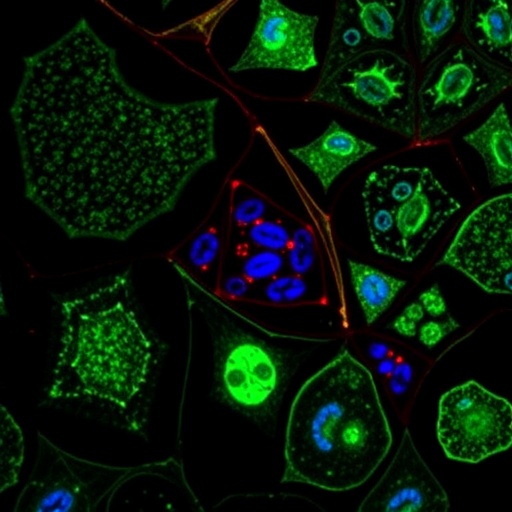
In the ever-evolving landscape of biomedical research, understanding the delicate balance cells maintain under stress conditions has become a cornerstone in developing therapies for degenerative diseases. A groundbreaking study recently published in Cell Death Discovery unveils how targeting a critical cellular regulator, hypoxia-inducible factor-1 (HIF-1), confers resilience to retinal pigment epithelium (RPE) cells facing hypoxidative stress. This novel approach not only shields these cells from death but also rectifies widespread metabolic derailment, holding profound implications for combating retinal degenerations that threaten vision worldwide.
The retinal pigment epithelium serves as the essential support system for photoreceptors, facilitating nutrient transport, waste removal, and phagocytosis of photoreceptor outer segments. Despite its crucial role, the RPE is especially vulnerable to environmental and metabolic insults, including oxidative stress and hypoxia, which can precipitate cell demise and visual impairment. The intricate interplay between hypoxia and oxidative stress—termed hypoxidative stress—creates a pernicious microenvironment contributing to age-related macular degeneration (AMD) and other retinal pathologies. Within this context, the transcription factor HIF-1 emerges as a master regulator, orchestrating gene expression responses to oxygen fluctuations.
HIF-1, composed of HIF-1α and HIF-1β subunits, is stabilized in low-oxygen conditions, guiding cellular adaptation by activating genes involved in angiogenesis, metabolism, and survival pathways. However, under persistent or dysregulated activation, HIF-1 can paradoxically exacerbate pathological processes, particularly in metabolically sensitive cells like the RPE. The study deftly navigates this conundrum by employing a hypoxidative stress model that simulates the dual presence of hypoxia and oxidative stress encountered in disease states. Using this model, researchers dissected the specific role of HIF-1 and investigated whether its modulation could preserve RPE integrity.
Through rigorous in vitro experimentation, the authors implemented pharmacological and genetic strategies to inhibit HIF-1 activity in RPE cells under hypoxidative stress conditions. Their findings revealed a compelling protective effect; attenuating HIF-1 prevented cell death pathways from activating and safeguarded mitochondrial function, a critical determinant of cell survival and metabolic homeostasis. Beyond merely preventing apoptosis, HIF-1 targeting remedied disruptions in glycolysis and oxidative phosphorylation, which are often dysregulated during disease, suggesting a restoration of cellular bioenergetics.
A particularly striking aspect of the research is the detailed metabolic profiling of RPE cells, which uncovered that hypoxidative stress imposes a detrimental shift in energy metabolism. Normally, RPE cells flexibly toggle between glycolysis and mitochondrial respiration to meet energy demands. However, under stress, this balance collapses, skewing toward metabolic inefficiency and reactive oxygen species (ROS) production. HIF-1 inhibition restored this balance, delineating a mechanism whereby controlling transcriptional responses can recalibrate mitochondrial dynamics and reduce oxidative damage.
The implications stretch far beyond the realm of retinal biology. Hypoxia and oxidative stress are ubiquitous in numerous pathological conditions, including cancer, ischemia, and neurodegeneration. This study provides a conceptual framework for targeting master regulators like HIF-1 to modulate cellular responses to complex stress inputs. It challenges the traditional view that HIF-1 activation is uniformly adaptive and highlights the nuanced context-dependent roles this factor plays.
At a molecular level, the study elucidates the downstream effectors influenced by HIF-1 modulation, including key metabolic enzymes and survival genes. It becomes apparent that HIF-1 drives a transcriptional program that, while initially protective, becomes maladaptive under chronic stress by promoting metabolic reprogramming that favors cell death. The therapeutic potential resides in intercepting this maladaptive signaling cascade, thus preserving cell viability and function.
Notably, the study addressed potential concerns regarding off-target effects and ensured specificity by employing complementary approaches such as siRNA-mediated knockdowns alongside pharmacological inhibitors. These methodological rigor elements strengthen the confidence in implicating HIF-1 as a viable target. Furthermore, the translational relevance is underscored by the use of human-derived RPE cells, bringing clinical aspirations one step closer.
Future directions inspired by this research include investigating the interplay between HIF-1 and other stress-responsive pathways such as Nrf2-mediated antioxidant responses and unfolded protein response signaling. Understanding these networks’ cross talk could unearth synergistic strategies to bolster cellular defenses against multifaceted insults prevalent in retinal diseases.
Given the centrality of mitochondrial dysfunction in aging and degenerative disorders, the ability to restore mitochondrial respiration through targeted transcriptional modulation is a significant stride. The study also opens avenues to explore small molecules or gene therapies that safely and reversibly dampen HIF-1 activity, ideally tuned to the temporal dynamics of disease progression.
Moreover, the study’s hypoxidative stress model itself is a valuable tool offering higher fidelity in replicating in vivo pathophysiological conditions compared to conventional singular stress models. This allows for more predictive assessments of therapeutic candidates and a better understanding of disease mechanisms.
Importantly, this research invites a reevaluation of hypoxia signaling paradigms, emphasizing the dualistic nature of factors like HIF-1, which may serve as both guardians and executioners depending on environmental cues. Such insights refine our precision medicine approaches, guiding interventions that precisely modulate cellular pathways rather than blunt inhibition or activation.
In conclusion, the discovery that targeting HIF-1 within a hypoxidative stress context rescues retinal pigment epithelium cells unveils a transformative strategy against retinal degeneration. By reestablishing metabolic equilibrium and preventing cell death, this approach holds promise to safeguard vision and combat diseases that currently lack effective treatments. The broader ramifications magnify the relevance of manipulating hypoxia signaling in diverse biomedical arenas, cementing HIF-1 as a pivotal node in the cellular stress response network worthy of intense scientific and clinical focus.
Cite Scienmag News
Ophelia Keating. (August 14, 2025). Blocking HIF-1 Shields Retinal Cells from Hypoxia. Scienmag. https://scienmag.com/blocking-hif-1-shields-retinal-cells-from-hypoxia/
Ophelia Keating. "Blocking HIF-1 Shields Retinal Cells from Hypoxia." Scienmag, 14 August 2025, https://scienmag.com/blocking-hif-1-shields-retinal-cells-from-hypoxia/. Accessed 3 September 2026.
Ophelia Keating. "Blocking HIF-1 Shields Retinal Cells from Hypoxia." Scienmag. August 14, 2025. https://scienmag.com/blocking-hif-1-shields-retinal-cells-from-hypoxia/


