


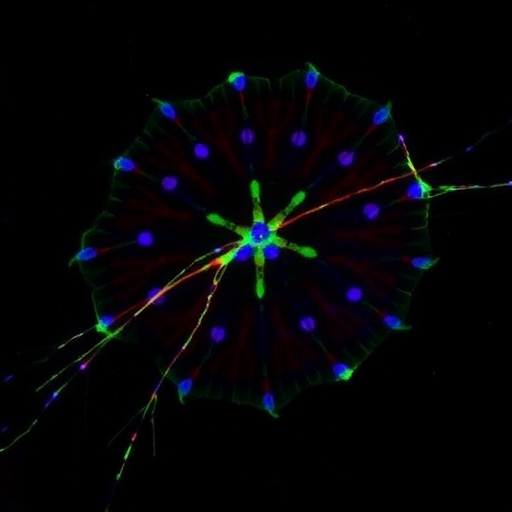
In a groundbreaking study published in Nature Communications, researchers have unveiled a promising therapeutic avenue targeting astrocyte signaling pathways to mitigate the molecular and functional impairments associated with Fragile X syndrome (FXS). This neurodevelopmental disorder, caused by a mutation in the FMR1 gene leading to the loss of fragile X mental retardation protein (FMRP), manifests in intellectual disabilities, autism spectrum-like behaviors, and synaptic dysregulation. Traditionally, much of the research has focused on neuronal abnormalities; however, the emerging role of astrocytes — the star-shaped glial cells crucial for maintaining neuronal health and synaptic function — adds a new dimension to understanding FXS pathology and intervention strategies.
Astrocytes, often overshadowed by their neuronal counterparts, are increasingly recognized as active players in brain circuitry and signaling. The bone morphogenetic protein (BMP) signaling pathway, a fundamental mediator in astrocyte development and function, has drawn attention for its intricate involvement in neurodevelopmental disorders. The study led by Deng, J., Paumier, A., Labarta-Bajo, L., and colleagues explores how modulating BMP signaling within astrocytes affects molecular signatures and behavioral deficits in a fragile X syndrome mouse model, revealing compelling evidence that astrocyte-targeted interventions can restore neurofunctional balance.
Using a combination of genetic techniques, the researchers successfully suppressed BMP signaling specifically in astrocytes of FXS mouse models. This strategic suppression resulted in a remarkable normalization of gene expression profiles that are usually dysregulated in fragile X pathology. Notably, transcriptomic analyses revealed restoration in key molecular pathways related to synaptic transmission, neuroinflammation, and cellular metabolism, underscoring the broad regulatory role astrocytes exert on neuronal microenvironments affected by FMRP deficits.
One of the critical advancements in this study is the elucidation of how aberrant astrocyte BMP signaling exacerbates neurological dysfunction in FXS. BMP signaling typically orchestrates astrocyte maturation and reactive states, processes that, when dysregulated, can lead to maladaptive glial behavior. The findings revealed that hyperactive BMP signaling in FXS astrocytes leads to pathological alterations in calcium signaling and neurotransmitter uptake, contributing to synaptic inefficiencies and network instability. These insights pave the way for the novel hypothesis that targeted reduction of BMP activity in astrocytes may recalibrate these pathways, favoring synaptic plasticity and cognitive function.
Behavioral assays conducted on the genetically modified mouse models provided compelling functional validation of the molecular findings. Fragile X mice with suppressed astrocyte BMP signaling demonstrated significant improvements in cognitive tasks, sensorimotor gating, and social interaction paradigms—domains notoriously impaired in FXS patients. This translational relevance of astrocyte BMP modulation suggests a potential for astroglial-focused therapies to alleviate some of the hallmark behavioral disruptions observed in fragile X syndrome.
The interdisciplinary approach taken by the authors incorporated electrophysiological recordings and in vivo imaging to interrogate synaptic activity following BMP pathway suppression. Enhanced synaptic connectivity and normalized excitatory/inhibitory balance were observed, highlighting how astrocytic BMP signaling intricately modulates neuronal network homeostasis. These findings challenge the neuron-centric paradigm and establish astrocytes as pivotal modulators within the fragile X brain, capable of being leveraged to restore neurophysiological function.
At the molecular level, the study delineates how BMP signaling intersects with key intracellular cascades known to be disrupted in FXS, such as mTOR and ERK pathways. By dampening BMP activity, the researchers saw downstream effects improving protein synthesis homeostasis and reducing aberrant neuroinflammatory markers. This mechanistic insight into pathway cross-talk advances the understanding of how astrocytes contribute to the complex pathogenesis of fragile X syndrome beyond mere supportive roles.
The study also highlights the temporal dynamics of BMP signaling in astrocytes, indicating that early intervention during critical developmental windows may maximize therapeutic efficacy. Dysregulated glial signaling during these periods can have enduring effects on synaptogenesis and neural circuit formation, suggesting that timing of intervention is crucial for reversing Fragile X impairments.
Importantly, this astrocyte-focused therapeutic strategy addresses some of the limitations faced by previous Fragile X treatments, which have largely targeted neuronal receptors and synaptic proteins with limited clinical success. By shifting the focus to glial modulation, the study opens a new frontier that may yield more robust and sustained improvements in FXS symptomatology.
The use of cutting-edge single-cell RNA sequencing further amplified the resolution of astrocyte subtype-specific responses to BMP signaling manipulation. This high-definition molecular profiling unveiled heterogeneity within astrocytic populations, allowing the team to pinpoint which astrocyte subsets predominantly contribute to pathological states and which are most amenable to therapeutic modulation.
Another salient aspect of the research was the exploration of how BMP signaling influences astrocyte-neuron metabolic coupling. Astrocytes play a vital role in providing metabolic support to neurons, and in FXS models with unregulated BMP signaling, this metabolic support is impaired. The attenuation of BMP signaling restored metabolic fluxes, suggesting improved neuronal energy homeostasis as a contributing factor in functional recovery.
Given the translational potential, the study also investigated pharmacological agents known to inhibit BMP signaling, testing their capacity to mimic genetic suppression effects. Preliminary results indicate that small molecule inhibitors can achieve similar molecular and behavioral rescues, fostering hope for non-genetic therapies to reach actual Fragile X patients.
This new focus on astrocyte BMP signaling aligns with recent shifts in neuroscience research emphasizing the glial contributions to brain disorders. It expands the therapeutic target space and encourages the development of more holistic treatment paradigms that encompass the full cellular diversity of the nervous system.
In sum, the work by Deng and colleagues revolutionizes the conception of Fragile X syndrome pathophysiology by highlighting the central role of astrocytes and their BMP signaling in mediating disease phenotypes. By correcting maladaptive astroglial signaling, they have uncovered a promising new strategy to alleviate the debilitating cognitive and behavioral consequences of this syndrome.
As the scientific community progresses towards validating these findings in human models and clinical trials, the notion of glial-centric treatments for neurodevelopmental disorders may become a cornerstone of next-generation therapeutics. The implications extend beyond Fragile X syndrome, potentially impacting a broader spectrum of neuropsychiatric and neurodegenerative conditions characterized by astrocytic dysfunction.
The study represents a paradigm shift, offering a novel lens through which to view brain disorders—one where astrocytes emerge not just as bystanders, but as dynamic and actionable contributors to brain health and disease modulation.
Cite Scienmag News
Juliet Wilcox. (April 23, 2026). Blocking Astrocyte BMP Signaling Eases Fragile X Deficits. Scienmag. https://scienmag.com/blocking-astrocyte-bmp-signaling-eases-fragile-x-deficits/
Juliet Wilcox. "Blocking Astrocyte BMP Signaling Eases Fragile X Deficits." Scienmag, 23 April 2026, https://scienmag.com/blocking-astrocyte-bmp-signaling-eases-fragile-x-deficits/. Accessed 4 September 2026.
Juliet Wilcox. "Blocking Astrocyte BMP Signaling Eases Fragile X Deficits." Scienmag. April 23, 2026. https://scienmag.com/blocking-astrocyte-bmp-signaling-eases-fragile-x-deficits/


